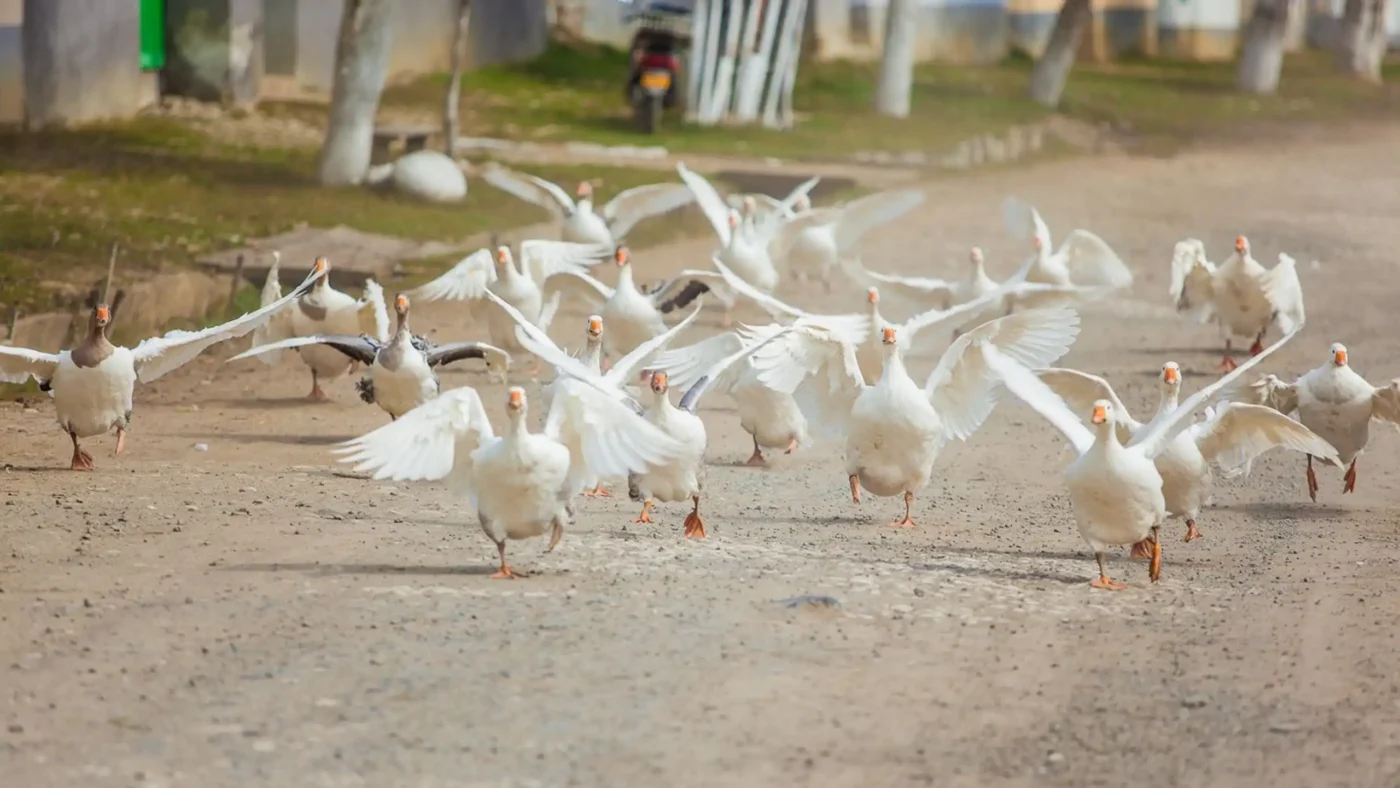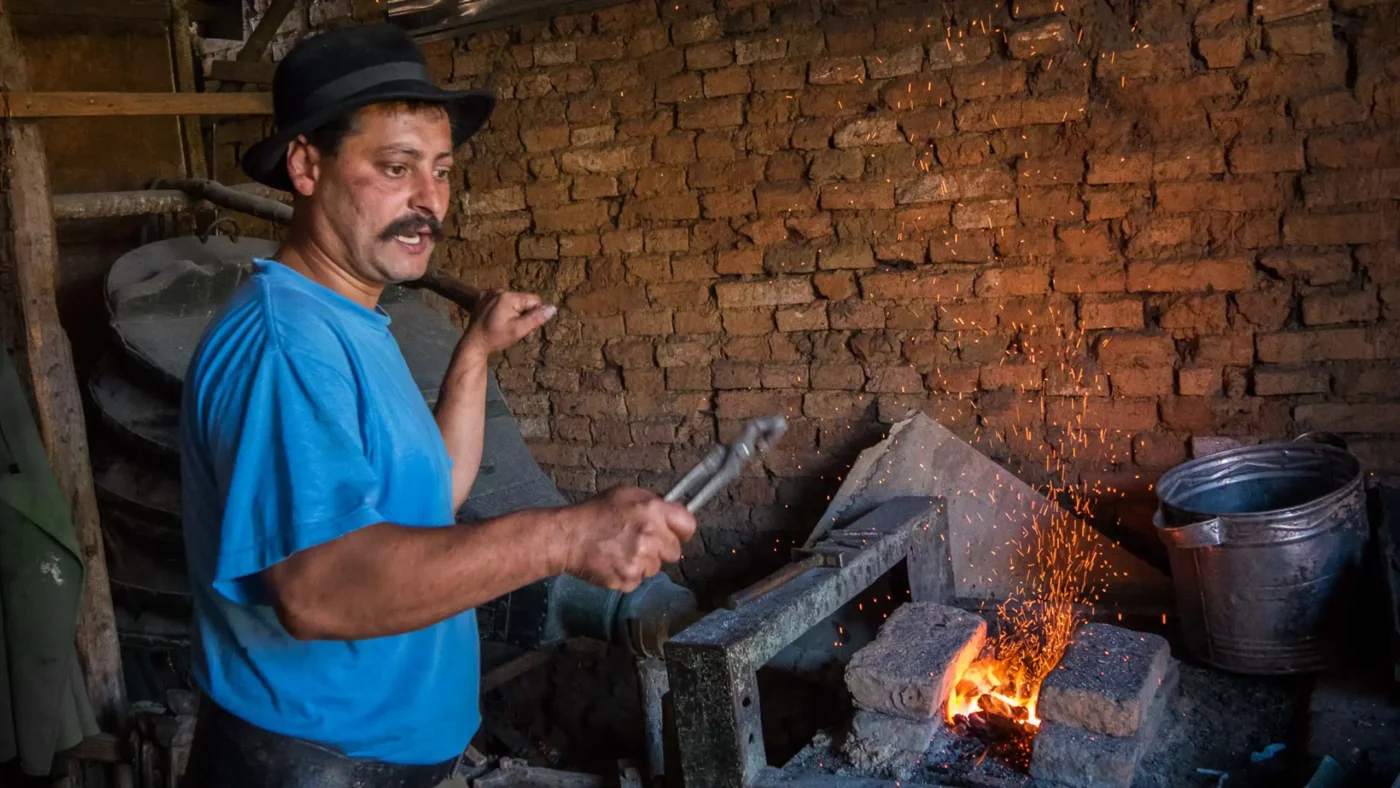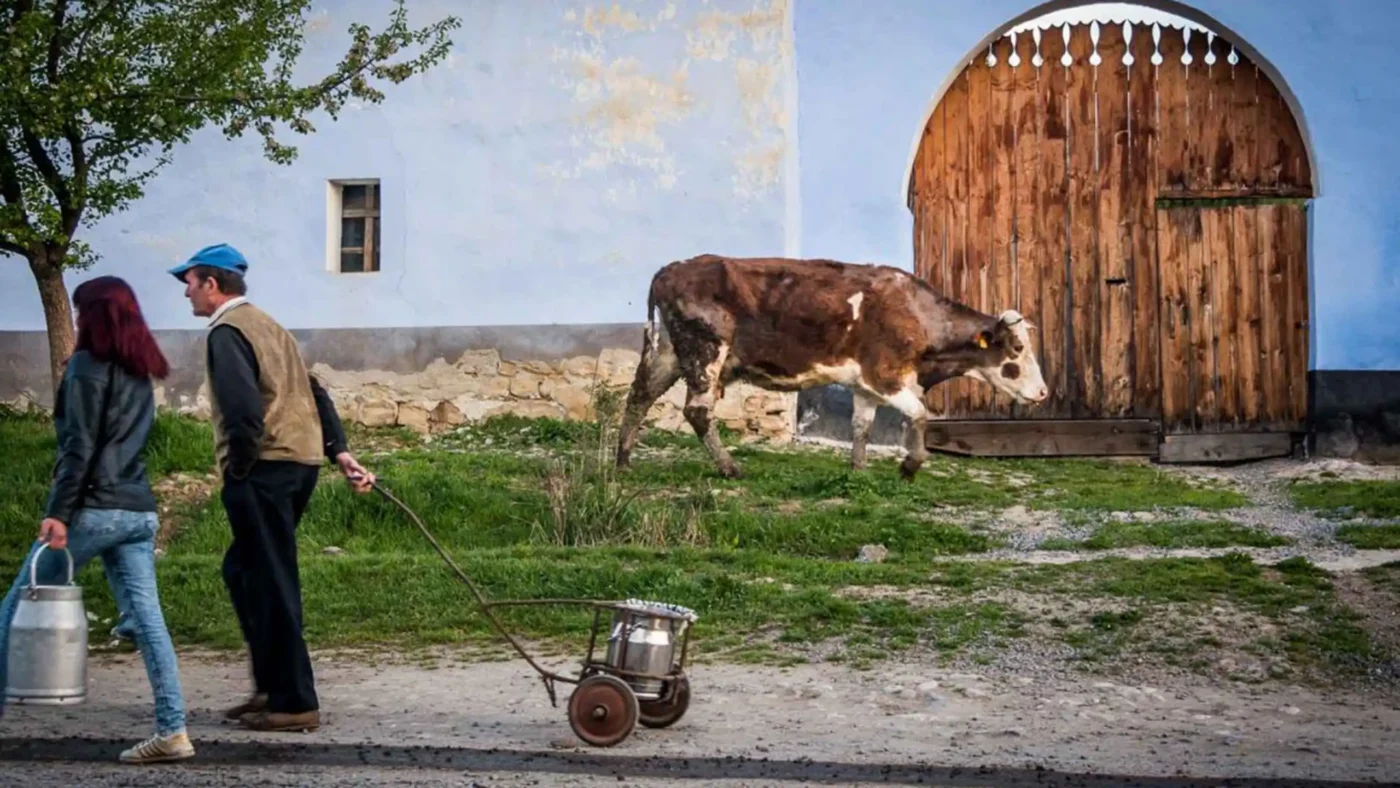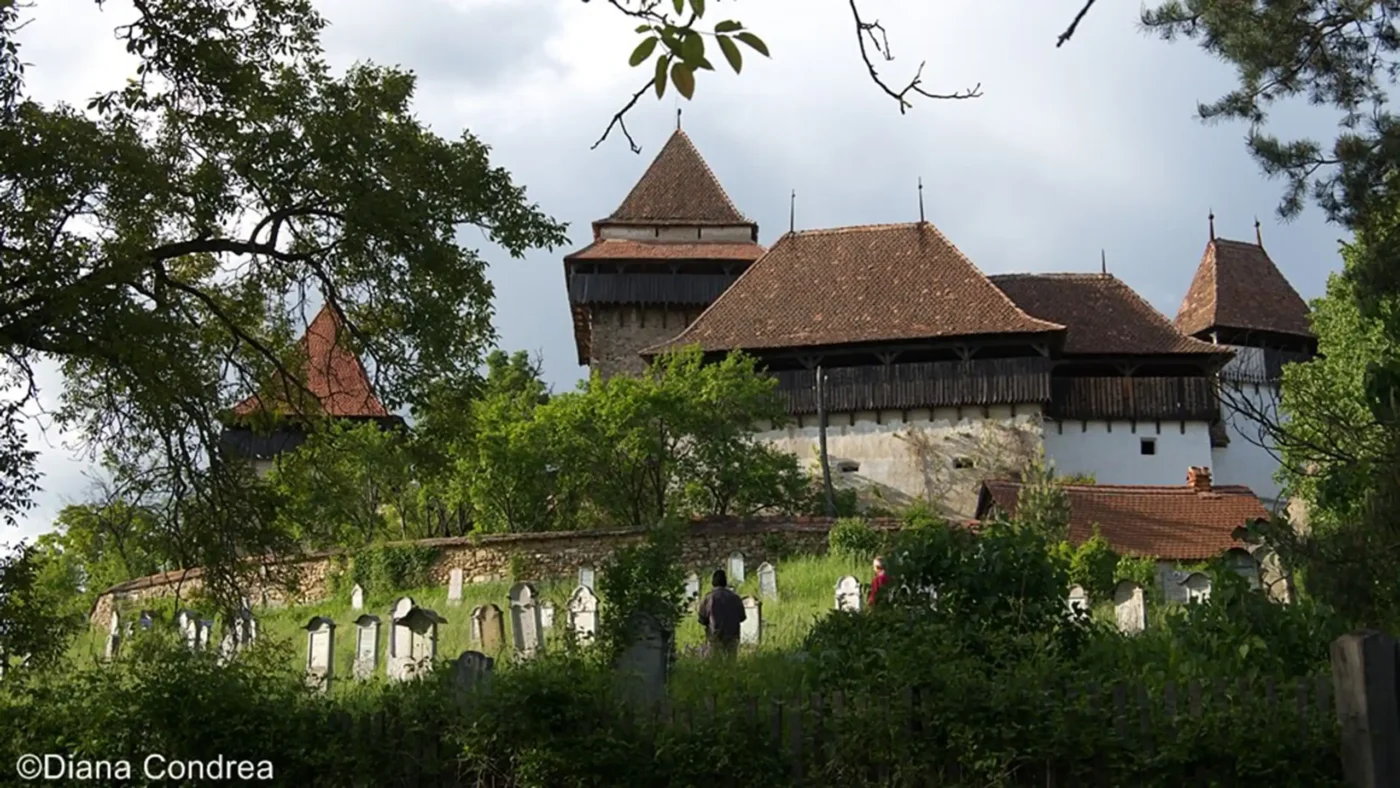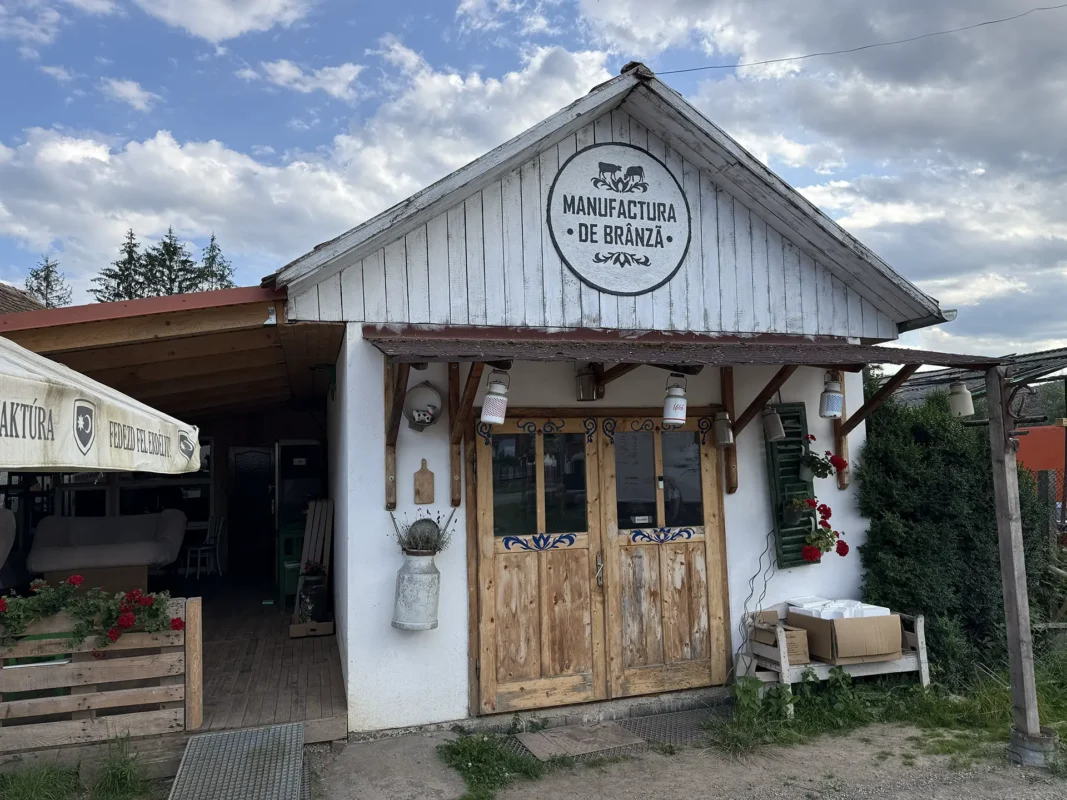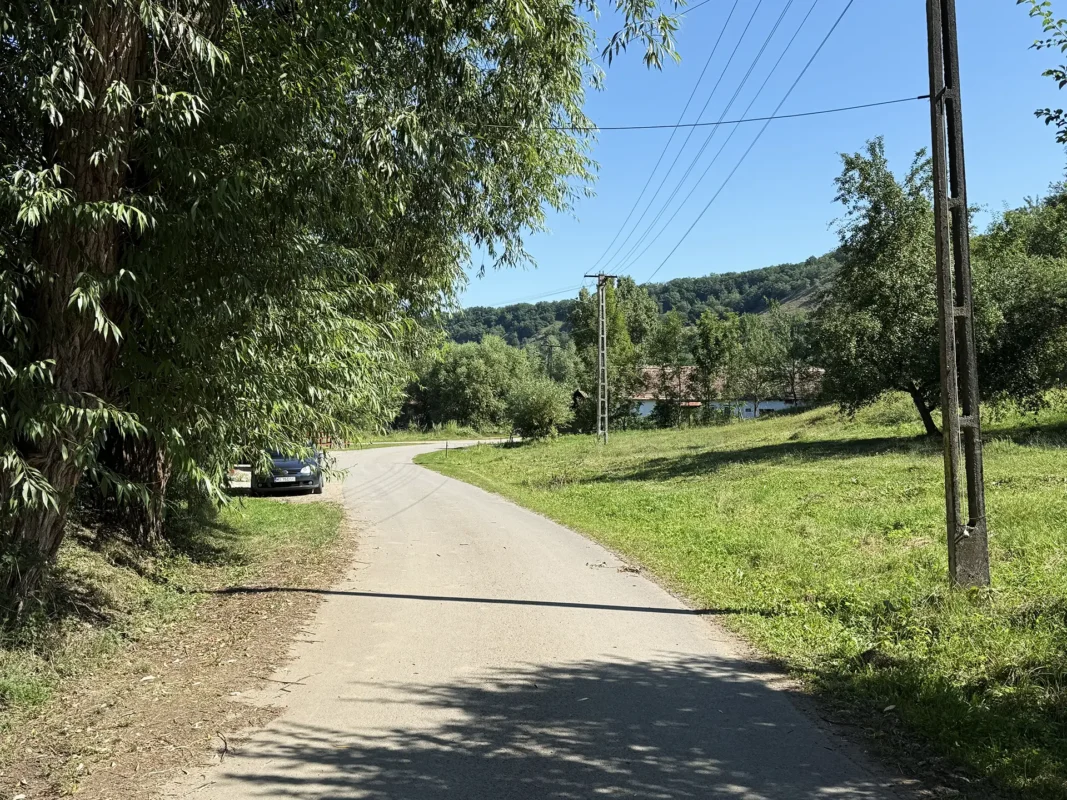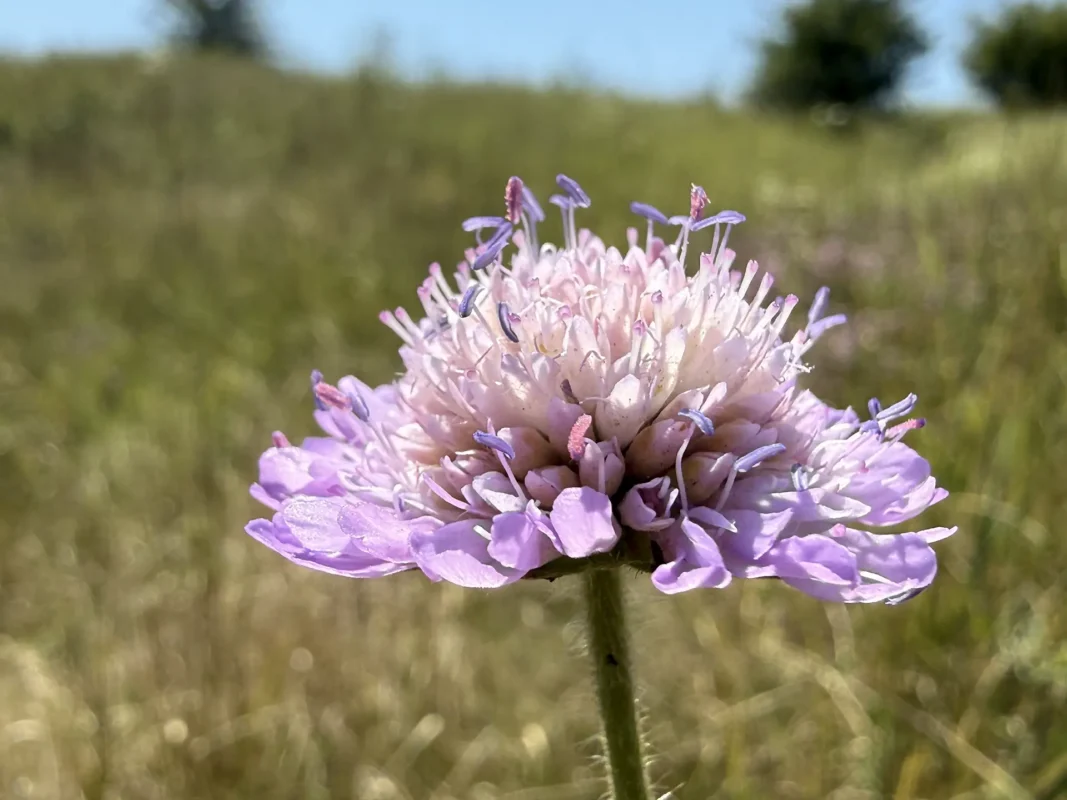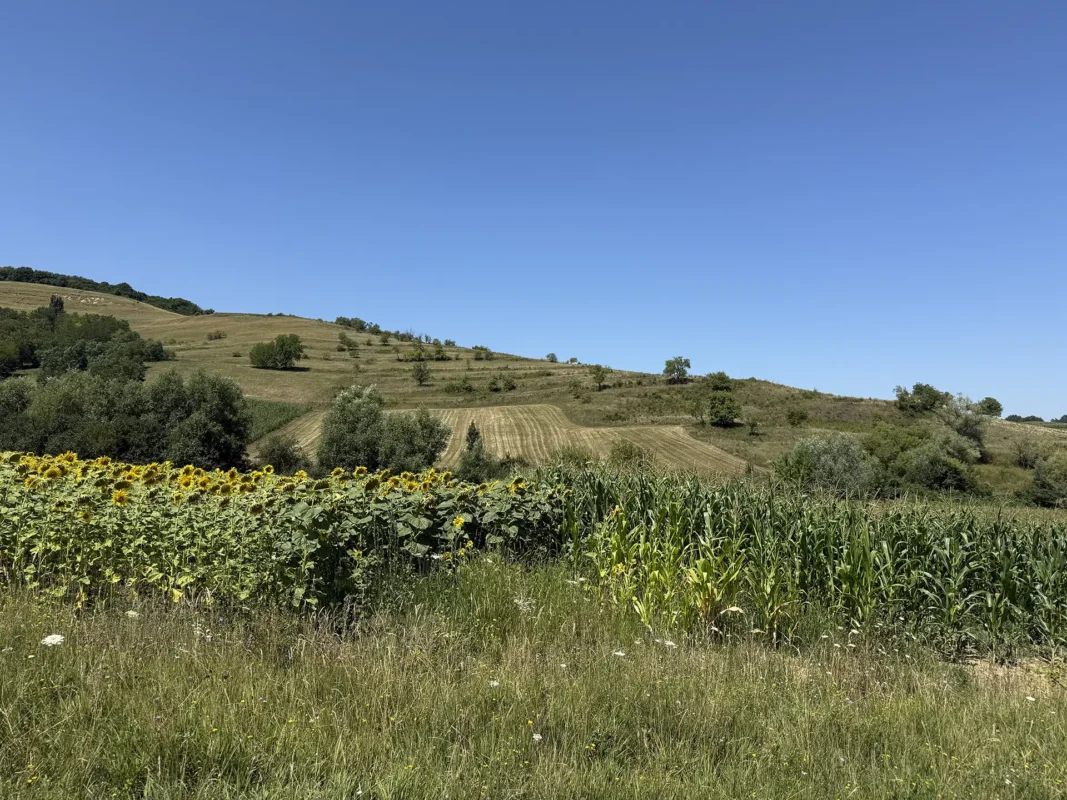



Rolling Hills, Hidden History - A Transylvanian Story
remembered in folklore and green fields
remembered in folklore and green fields
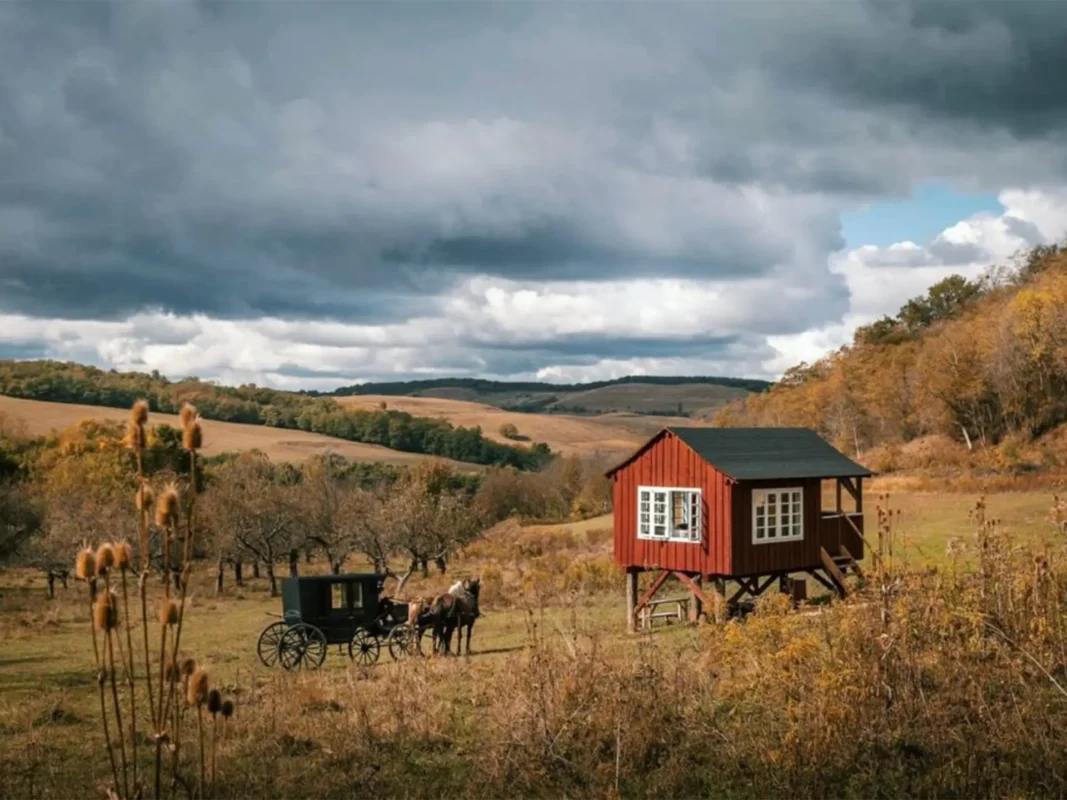
On terra, some stories are carved in stone, while others are powerful and loud. You see, these stories have something in common: they're permanent. This is terra and we are Unbound. This story, well, it came in complete, clear serenity. In the summer of 2026, the rolling hills of Transylvania opened a threshold in time: five days through villages where Saxon walls outlived their builders and then many of the generations that followed them, where history was written, and where nature perseveres.
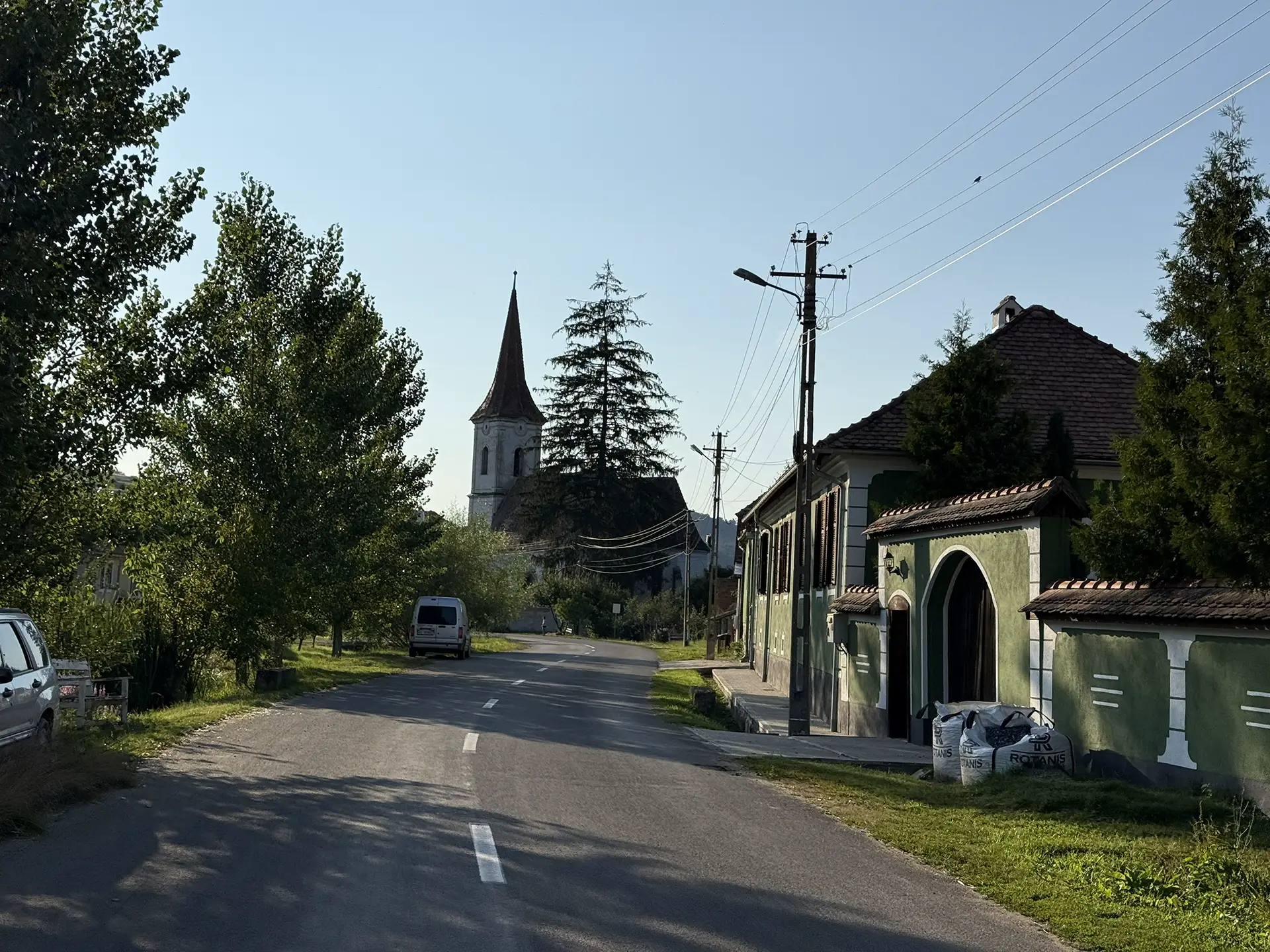
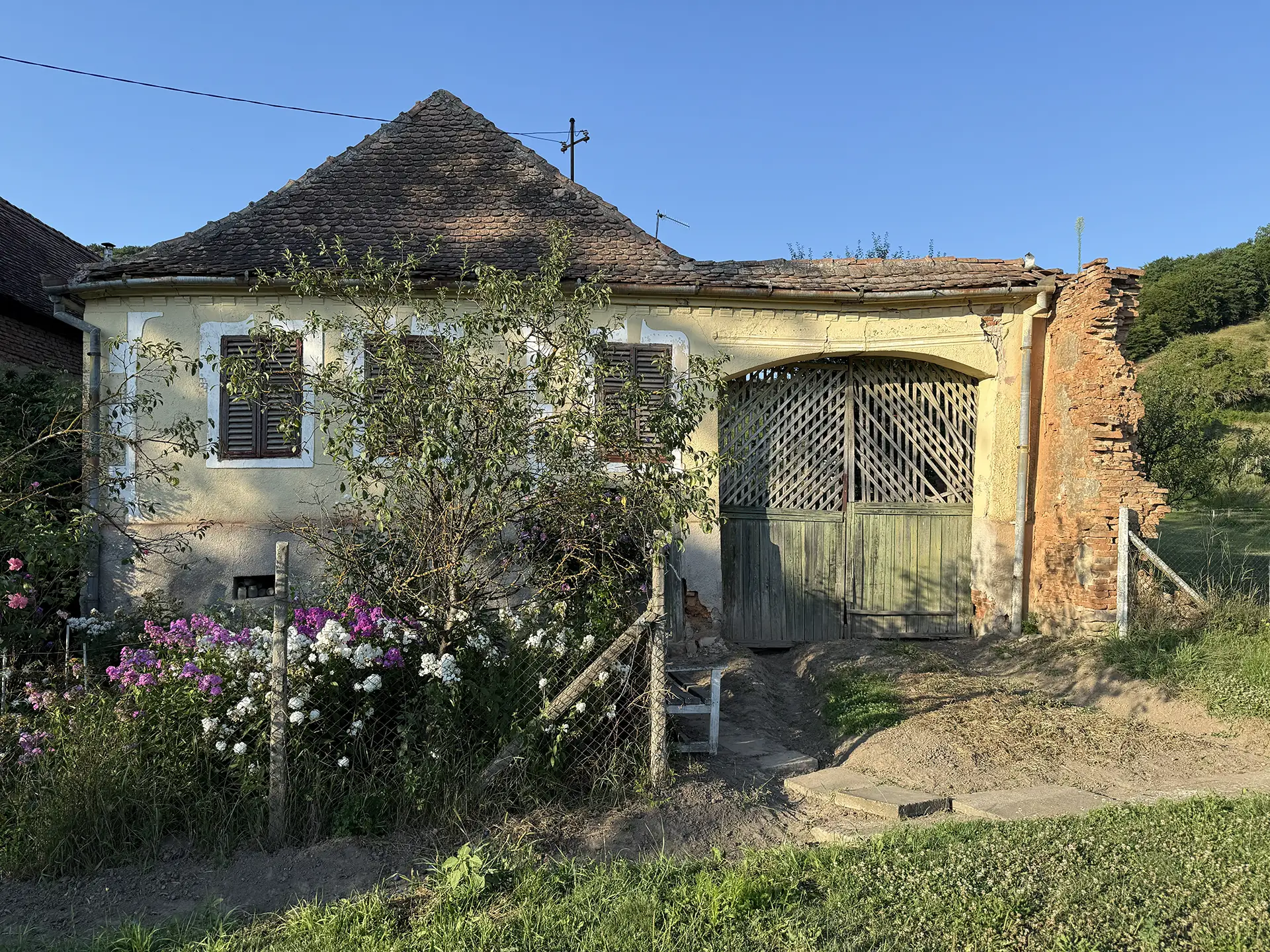
At the center was Cund - a small village between forest and farmland, known across centuries as Kund, Reußdorf or Reisdref. From Cund, roads reached outward: to Viscri and Biertan, to the halls of the Teleki family, the butchers and craftsmen's guilds of Târgu Mureș, and finally Sighișoara. History here doesn't need grand museums to make itself known. It survives in a church nobody can enter, a story passed between generations, or a house staring back at you from across the street. You just have to see that everything's connected. As weird as it might sound - keep reading, all shall be revealed.
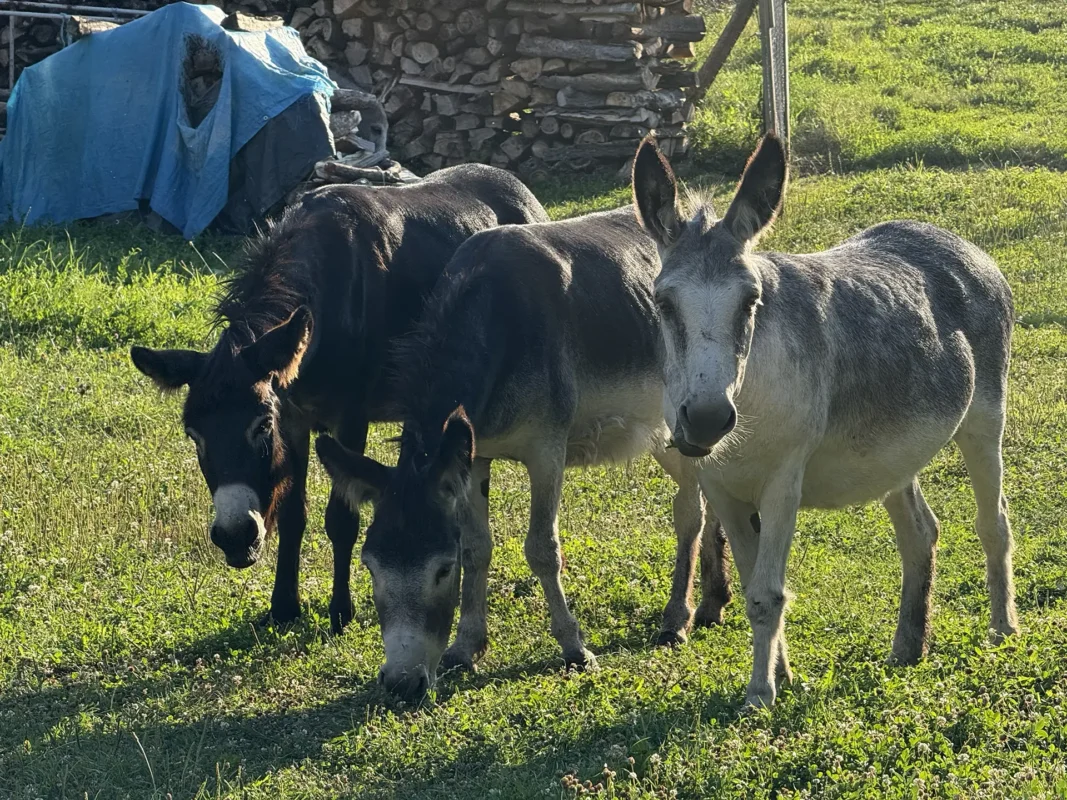
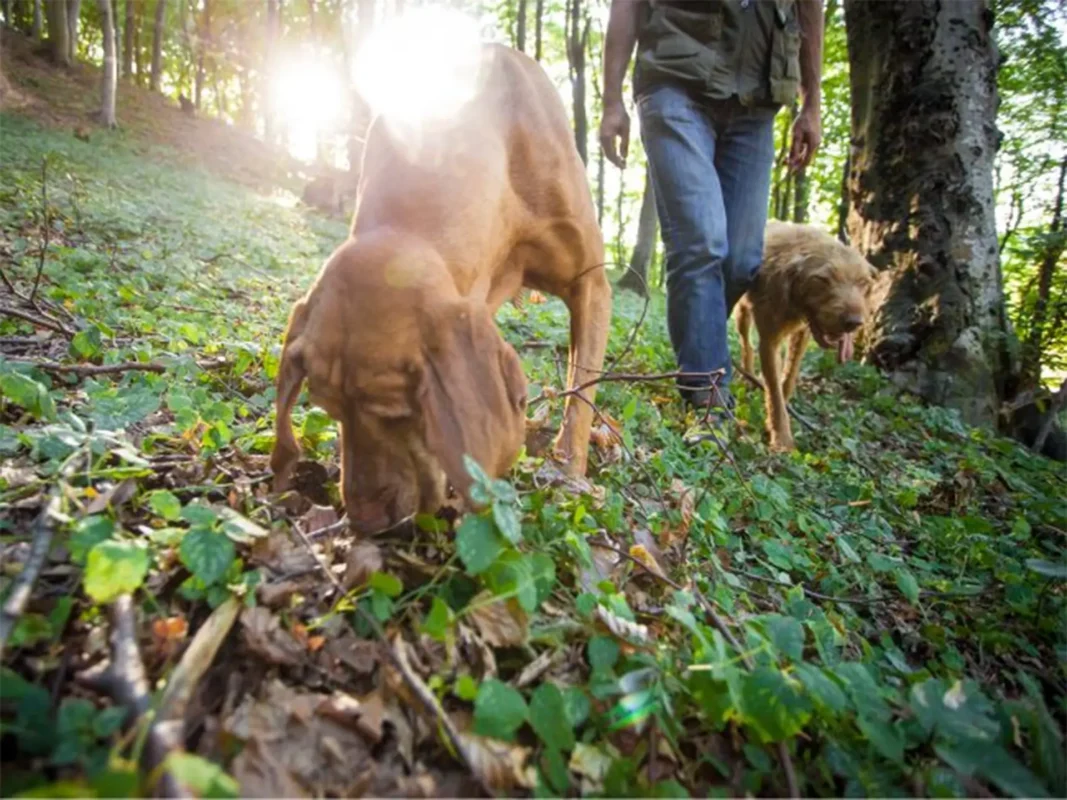
Transylvania has never belonged entirely to history. Beyond the last houses, shepherds today still watch the forests for bears; truffle hunters spend their days searching the earth, while somewhere in those same hills, old tales remember knights and monsters. For a few days, the distance between today and the past millennium felt remarkably small.
Follow me into the rolling hills - through traditional gates, fields and folklore, and into a place I found unexpectedly difficult to leave behind.
Hero art source 1, 2
1.1) Alba Ecclesia
Our journey begins with the first threshold, sometime in the early 1100s - long before tourism and big painted gates. These hills are the sole witnesses of the small Székely community that built a church here around that time.
By the end of the 12th century, Saxon settlers had arrived, transforming the small church into what would eventually become a fortified refuge.
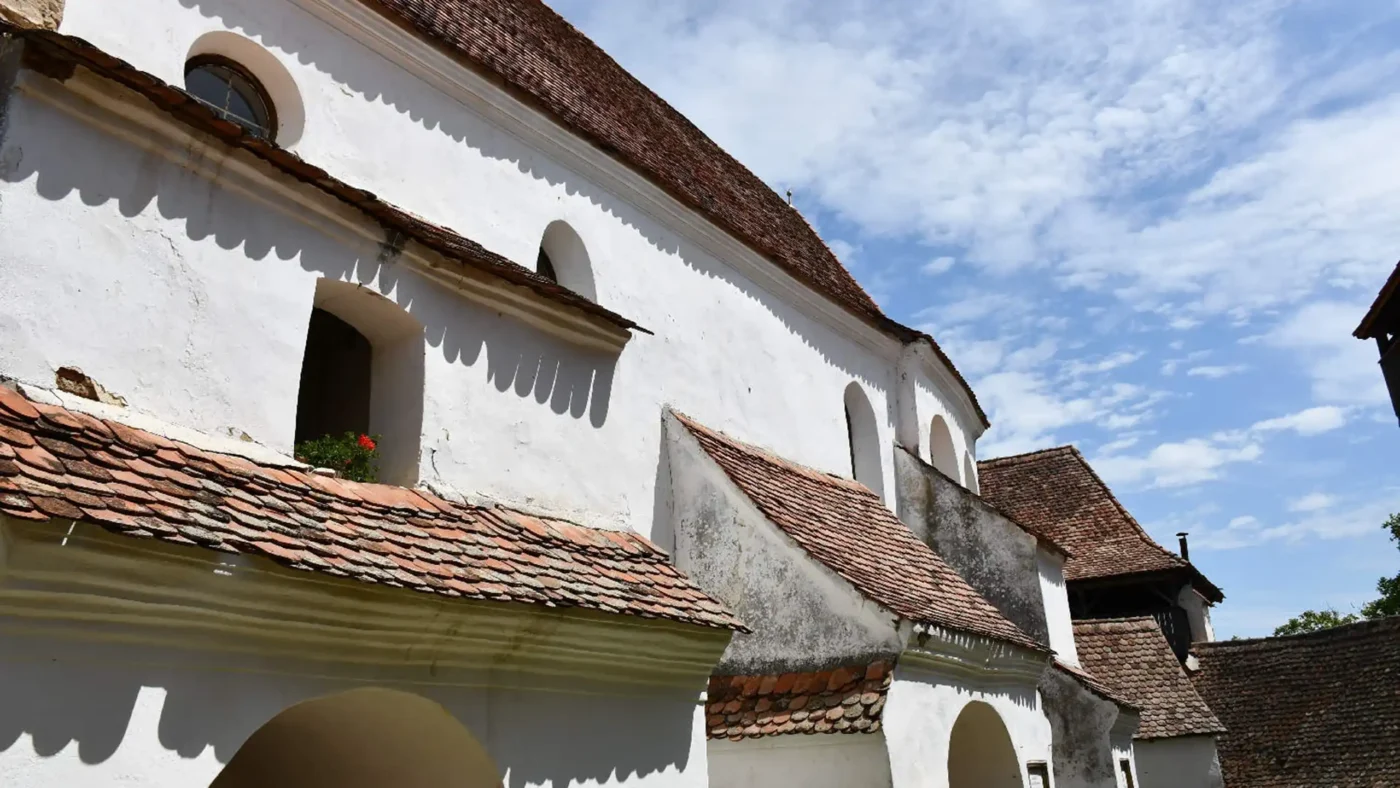
The settlement that developed beneath this center of prayer eventually became Deutschweißkirch, the "White Church" - a village whose identity grew quite literally around the church above it. Centuries later, Viscri, with its remarkably intact medieval settlement pattern, became part of UNESCO's Villages with Fortified Churches in Transylvania in 1999.
Video: Threshold Entry Point #1 - Aerial journey to Viscri, via Google Earth (2026).
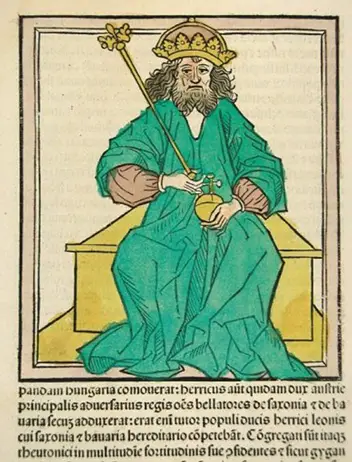
Image: Woodcut of King Géza II of Hungary - 1488
Source🔗
1.2) Hospites Regis
King Géza II approved, and the road into Transylvania opened from the west. From there came farmers, craftsmen, merchants and defenders - hospites, guests of the Crown - who crossed rivers and mountains and made homes among older Székely lands. History would remember them as the Transylvanian Saxons.
The king's guests received privileges in exchange for loyalty, taxes and service, and in 1224 King Andrew II would gather much of this relationship into the Andreanum - the great charter that helped define Saxon life in Transylvania for centuries.
At Viscri, an older church already stood on the hill. Around it, the newcomers raised stone, houses and walls, until prayer became refuge and village became fortress. Géza died in 1162, but his guests stayed. For centuries, they turned the southern hills of Transylvania into a constellation of fortified churches - Viscri among them.
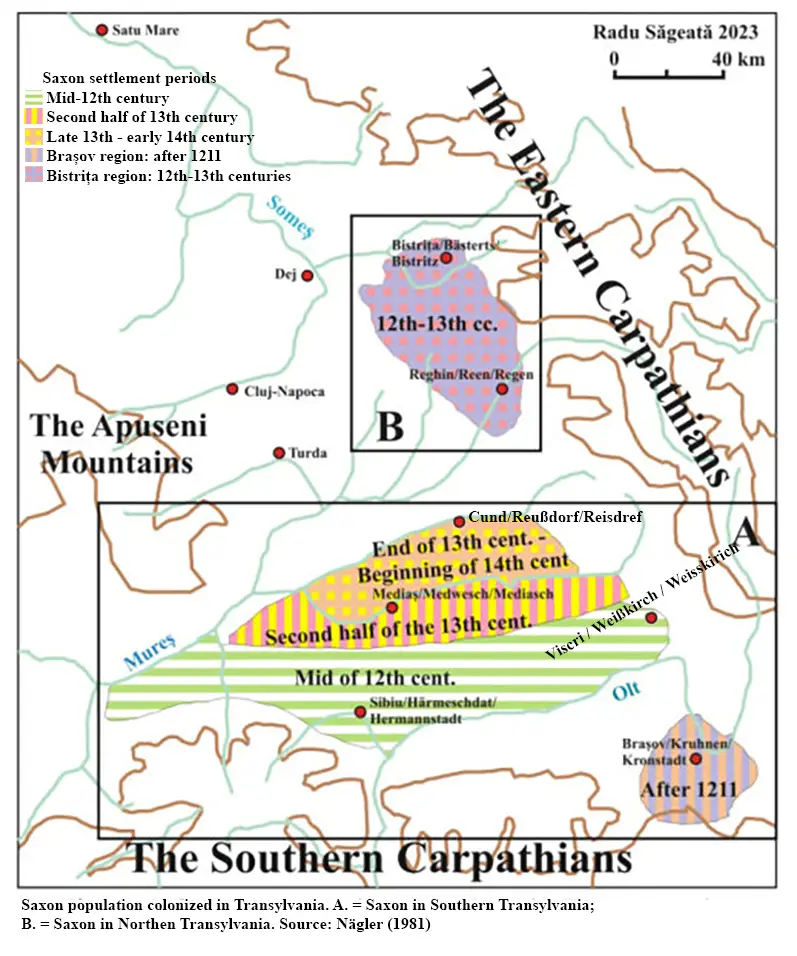
As the map reveals (click/tap on it to reveal it whole), Géza's invitation was only the beginning. From the mid-12th century onward, Saxon settlements spread across southern Transylvania, then farther north and east with each passing generation. Viscri stood among the earlier waves; Cund emerged along the later frontier. What began with royal guests became villages, churches and fortified walls - a new world. By the time the last colors on this map had settled, nearly two centuries had passed.
Source (.pdf): Radu Săgeată (2023), after Nägler (1981). Annotations & legend: Unbound Planet (2026).
1.3) Viscri Today
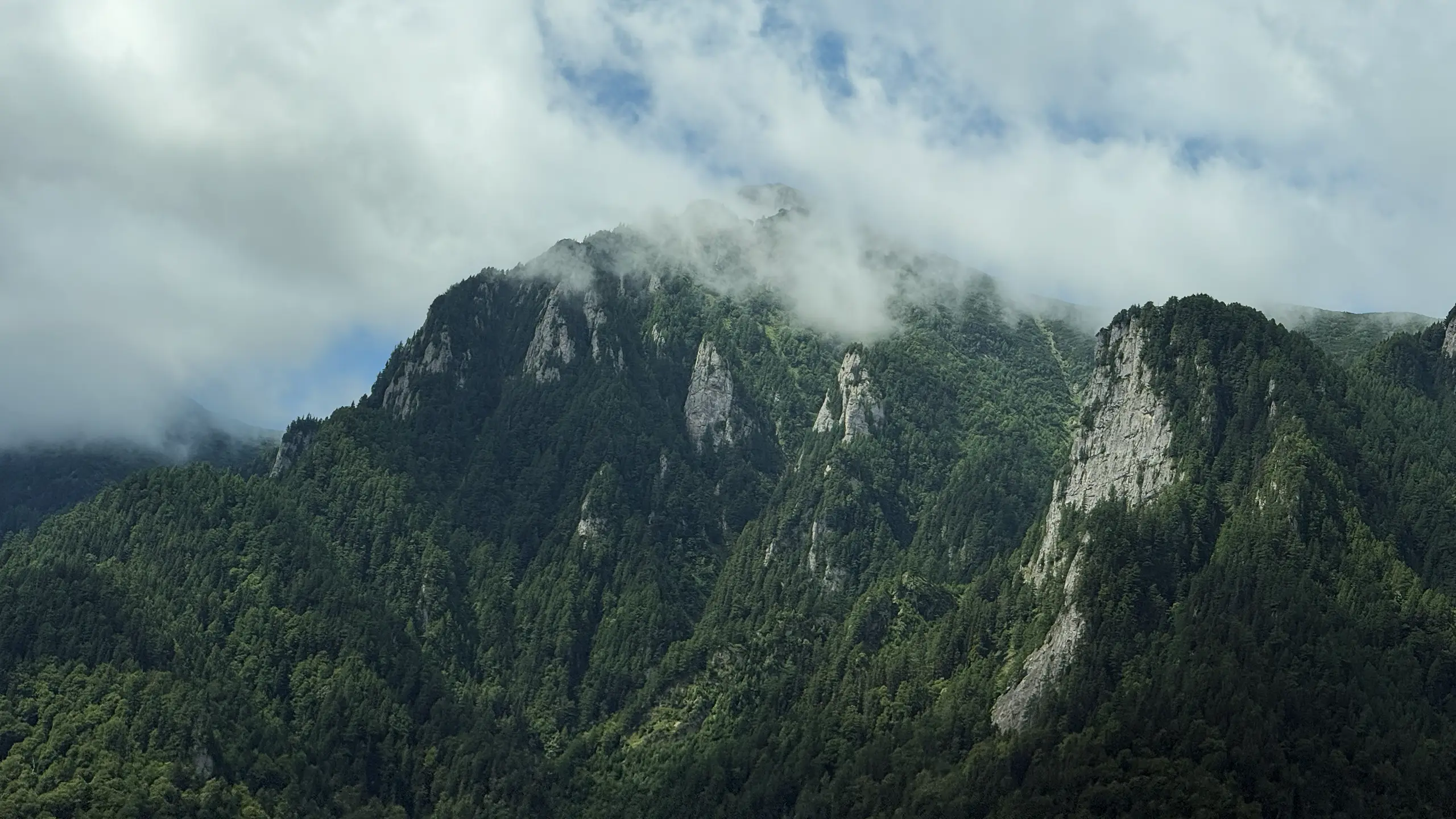
Leaving Bucharest, crack open the Carpathians through the Prahova Valley. Stop from time to time and take in the view; the Bucegi rise beside the road while the urban decibels slowly crossfade into soft summer wind, like some lost collector's edition record. Romania's roads have come a long way and, as of 2026, I consider this route about as good as a road can get around these parts of Europe. The traffic jams, however, remain perfectly capable of turning a simple drive into an expedition with stop-sightseeing included.
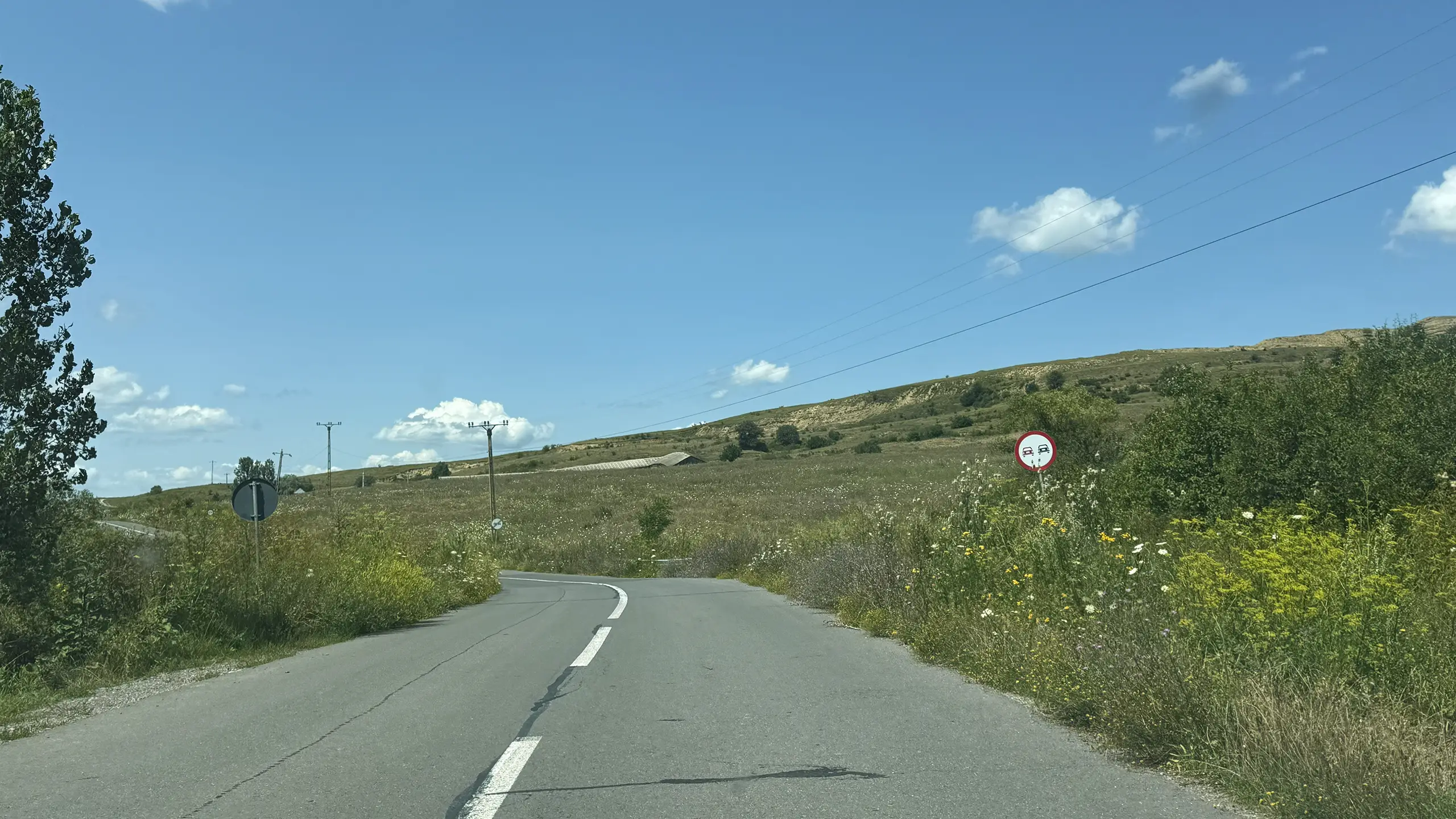
Past Brașov - Kronstadt - the mountains begin to loosen their grip. The turns soften, the horizon widens, and the rolling hills of southern Transylvania take over. Wildflowers crowd the roadside, grass climbs every slope and, after a rainy July, the landscape looked almost excessively alive.
Into the Carpathians, a crossing between worlds.
While in Viscri
Slow down, don't hit the farm animals and get ready to park - unless you have limited mobility, you'll need to leave the car outside the Hauptstraße, in the designated parking areas, unfortunately under the full August sun. I didn't mind. It is for the best.
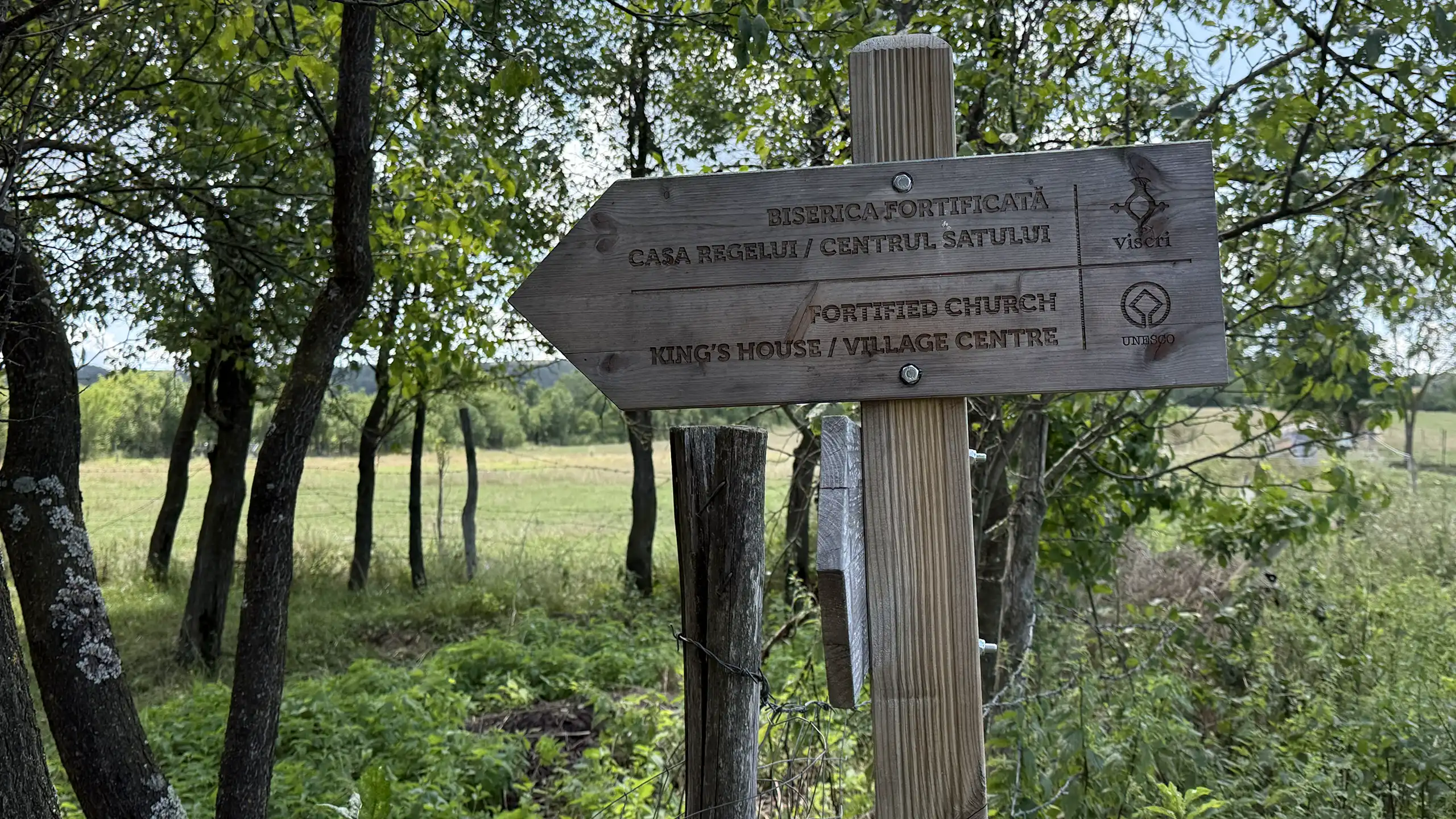
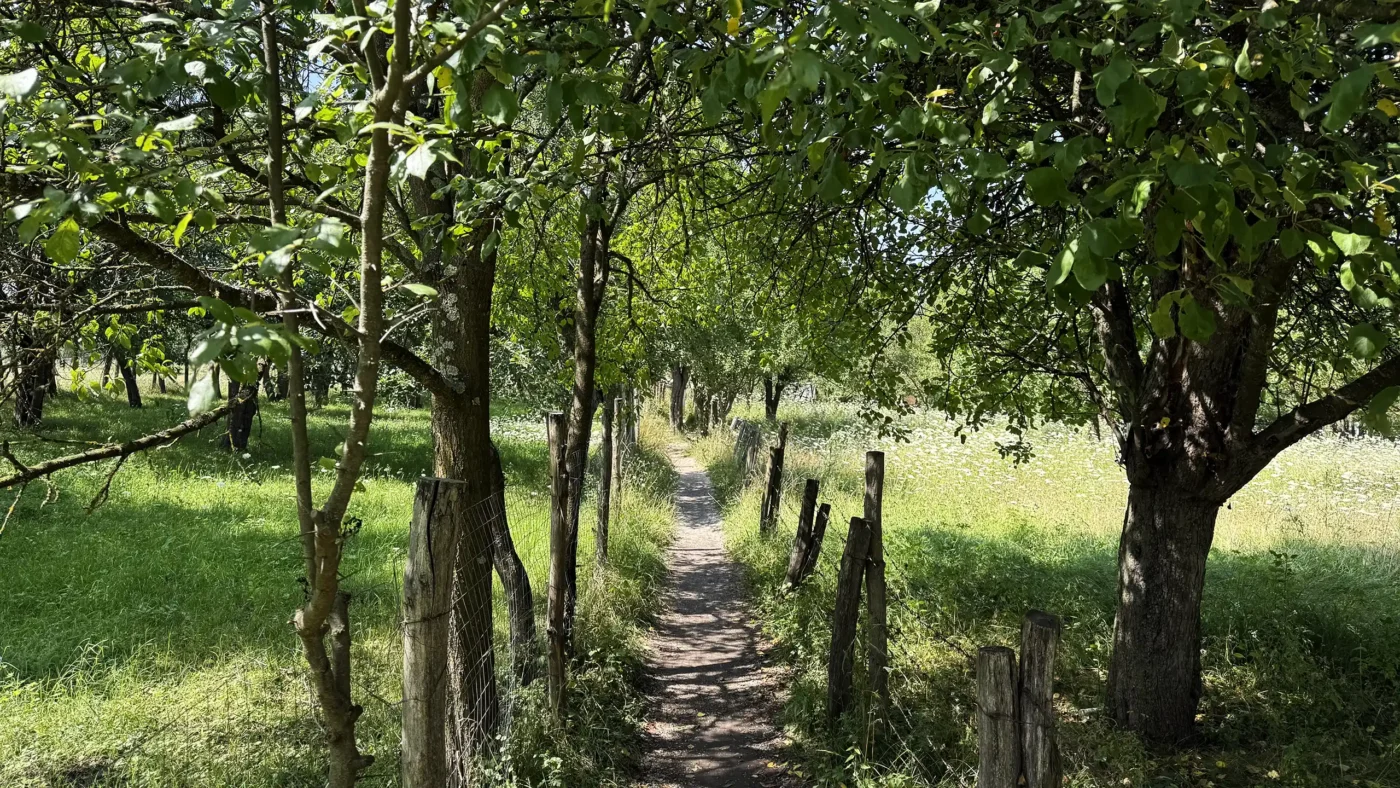
Even better, to reach the center from the parking areas, you can cut through the orchards and backyards of locals who agreed to open their property as a shortcut. A practical solution, but also an unexpectedly good excuse to wander through places you'd normally only glimpse from the road.
After the short hike, Viscri opens up fully. The Kingdom Come: Deliverance vibe is maxed out - only this time it's for real. If you remove the few signs of modern life (electricity and cars), the century becomes kind of difficult to identify. It's so alive, yet laid back, that King Charles III even bought his own house here.
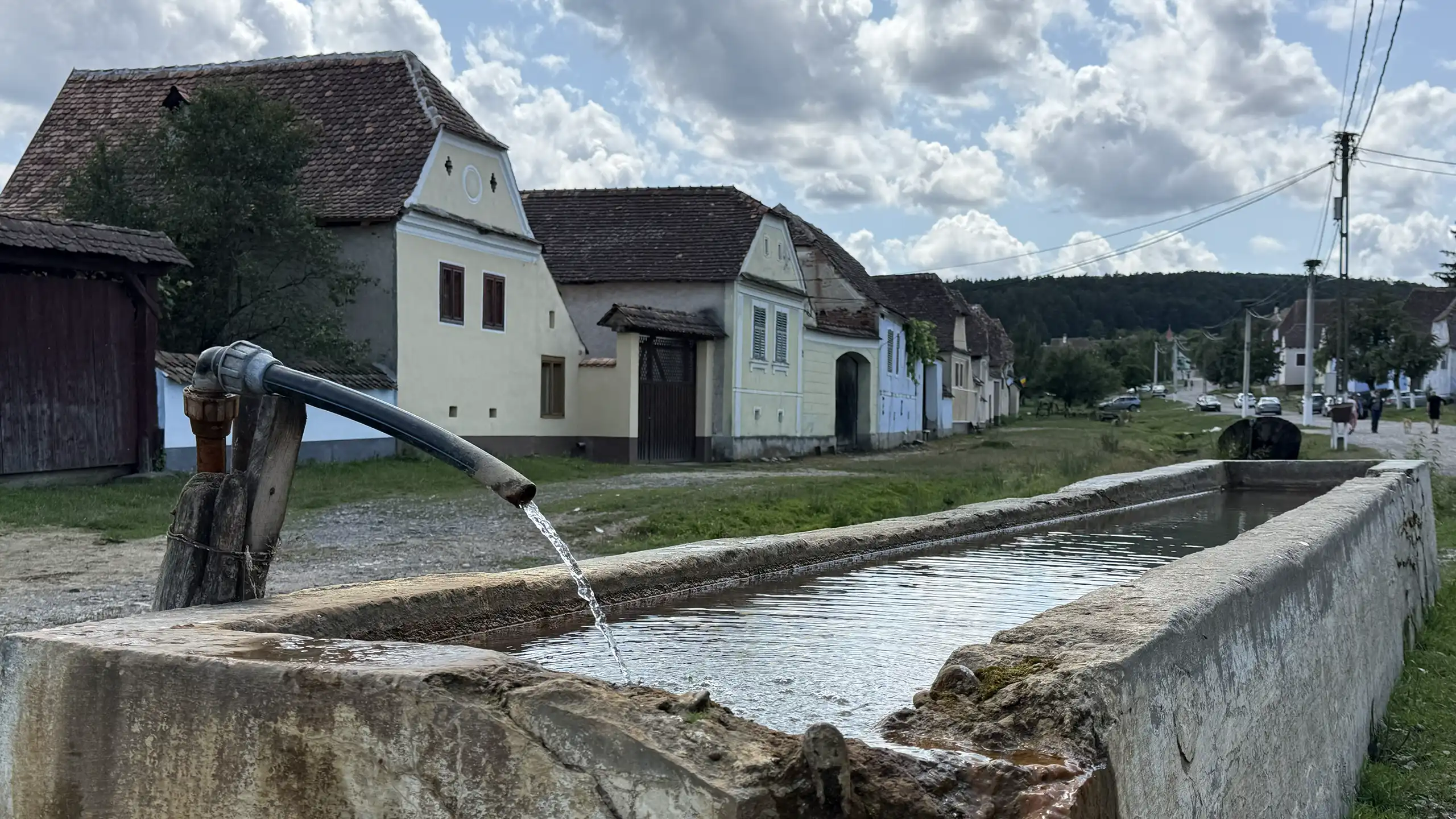
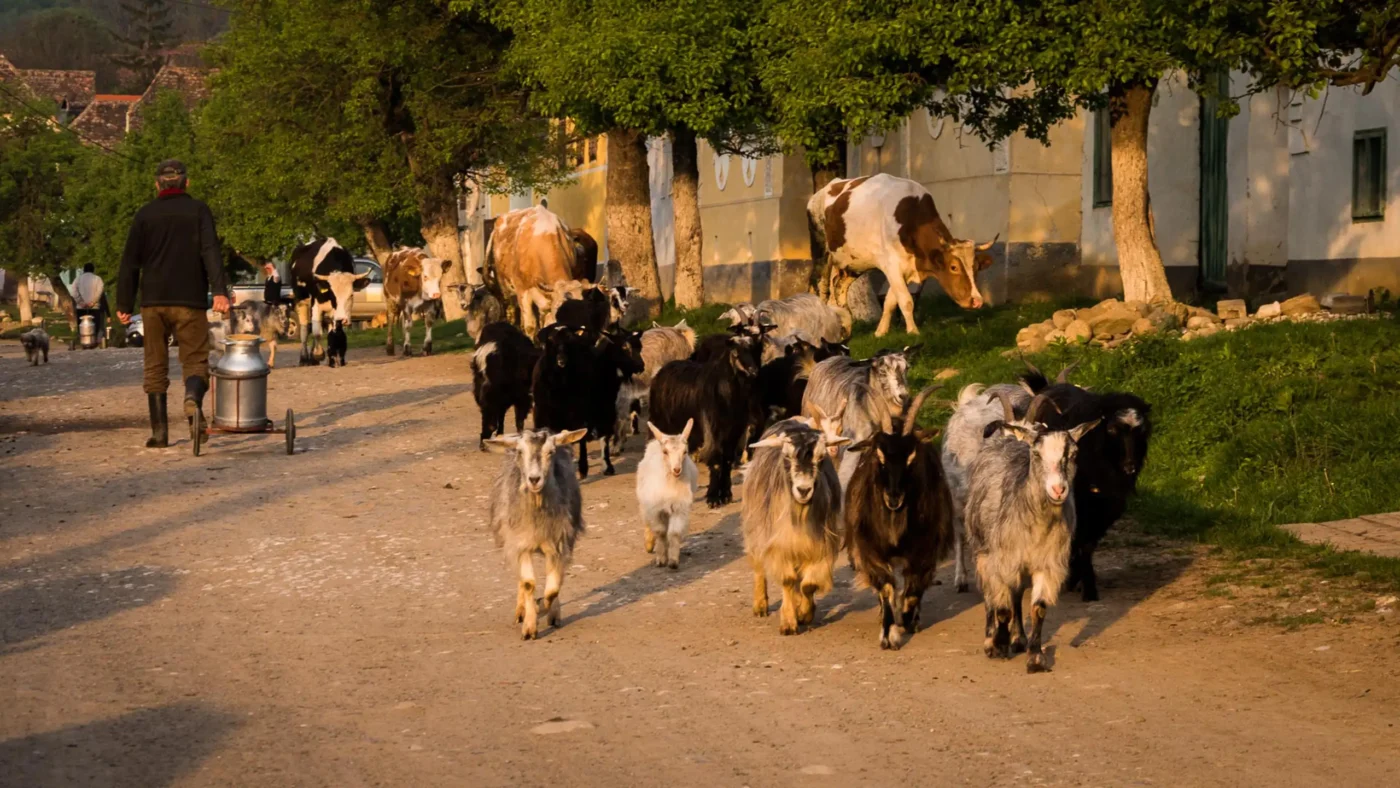
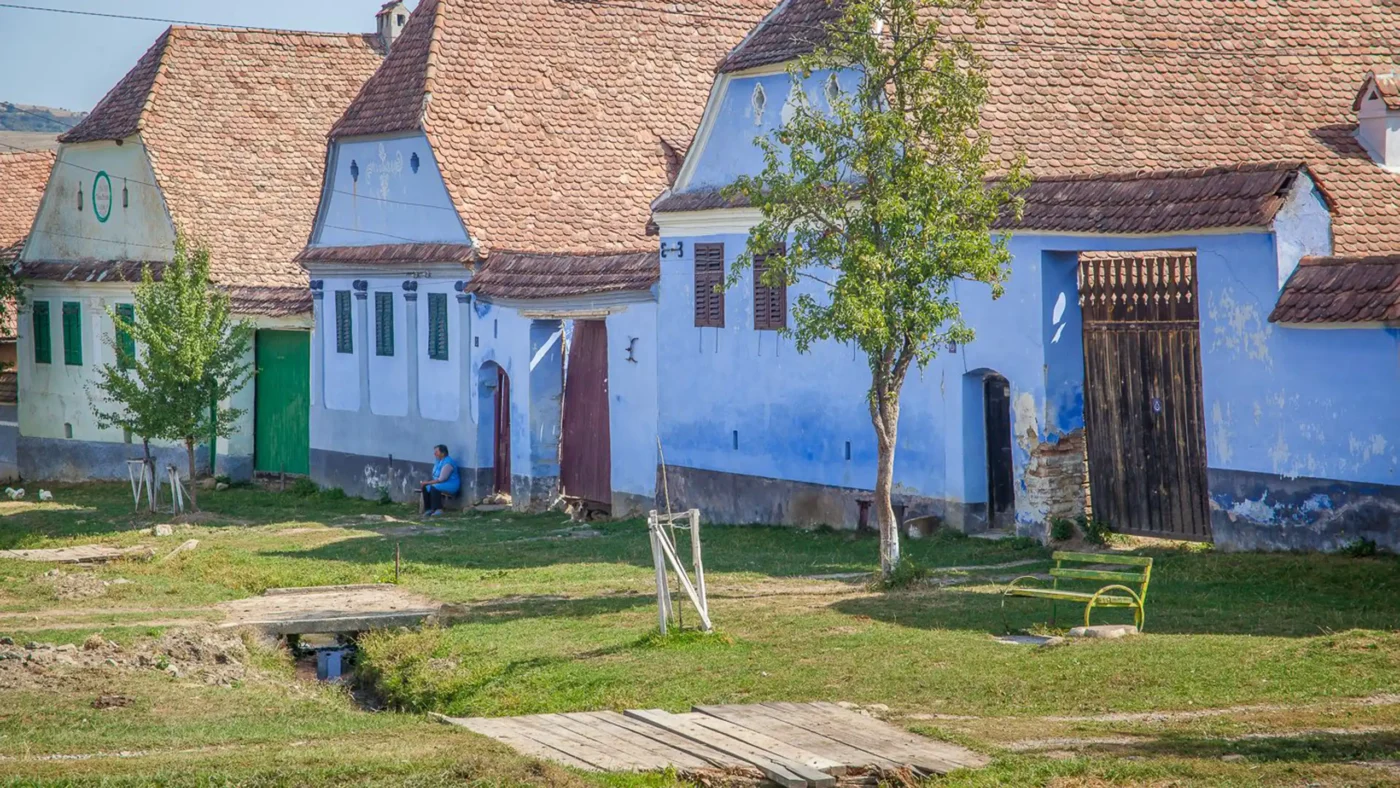
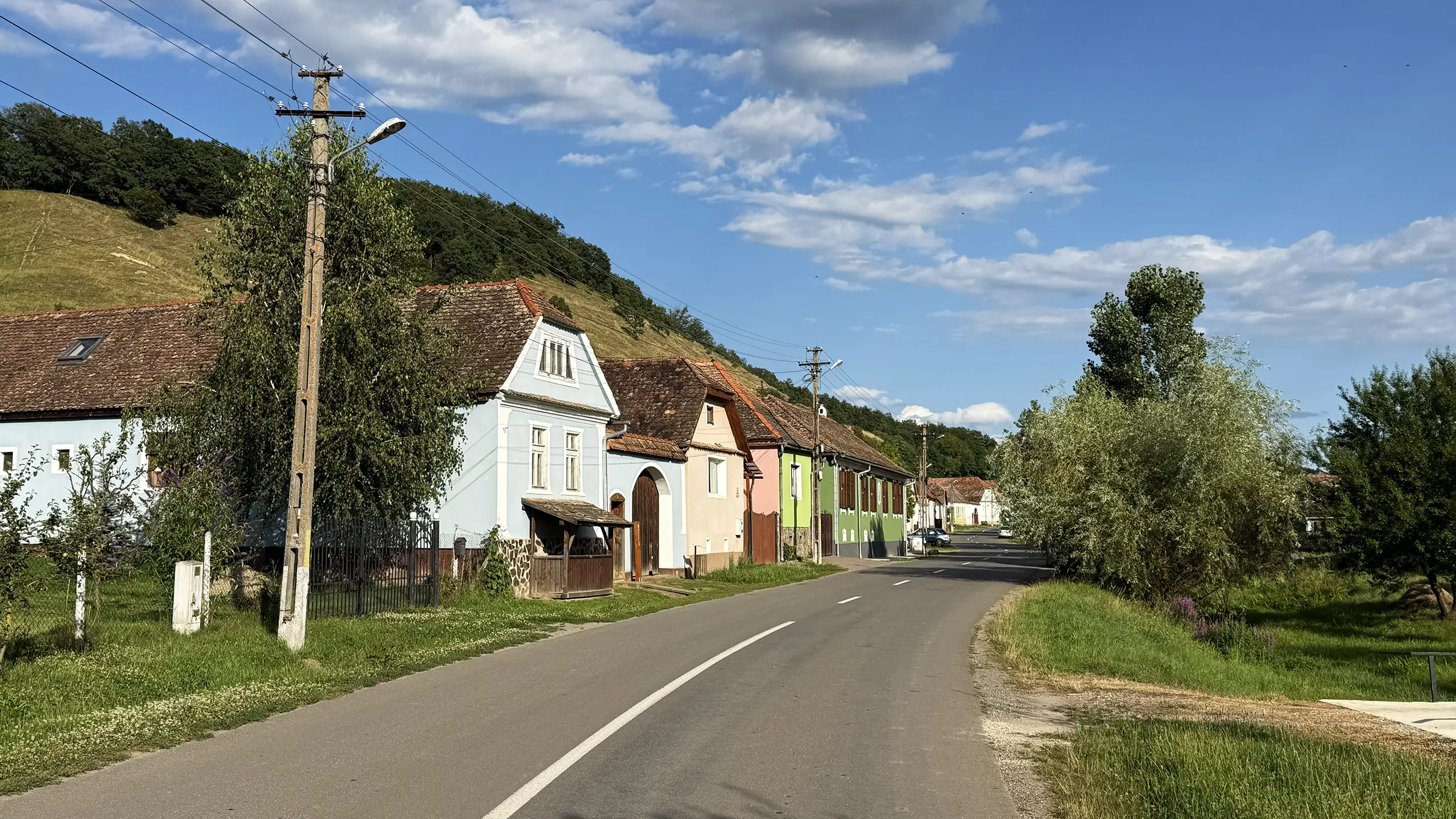
The main street is where Viscri feels least like a museum. People still sit outside their houses, livestock still interrupts traffic and the old Saxon houses continue doing exactly what they were designed to do: shelter families, animals, tools and work behind one continuous street wall. UNESCO may preserve the pattern, but daily life is what stops it from becoming just scenery.
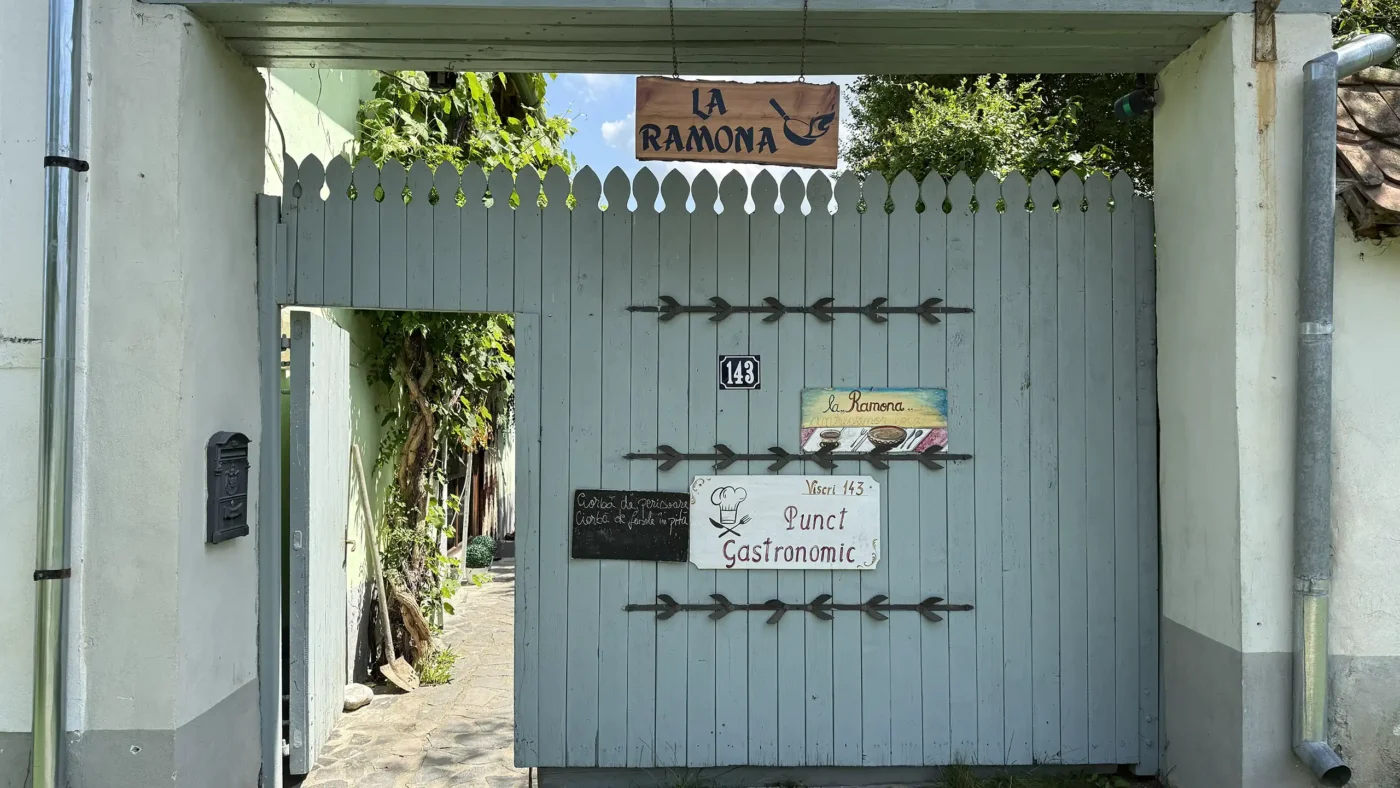
Some of these photos are mine, while others were captured by photographers far more experienced than me, whose work I've sourced below. By that point, though, I was getting seriously hungry and my mind was no longer particularly interested in composition. I stopped at Ramona's, Viscri 143, for ciorbă de legume.
After the meal at Ramona's, I lingered a little longer among the houses and exchanged a few words with the locals - the sort of conversation that belongs to villages: weather, animals, roads, who came through, who stayed. Nothing important on paper.
Then Viscri let me go. By late afternoon the road had emptied, the light had softened, and the hills began folding over one another again. Villages appeared and vanished between fields, with fortified church towers keeping watch above them. I tried to imagine what those hills must have looked like to a Cuman rider approaching from afar - stone walls on the horizon, bells sounding somewhere ahead, defenders gathering above the gates. The farther I drove, the quieter Transylvania became. It felt more and more like a fantasy tale.
Somewhere beyond those bends was Cund - still unseen. The second threshold was waiting.
2.1) Reisdref bound
The second threshold appears in writing in the early 14th century, but the valley was older than the ink. Cund sat quietly between the Târnava Mare and Târnava Mică, a small settlement shaped by Saxon hands, feudal estates and the slow rhythm of agriculture.
Across the centuries, the name changed with the people speaking it: Cund, Kund, Reußdorf, Reisdref. Different tongues, same valley. The houses, fields and church stood ground while kingdoms shifted around them.
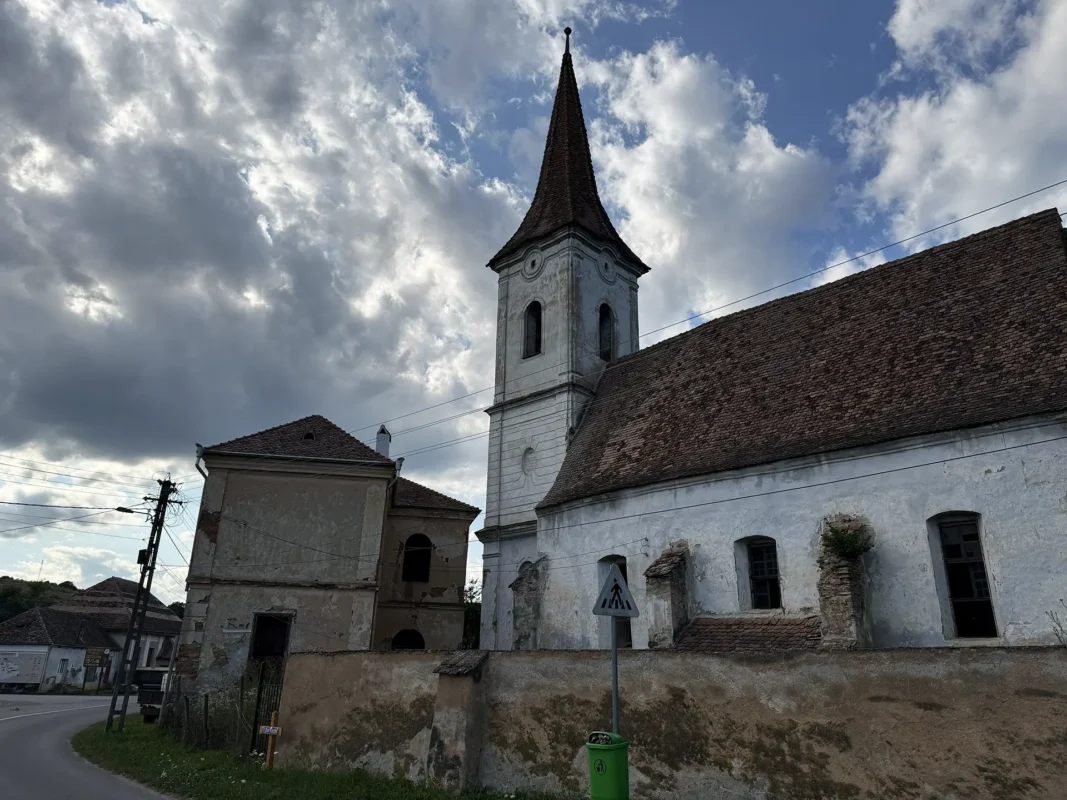
By the 15th century, a Gothic church stood at the heart of the village, later joined by a bell tower rebuilt in 1804. Its defensive walls are now almost gone, but the church still carries the outline of the old Saxon world that once filled these streets.
Video: Threshold Entry Point #2 - Aerial journey from Viscri to Cund, via Google Earth (2026).
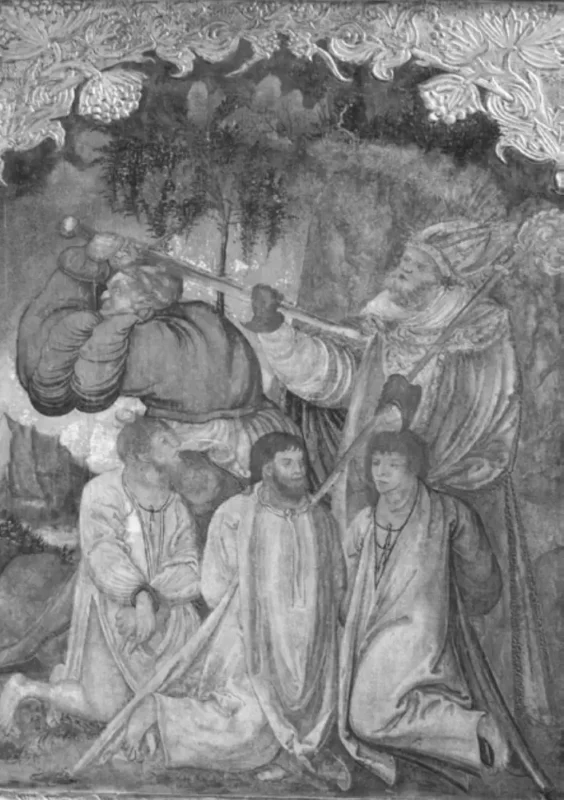
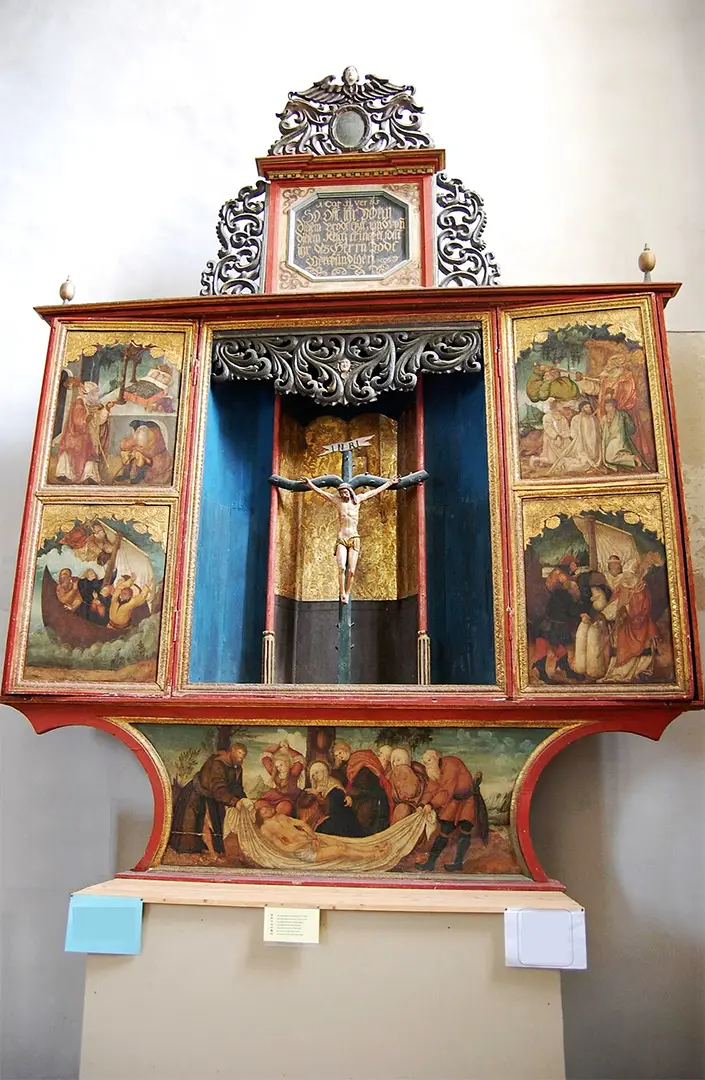
Actual Cund altar panel: Saint Nicholas saves three innocent men from execution. Early 16th century; now preserved in Sighișoara's Church on the Hill. Source: Adrian Stoia, 2016, Fig. 19, p. 46.
2.2) Sanctus Nicolaus
By the 15th century, Cund had raised its own Gothic church, dedicated to Saint Nicholas - protector of travellers, sailors and those who found themselves in need. In the old stories, Nicholas crosses the line between bishop and legend: saving innocents from execution, calming storms, rescuing the desperate and appearing whenever the road ahead turns dark.
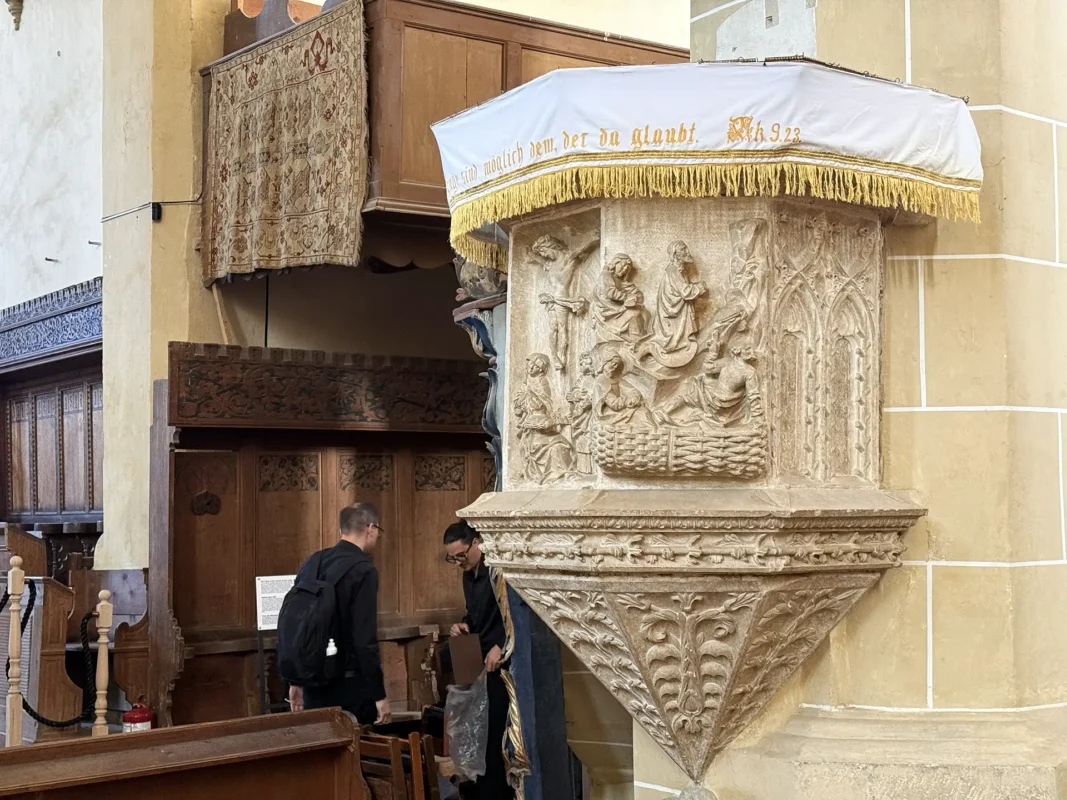
His image once watched over Cund from a painted triptych altar. Opened, it told the miracles of the saint; closed, it revealed scenes from the Passion of Christ. The altar survived even as much of the fortified world around it did not, and today it rests far away in Sighișoara's Church on the Hill.
Cund itself lived a less miraculous history. Noble families fought repeatedly over the right to possess it, most households fell under feudal rule, and only a few remained free. Yet the village endured between the two Târnave, with Saint Nicholas still written into its oldest stones.
Click/tap on the image to reveal it whole.
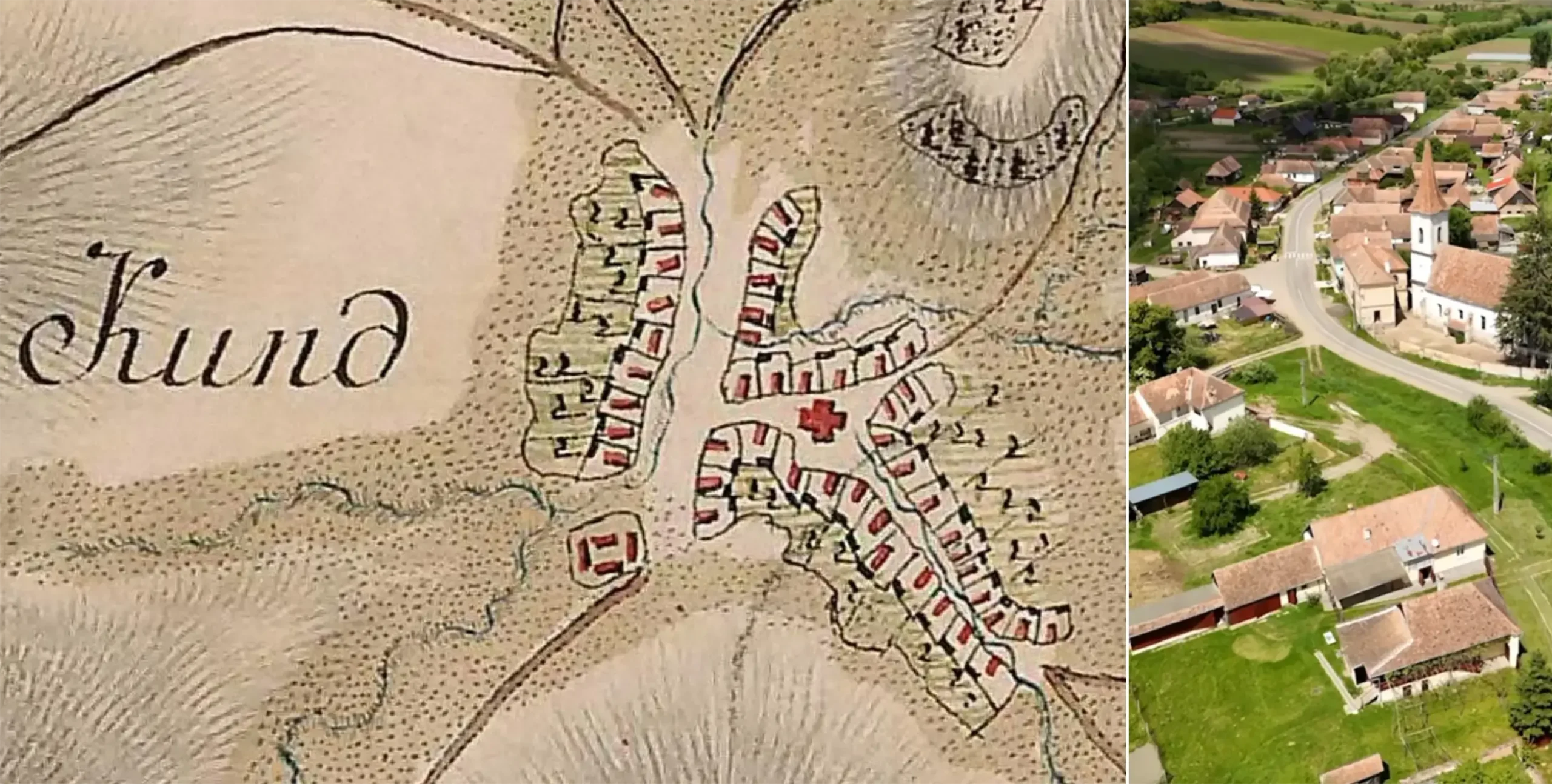
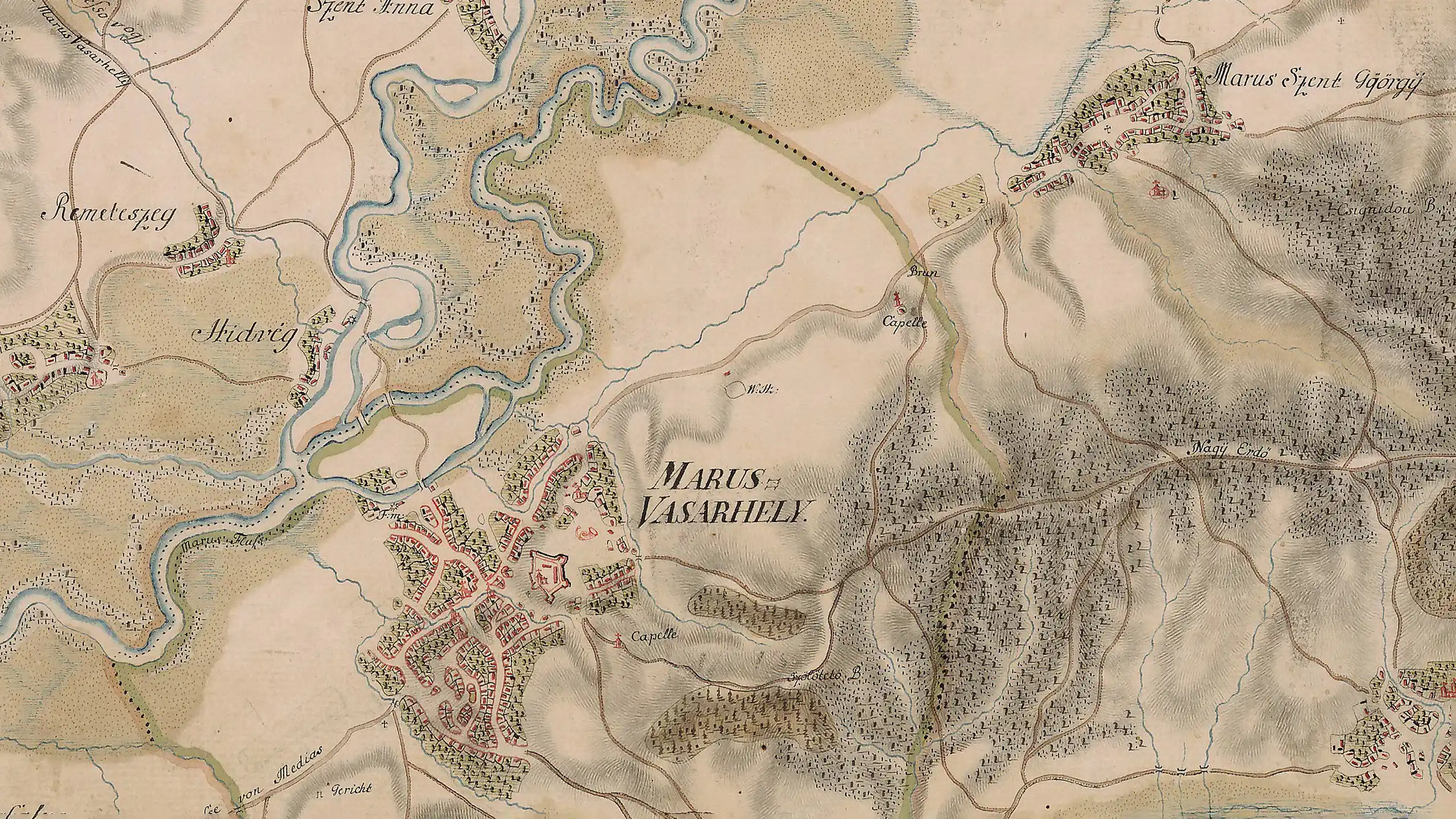
By the late 18th century, Kund was already firmly written into the landscape. The First Military Survey of the Habsburg Monarchy records a compact village gathered around its church, lanes and cultivated plots, enclosed by the same folds of terrain that still define Cund today.
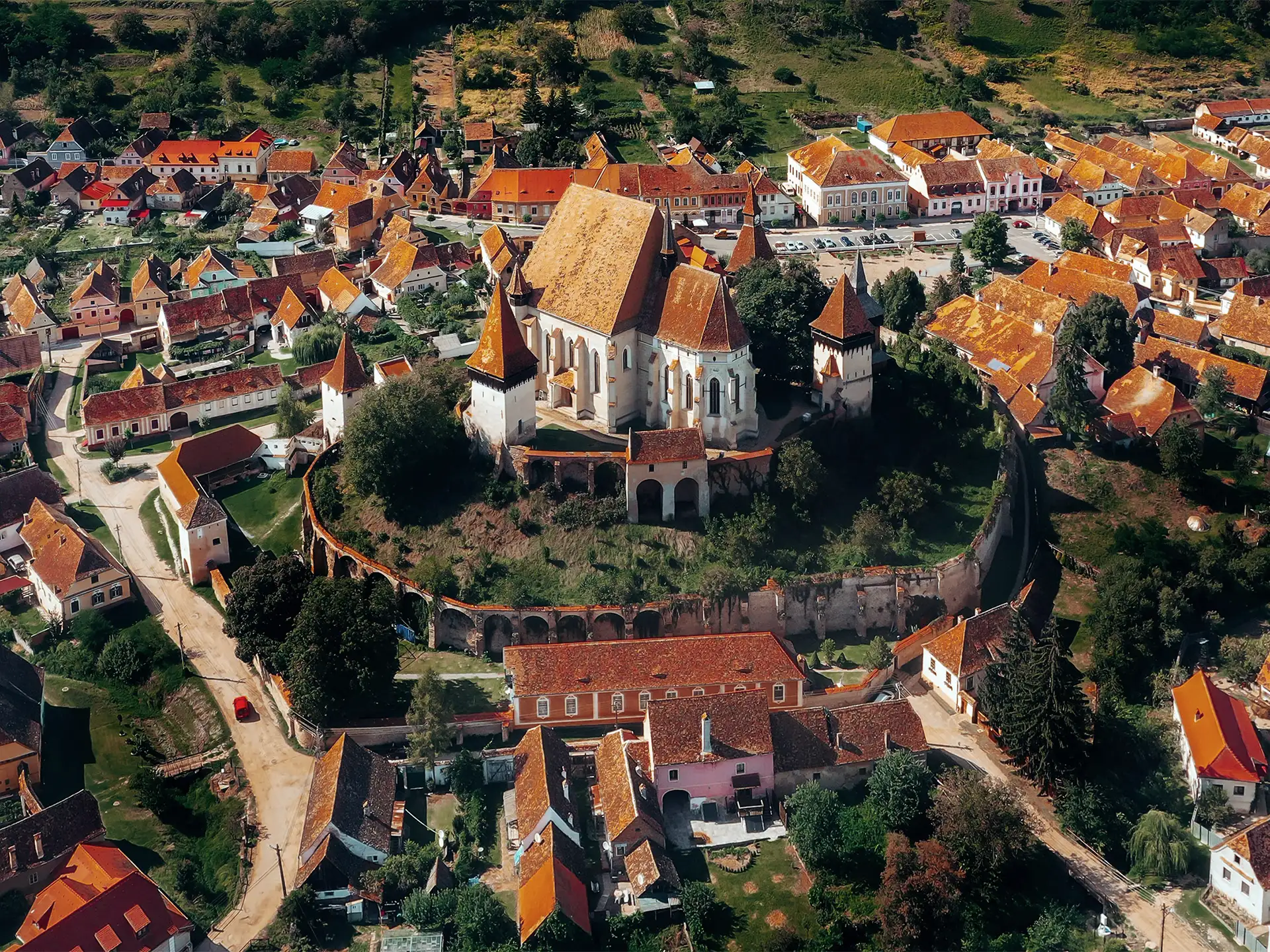
Put the old map (source) beside the modern aerial view (credits: Valea Verde Retreat) and the resemblance is almost unsettling. Roofs have changed, roads have widened and generations have come and gone, yet the bones of the village remain. Names shifted. People shifted. The valley did not.
2.3) Cund, the Main Course
The last stretch to Cund is not difficult, but it does get increasingly quiet. Main roads turn into smaller roads, smaller roads into roads with almost no signal. By then, the fortified churches, painted houses and Saxon names had already done their work on me. Cund felt less like another stop and more like the point where the trip finally exhaled - and exhale is where I belong.
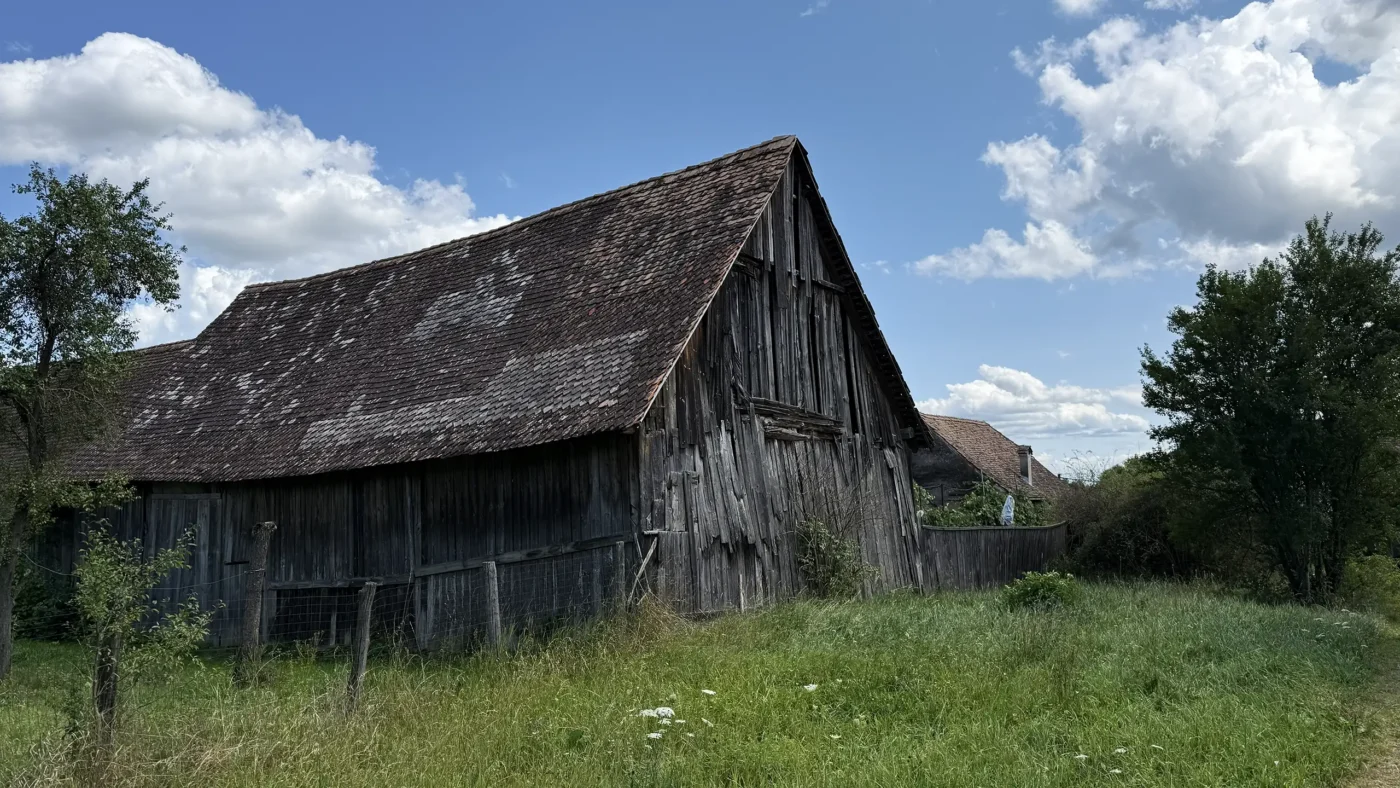
The village reveals itself slowly. A few houses first, then barns, gardens, animals and the old church rising above them. No grand entrance, no tourist choreography - just a road bending into a settlement that seems perfectly comfortable being left alone. After Viscri, which wears its UNESCO status rather gracefully, Cund feels almost secretive by comparison.
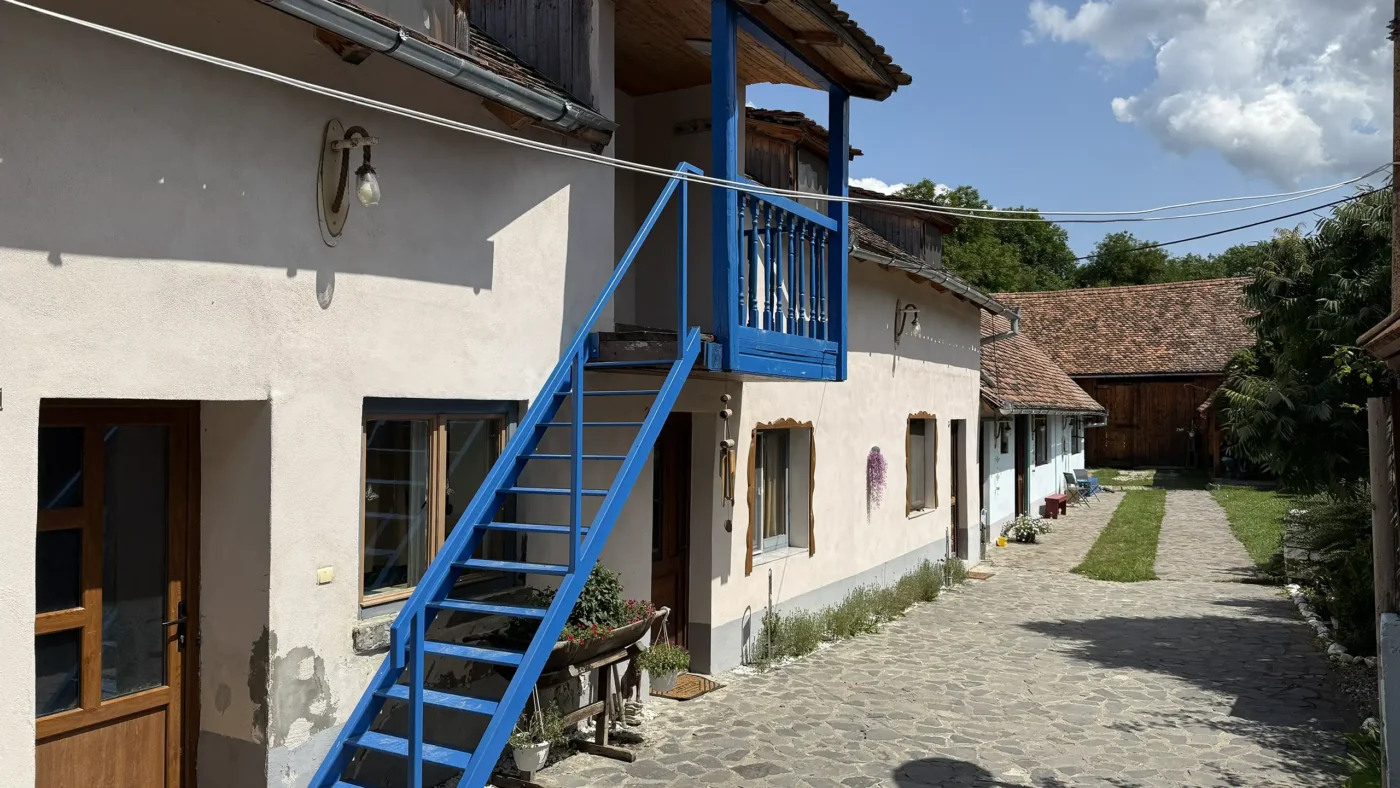
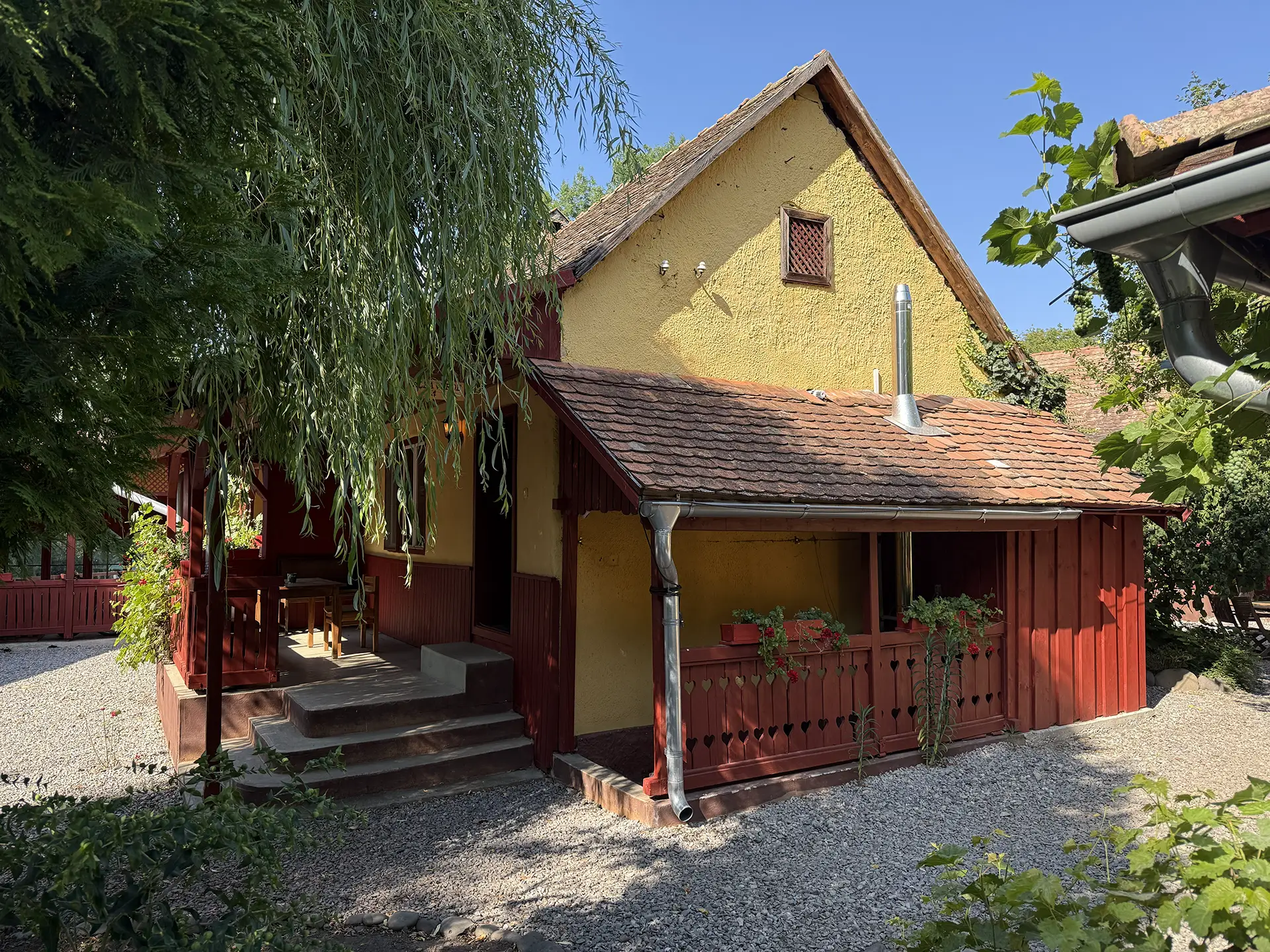
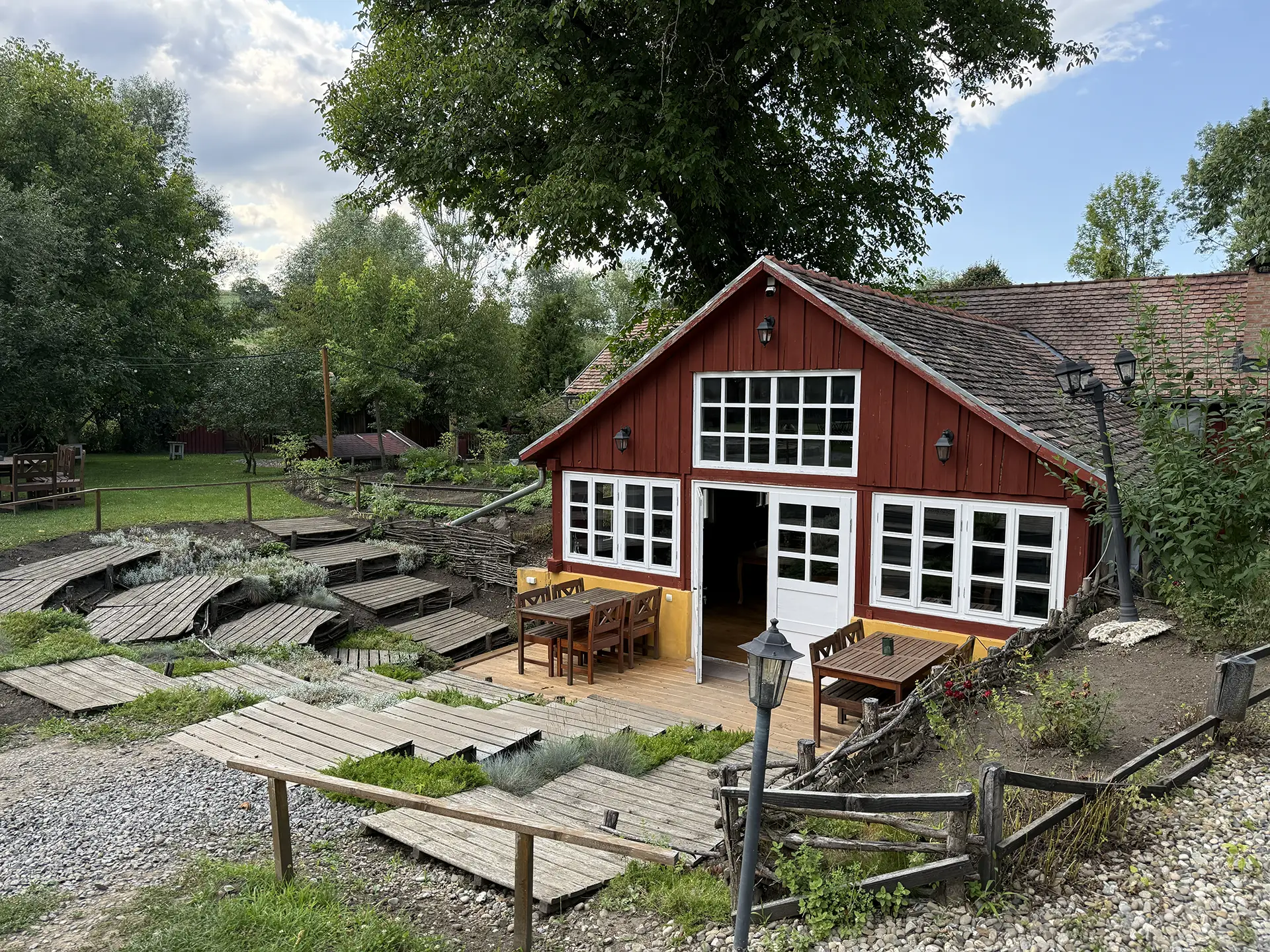
Valea Verde is not really a hotel in the usual sense. There is no single building keeping everyone under one roof; instead, the retreat is scattered across Cund, using restored village houses, apartments and former Saxon properties as places to stay. You sleep inside the village rather than beside it, which makes the whole thing feel less like checking into a resort and more like temporarily borrowing a piece of Cund.
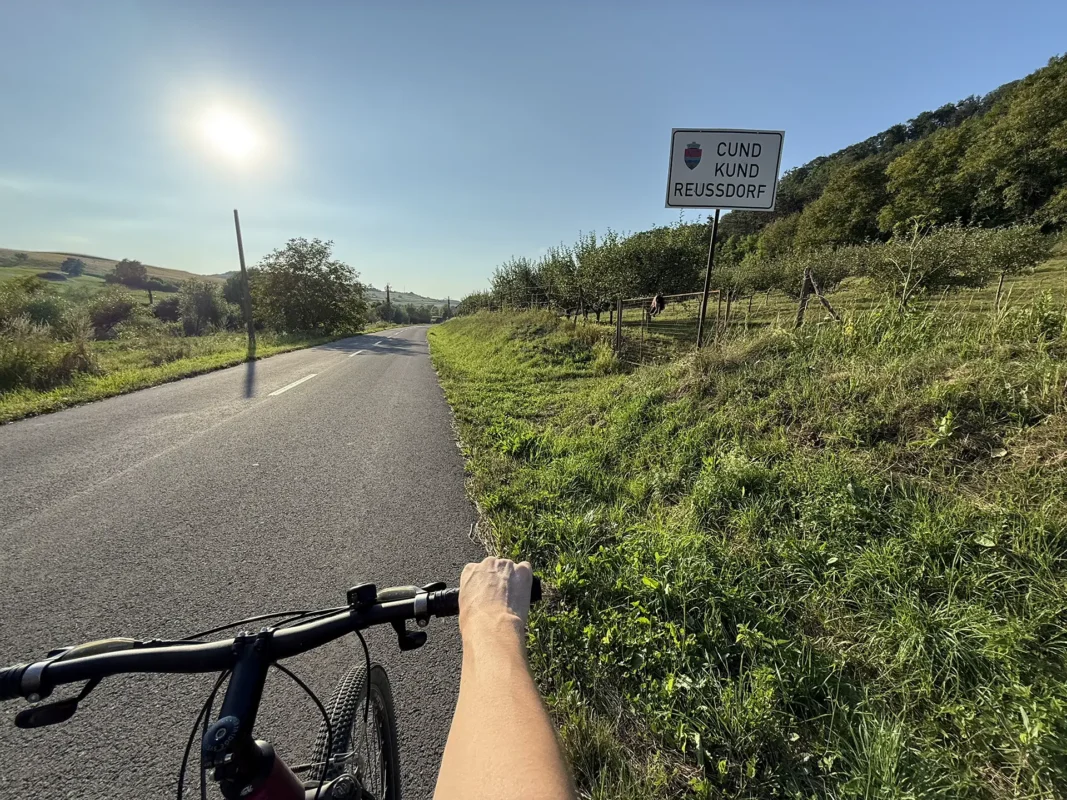
The rooms are spread between several houses, while the restaurant and common areas sit elsewhere, so a stay naturally involves walking the village itself. If walking isn't your thing, you can rent a bike. If cycling isn't either, you can always drive - although, if your health allows it, I'd strongly recommend staying on foot. Cund rewards the slower pace.
Food & drink, return to the room - each small movement becomes another excuse to once again pass old gates, gardens, and whatever livestock happens to have business on the road that day.
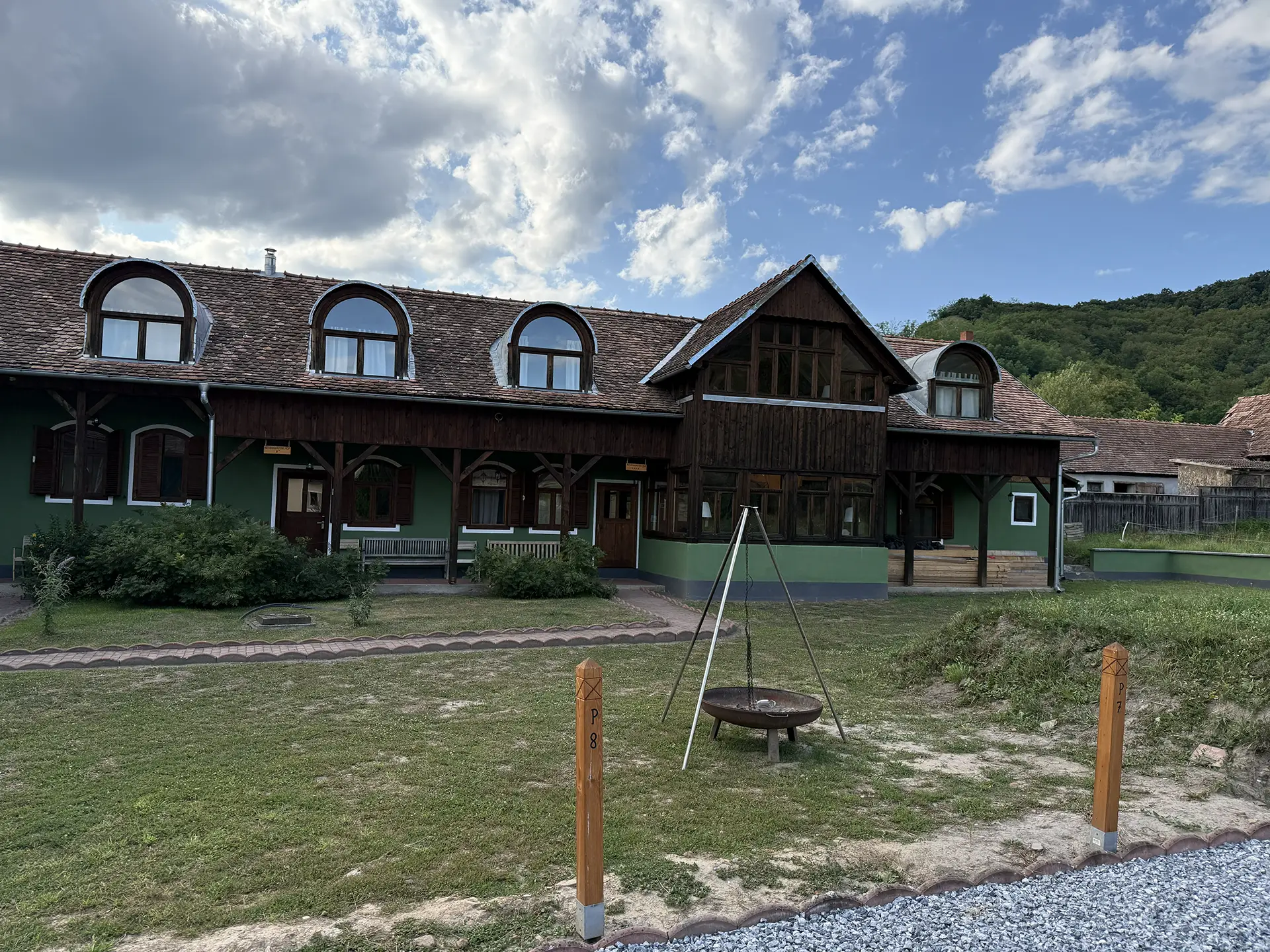
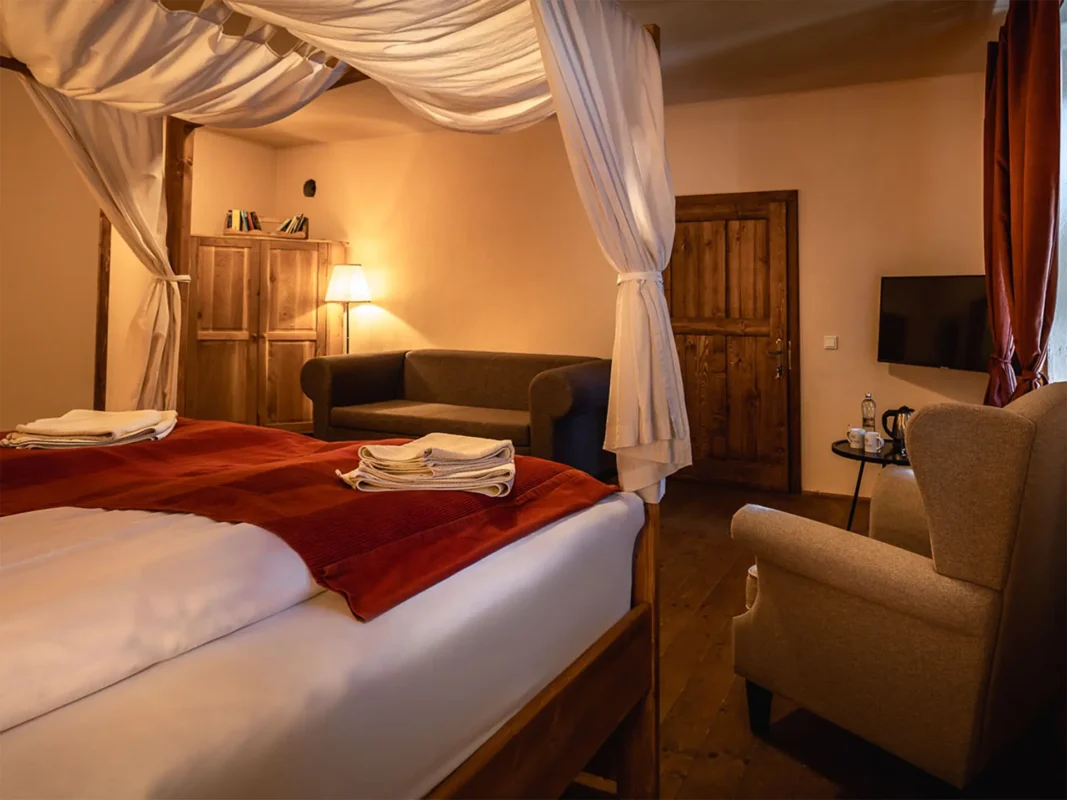
I checked into Reussdorfer Hof, apparently the largest house in the village, dropped the luggage and went straight back outside. The streets were almost empty. Dogs treated every gate as a watchtower, and somewhere behind the houses sheep were settling in for the evening. This was the main course.
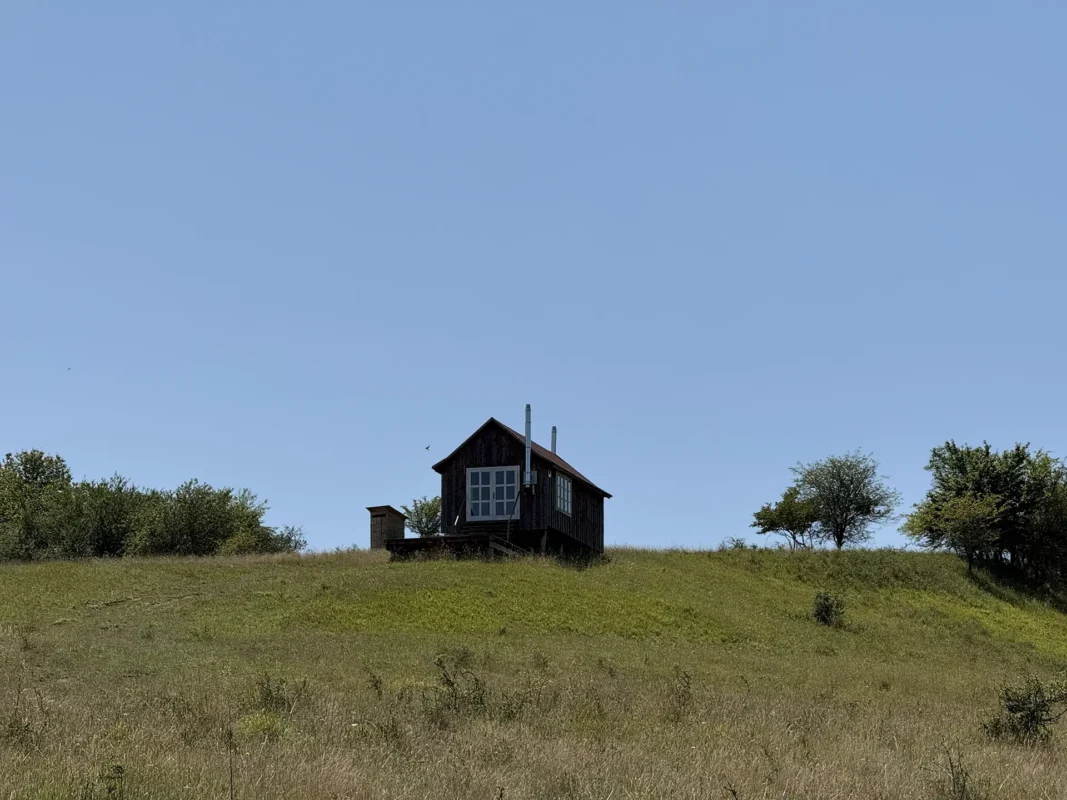
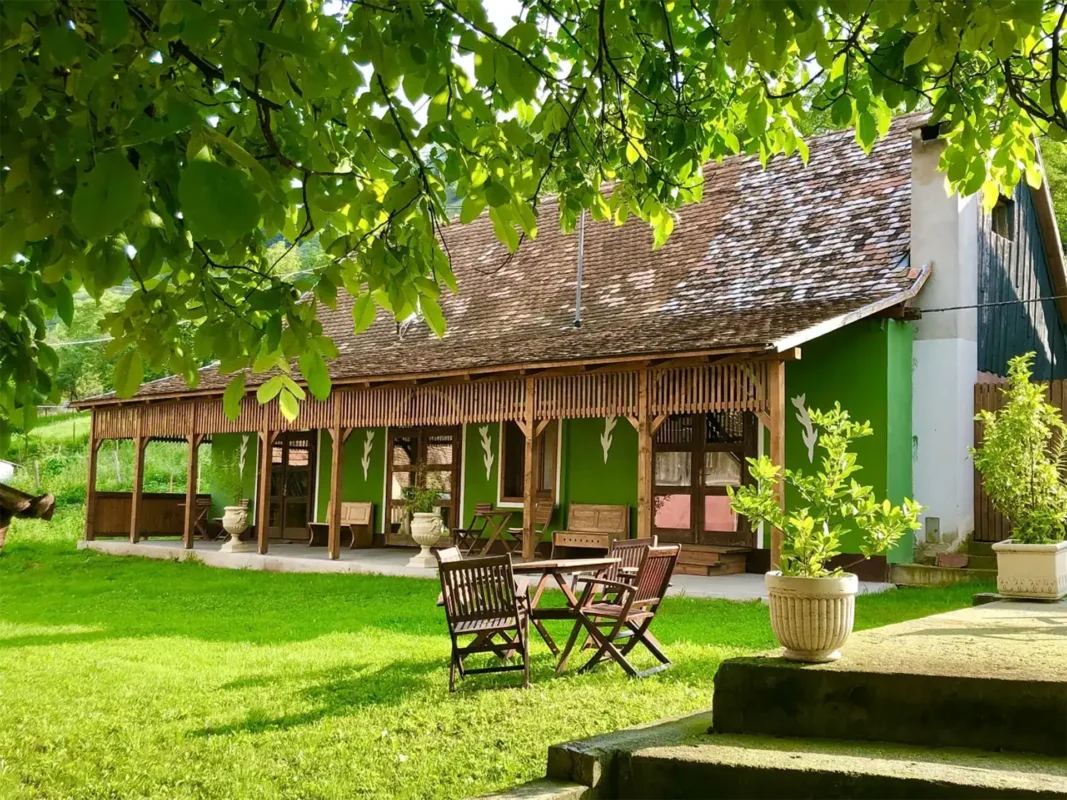
Reussdorfer Hof - my place - is the green house. A great example of what big yards these Saxon houses hide behind their gates.
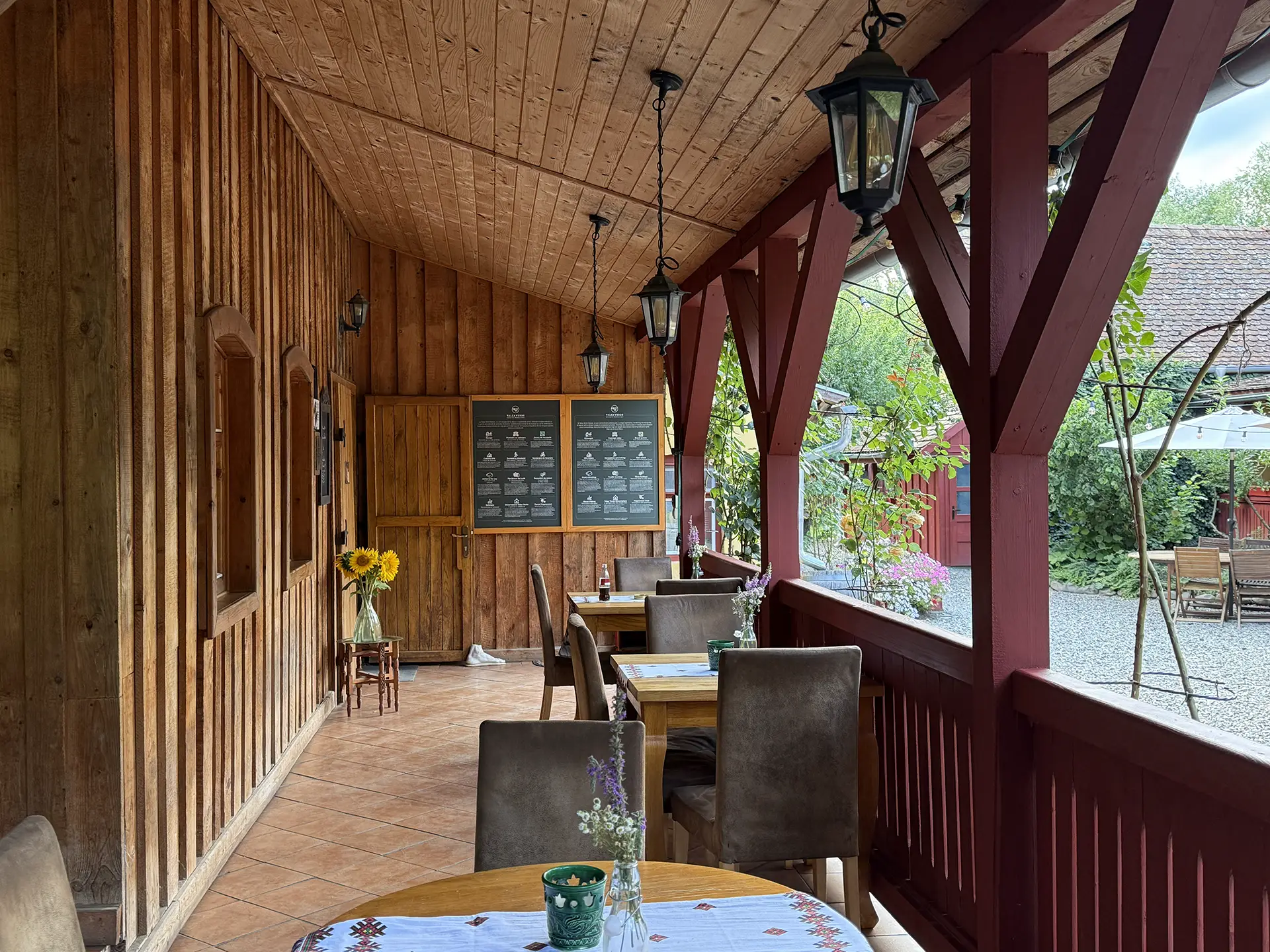
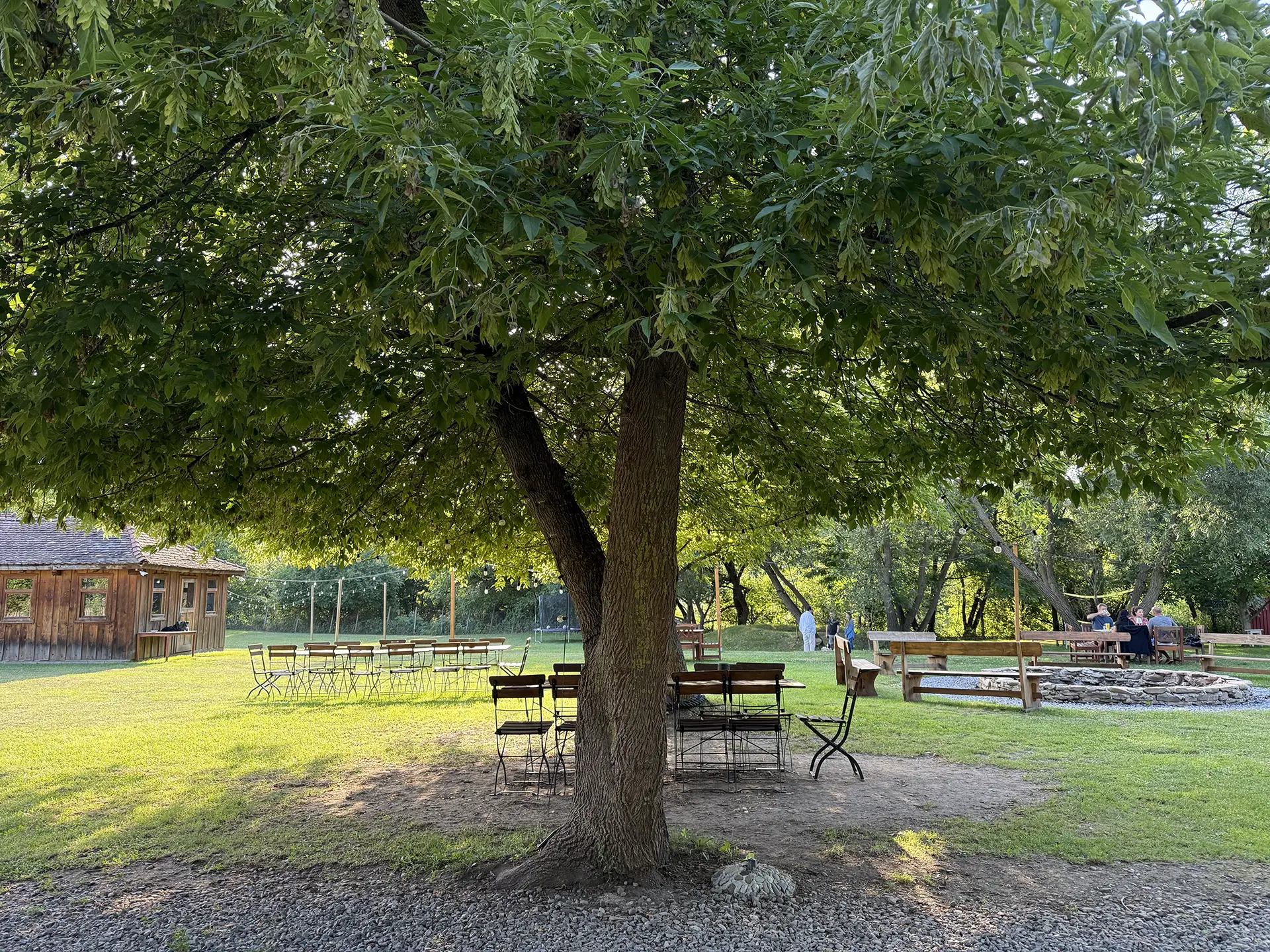
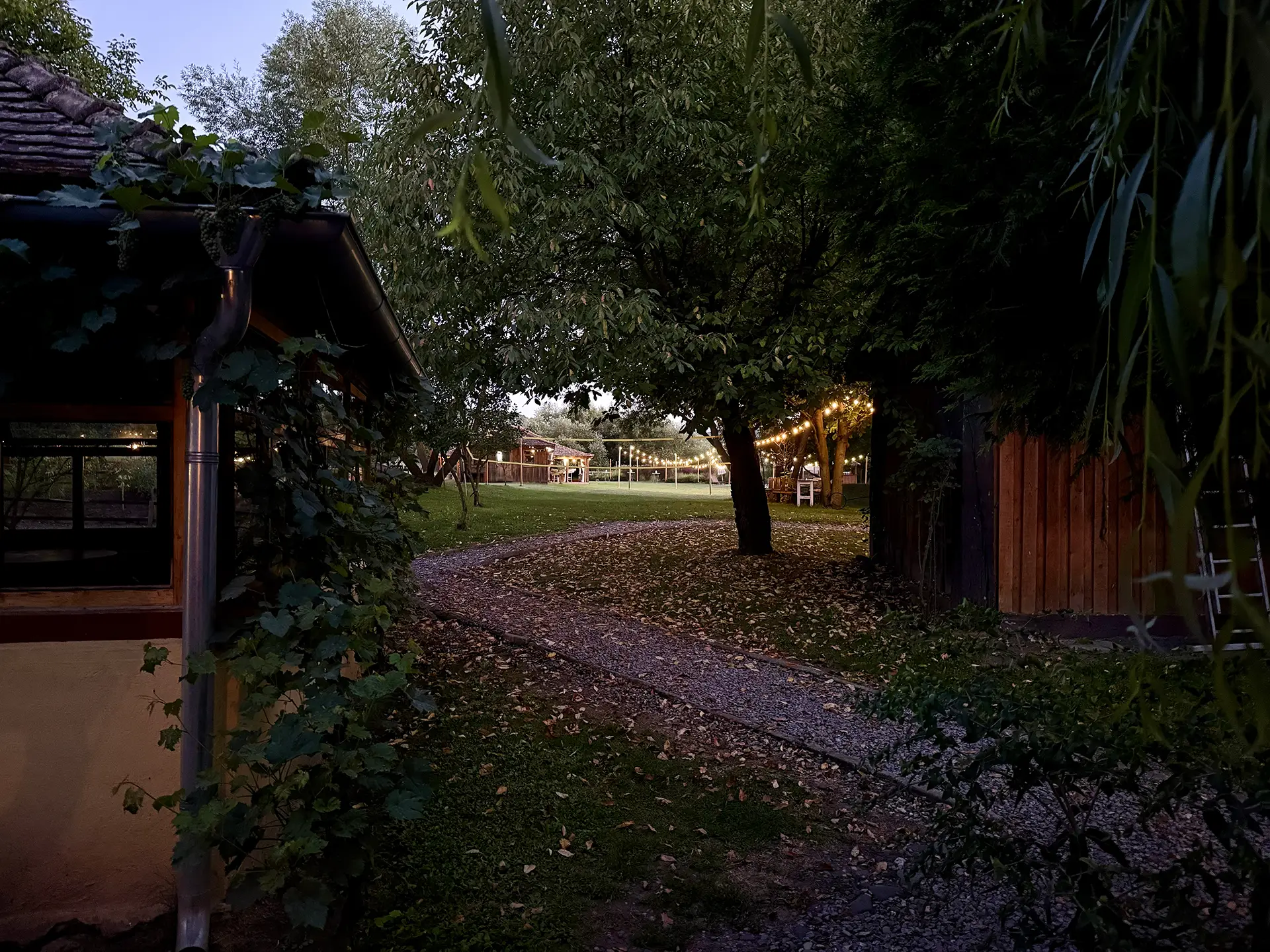
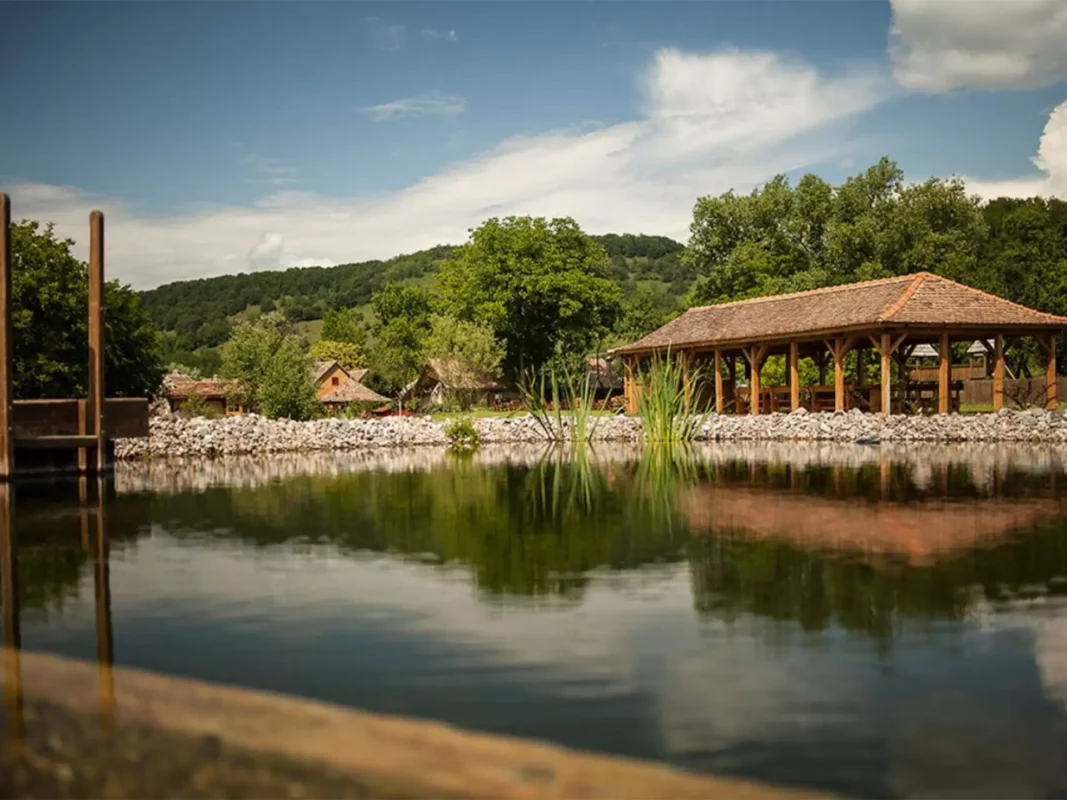
Breakfast and lunch are usually served in a quaint wooden lodge, inside the main retreat, while dinner is served in the lush green garden. However, you can mix & match however you wish.
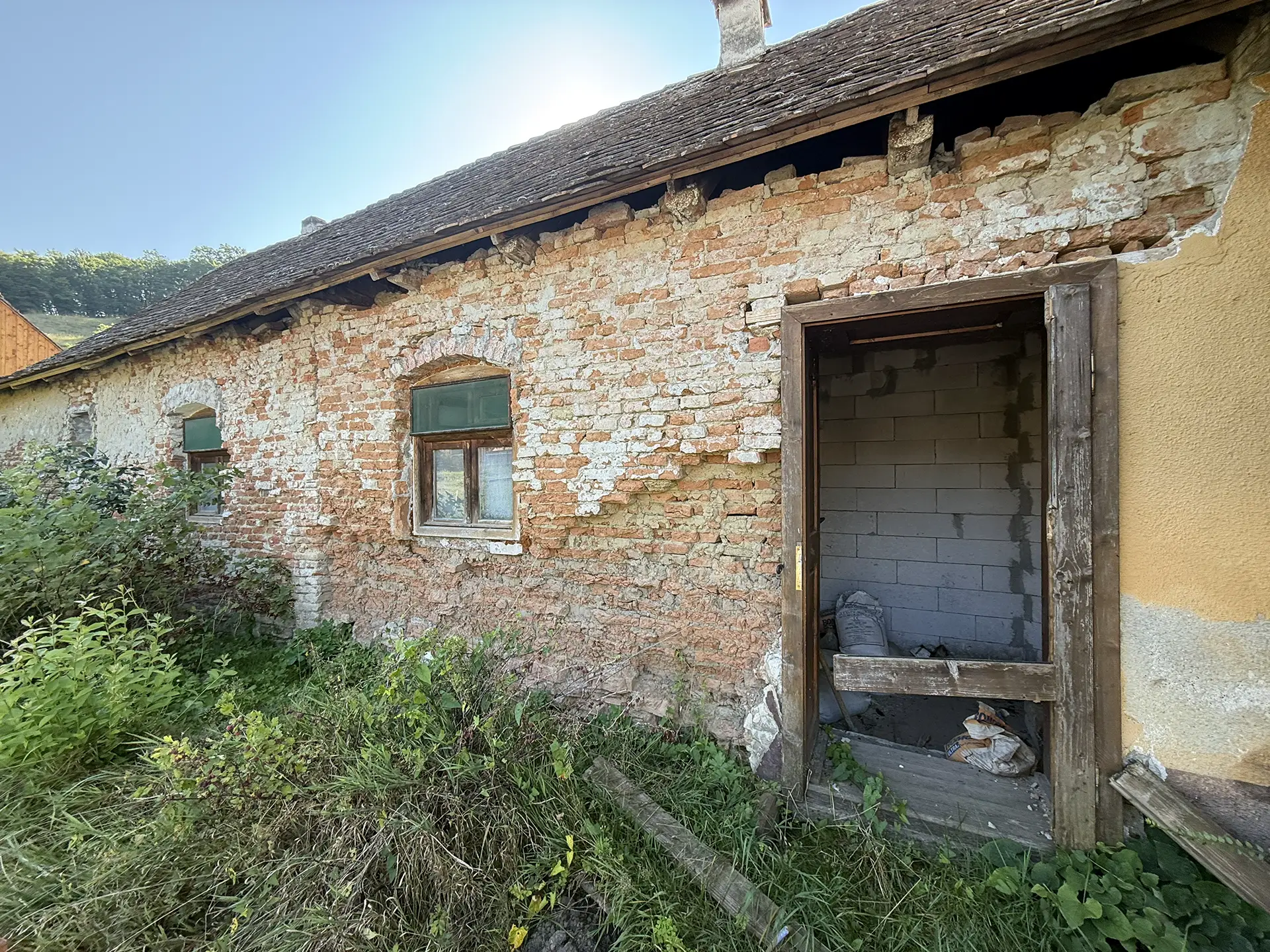
The old church stood just ahead, but its doors were closed. Not for ceremony or preservation - the building is abandoned, structurally unstable and considered unsafe to enter, unfortunately. I rented a bike for the whole stay, as I'm really into it, especially in a low-traffic place like this one and started exploring further.
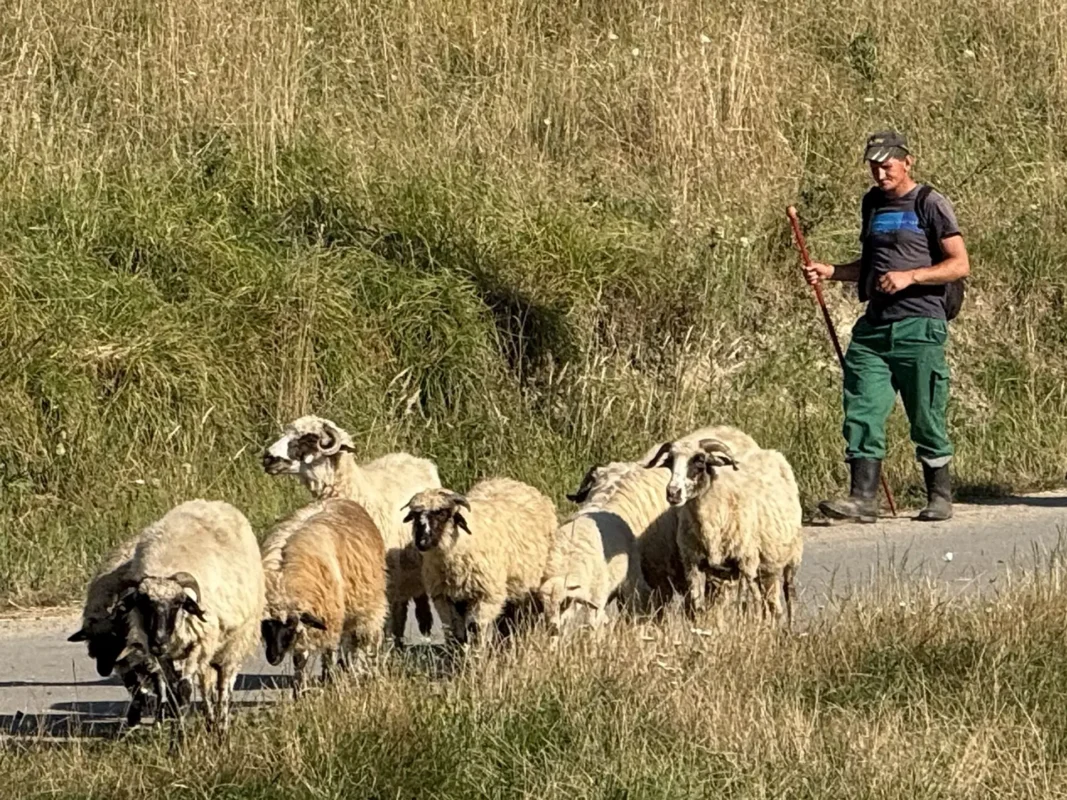
Not everything beyond Cund's last houses was quite so harmless. While walking the hills, I stopped to talk with a shepherd tending his flock near the forest. He pointed towards the tree line and told me that a large bear had been coming down at night.
By then, it had killed eight of his sheep. Suddenly, the dark band of forest behind those postcard-perfect hills looked a little different. Wolves also inhabit this part of Transylvania, alongside wild boar and other animals that generally have little interest in meeting us, but occasionally remind the villages that these fields are shared territory.
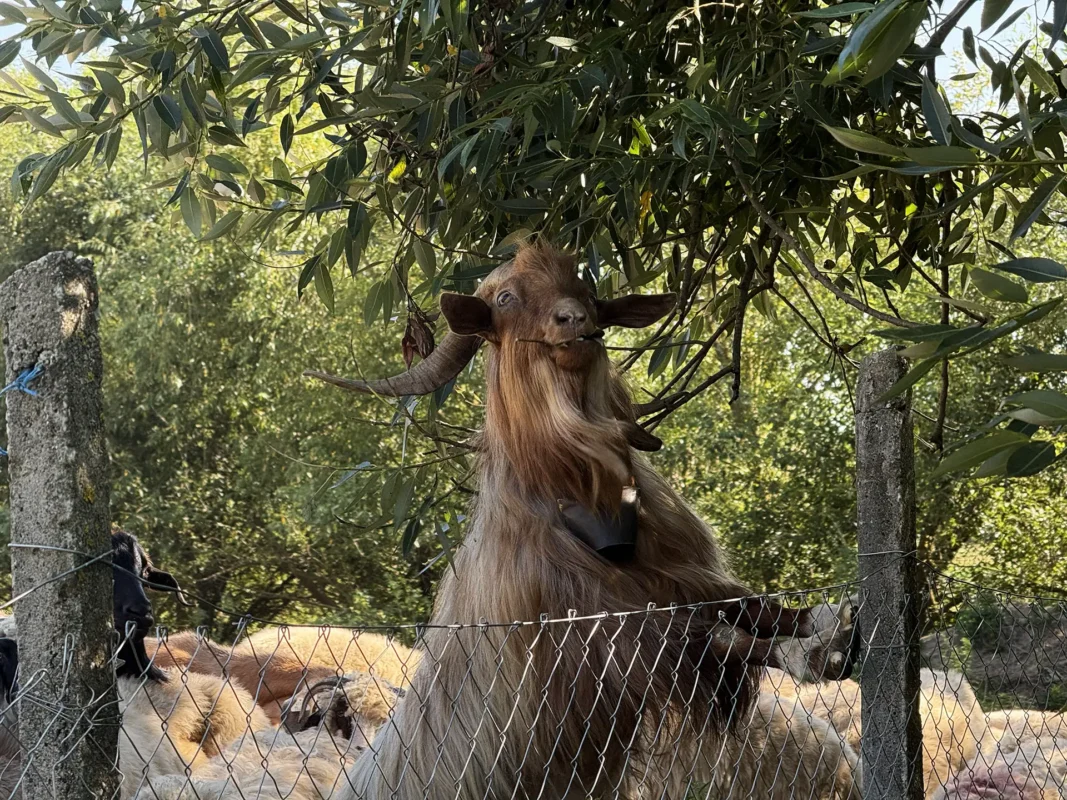
"A tragedy", I told the shepherd, "It's unfortunate to lose even one of those poor souls". Then, I started counting his livestock, and as they say, it was pretty effective at sending me to sleep later on. He said he owns approximately 600 sheep and 100 goats. I could understand why he hadn't taken the case any further. Eight sheep out of six hundred is a loss, but perhaps not one worth turning his life upside down over. There was only one problem with that math: the bear could come back.
Out here, the wilderness begins as soon as the paved road ends. Unfortunately, we ain't got Witchers around these parts, but we do have our trusty hounds. The shepherd was less optimistic. The dogs, he said, did not stand much of a chance against a bear that size.
Bears, wolves or Cumans, the danger has always been there. Unfortunately for me, being the sole visitor booked at Reussdorfer Hof, my imagination started to go in many directions. "Six hundred sheep" suddenly sounded less reassuring when I remembered that I was sleeping alone in the attic of a centuries-old village house, a short walk from an abandoned church, with nothing but fields between me and the forests surrounding Cund. From the main retreat to Reussdorfer Hof, it's a 10-15 minute walk. Enough to let your mind wander, or for something really bad to happen.
Of course, the rational part of my brain knew that the greatest danger that evening was probably tripping over something in the dark, or a drunk driver speeding through this village of barely 100 people. The other part of the brain had already populated every rustle beyond the garden with bears, wolves, medieval raiders and whatever else Transylvania had forgotten to mention in the history brief.
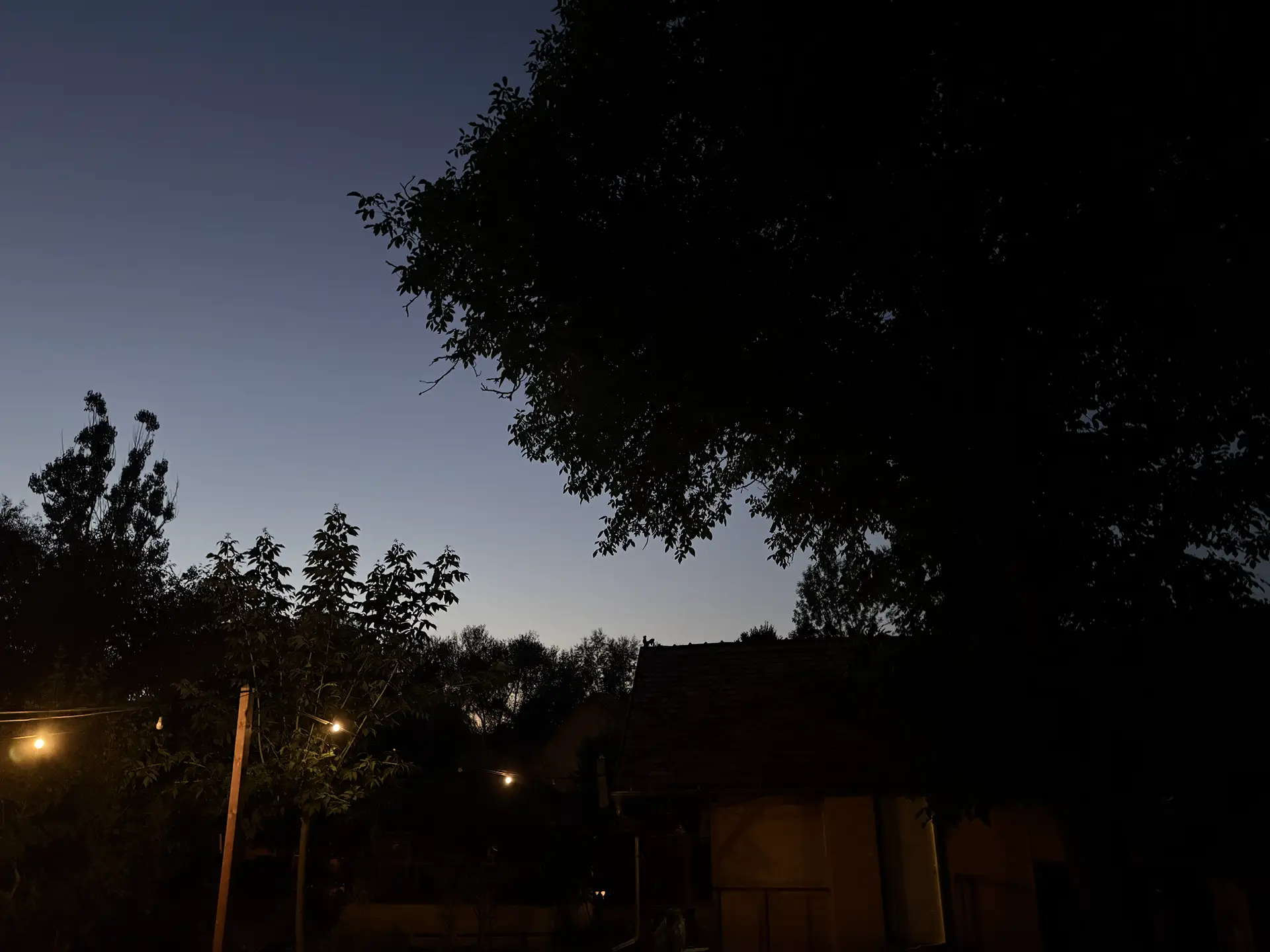
Then the sun disappeared behind the hills, and Cund changed character completely. I had to leave the bike at the retreat, and started walking towards my lodge.
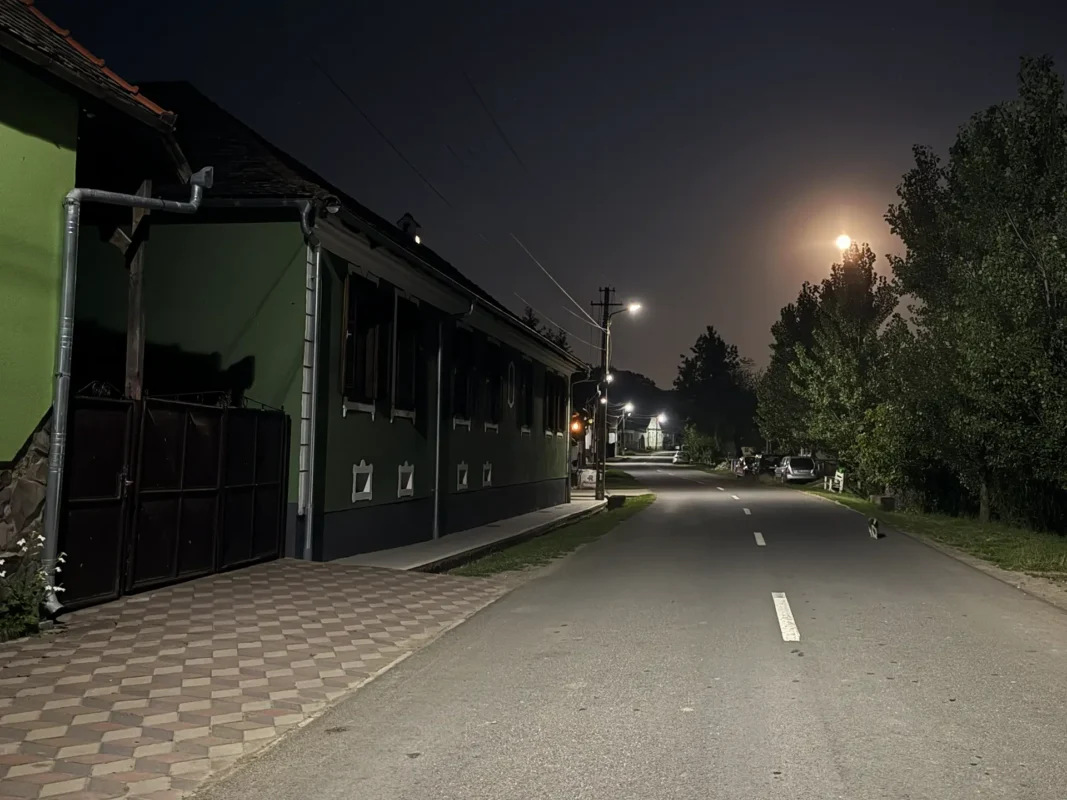
Doors closed, the last engines disappeared, garden lights came on one by one and the roads emptied until footsteps suddenly sounded far louder than they normally should. Even the dogs stopped barking for a while. On a full-moon night, my senses decided that was somehow worse. "At least the streets are well lit," I said to myself.
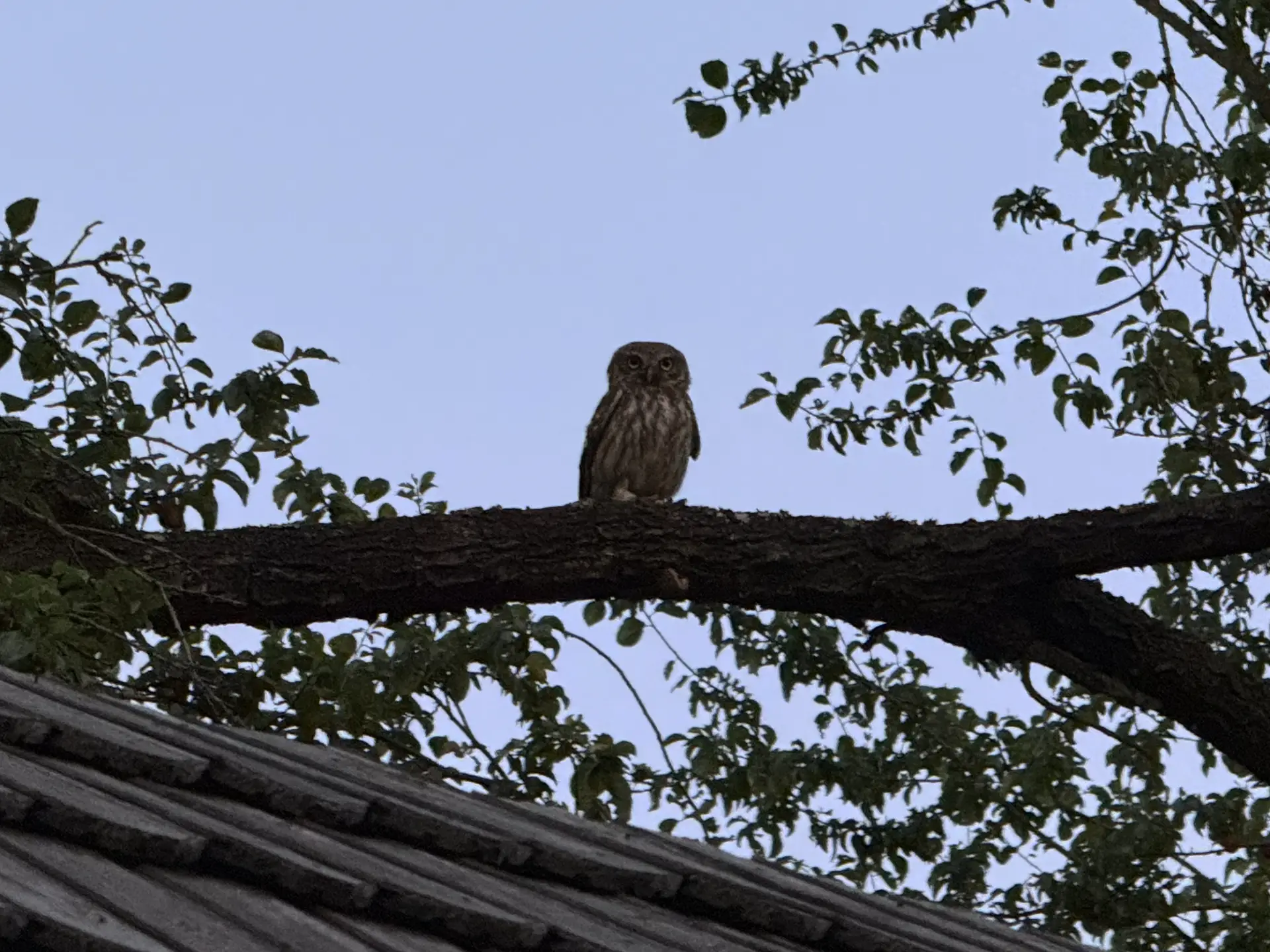
Then something stared back. A little owl - cucuvea, as we call it - had taken position above one of the old roofs, perfectly still and apparently unimpressed by my nocturnal expedition. In Romanian folklore its call has rarely enjoyed a cheerful reputation, but that evening it felt less like an omen and more like the village changing shifts.
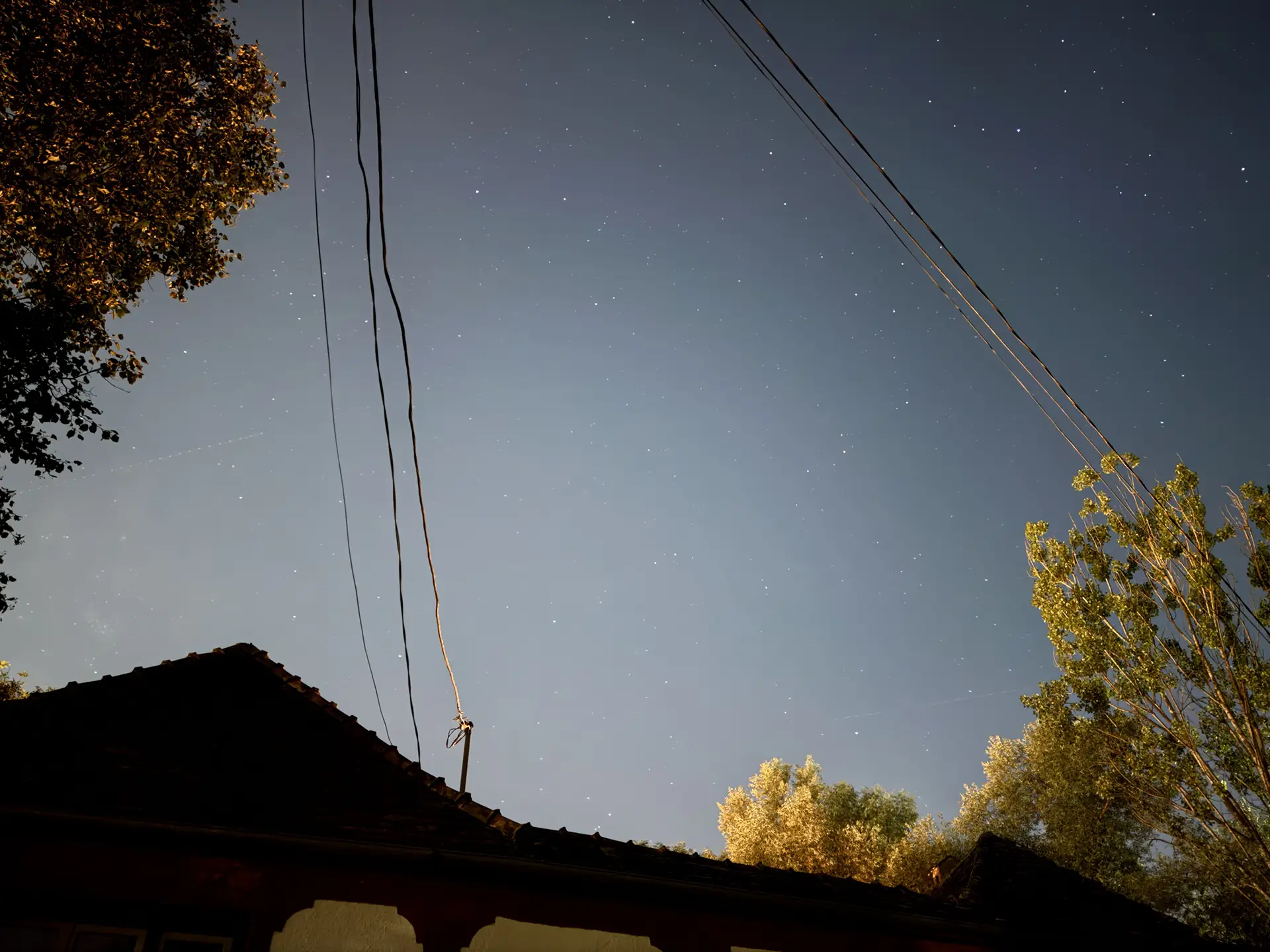
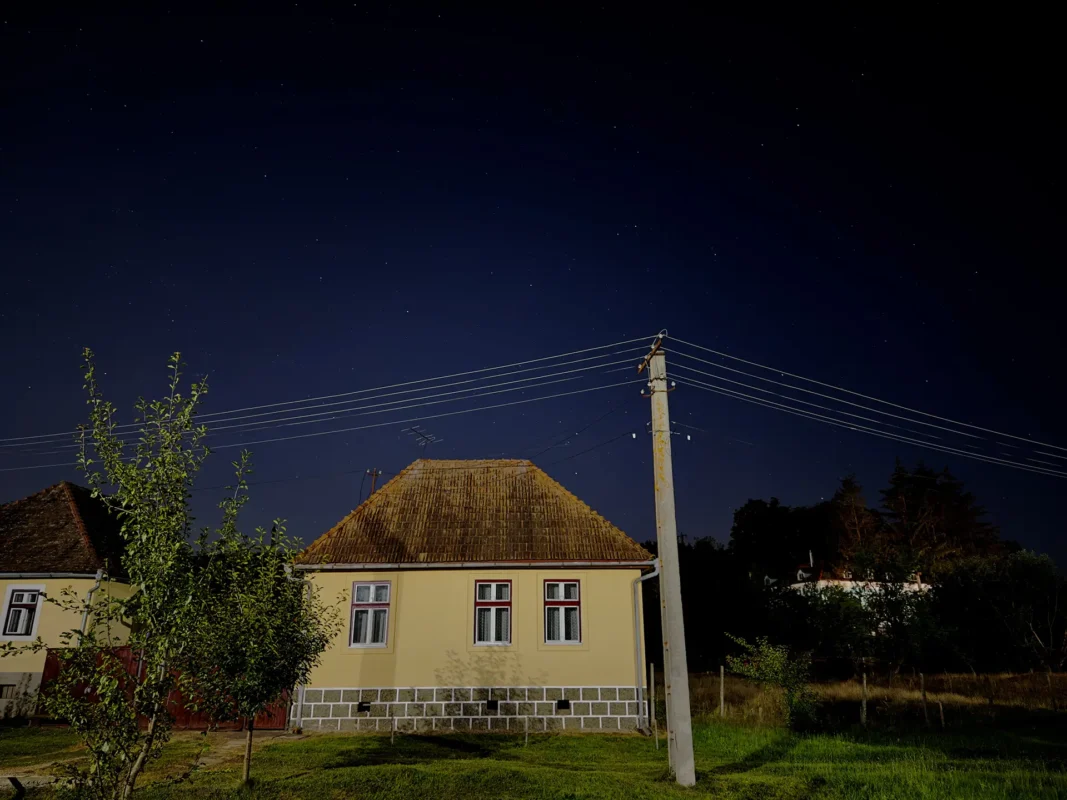
Above the rooftops, the full moon washed out the weaker stars, but somehow there were still enough of them to make the silence below feel even stranger. I wanted to take a few night shots of the village under the full moon, but my heart was pounding for some reason. The abandoned church was the strangest of all: its white tower still rose above the village, almost glowing against the night sky.
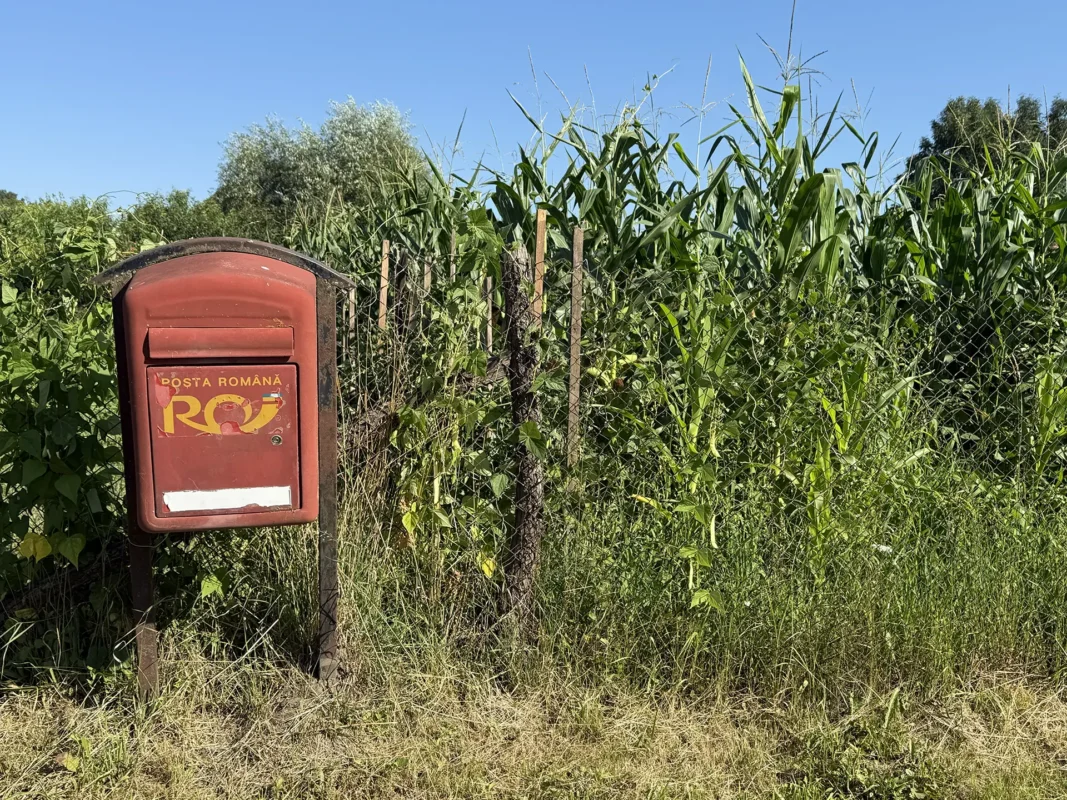
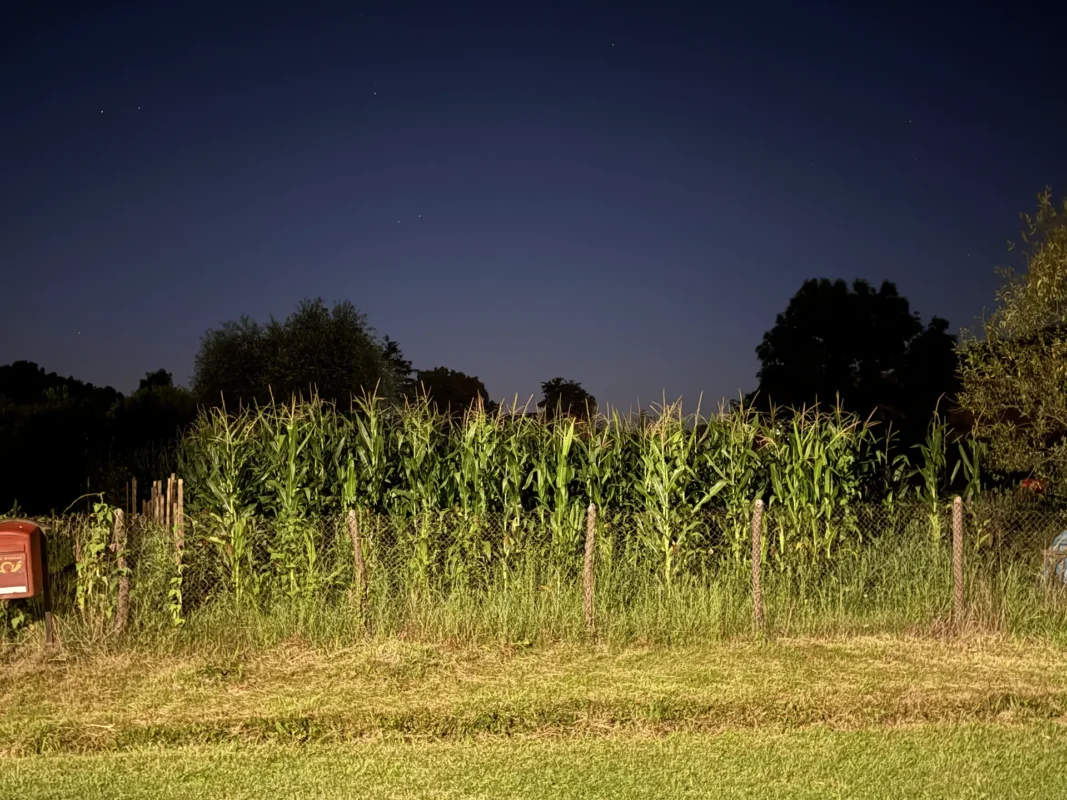
I kept walking. Past dark gardens, sleeping houses and cornfields glowing whenever a nearby lamp caught them, Cund felt suspended somewhere between centuries. The bear was still somewhere beyond the pasture. The church was still empty. The owl was on watch. And for a little while, that seemed like enough company.
Morning, of course, made the whole thing look ridiculous again. The roads were harmless, the cornfield was just a cornfield, and whatever strigas my brain had placed behind every fence had apparently clocked out for the day. Cund returned to life - people getting on with things as if nothing supernatural had happened whatsoever.
I spent the remaining days here roaming around: another house, another animal, another bend in the road, another detail that probably wouldn't make up a paragraph on its own. That's perhaps the point of Cund. There is very little here demanding your attention, yet somehow you keep finding reasons to stop.
By then I had also started wondering about something else. How does a place this quiet end up with restored Saxon houses scattered across the village, a restaurant serving carefully plated courses in the middle of rural Transylvania, and guests arriving from far beyond the valley?
For that, we need to talk about the man who chose Cund.
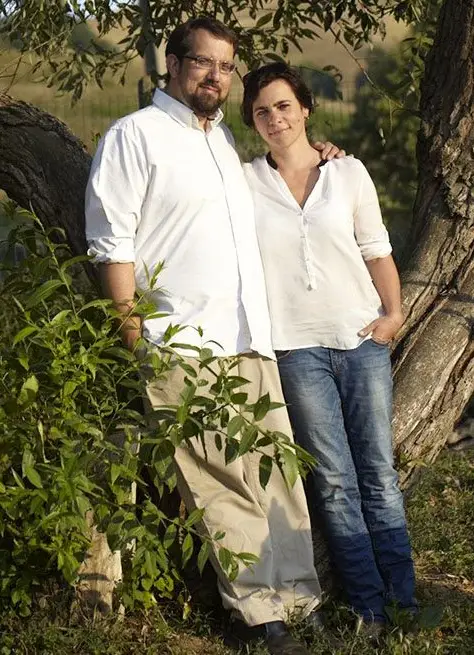
Image: Jonas and Ulrike Schäfer - from Hamburg to Cund, where a visit to Transylvania gradually became a new life. Source
3.1) Ex Sono ad Silentium
There are easier ways to end up in a forgotten Transylvanian village. Jonas Schäfer took the scenic route.
Before Cund, there was Hamburg, recording studios and the music business. Jonas had worked as a sound engineer and music producer, later running a record label and publishing house while managing artists and composers. Ulrike came from an entirely different world, with a background in social work and community involvement. They met in Hamburg in 2003. Not long afterwards, Transylvania entered the story.
Jonas's father, Klaus, had already been drawn east. He first came to Romania in December 1990 carrying aid for the children's hospital in Sighișoara and eventually became involved in social work around Cund. Jonas and Ulrike came to visit. Somewhere between the old Saxon houses, the hills and a village moving at a completely different frequency from Hamburg, the visit stopped feeling temporary.
3.2) The houses live again
What they found was beautiful, but it was also disappearing. Many of Cund's old Saxon houses had lost the families that built and inherited them, leaving behind courtyards, barns and walls whose original purpose was slowly fading with the community itself.
Instead of building a resort beside the village, Valea Verde began inhabiting what was already there. Old houses were restored and turned into places for guests to stay, gradually producing the strange arrangement I had now experienced myself: reception in one place, dinner somewhere else, your bed several streets away. By 2007, Valea Verde had formally opened, built around the idea that tourism might help give the old village fabric another reason to survive.
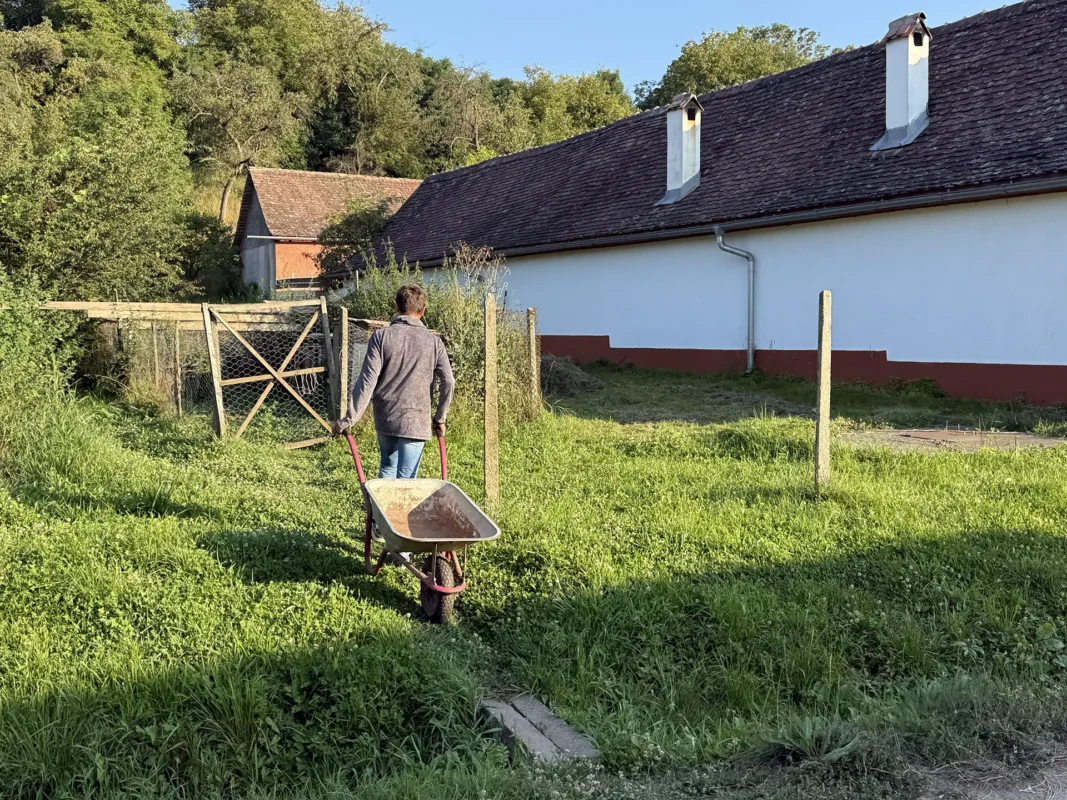
It did not turn Cund into a museum. Thankfully. The wheelbarrows, sheep, barking dogs and people still belong here more than any visitor does. Valea Verde simply inserted another layer into the village's long sequence of inhabitants. Source of images from the gallery below.
3.3) Ad Mensam
At some point, however, saving Saxon houses apparently became insufficient. Jonas also decided that people stranded in this tiny valley should be fed extremely well.
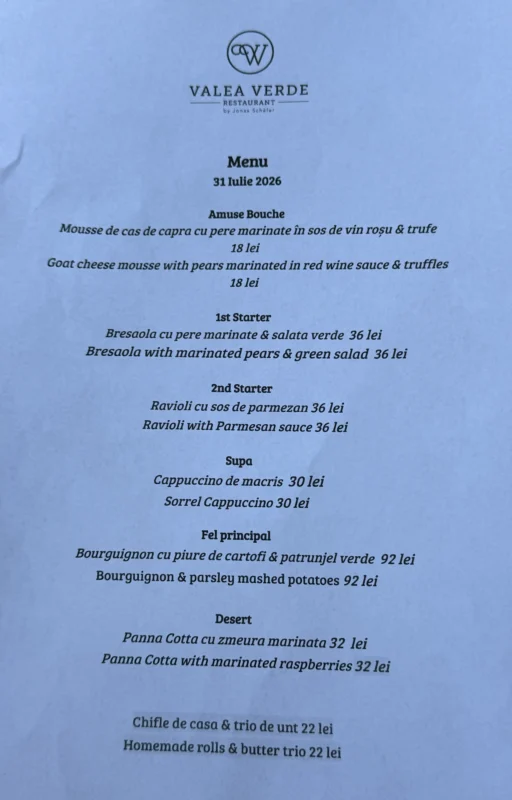
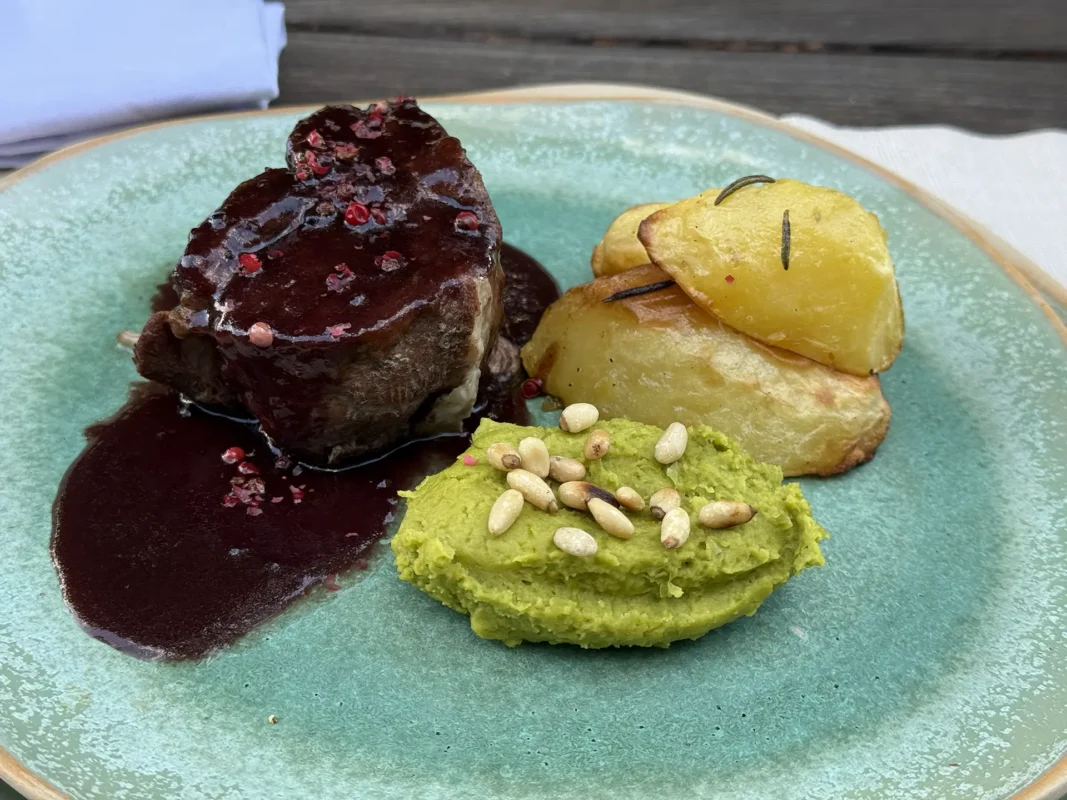
The restaurant occupies a restored old barn, but what arrives at the table is considerably less rustic than the setting might suggest. Jonas built the kitchen around local ingredients, filtered through French and Mediterranean influences, with Romanian wines following closely behind. Depending on the evening, the fixed menu runs through three, five or seven courses. The vegetable garden and fruit trees supply the kitchen directly whenever the season allows.
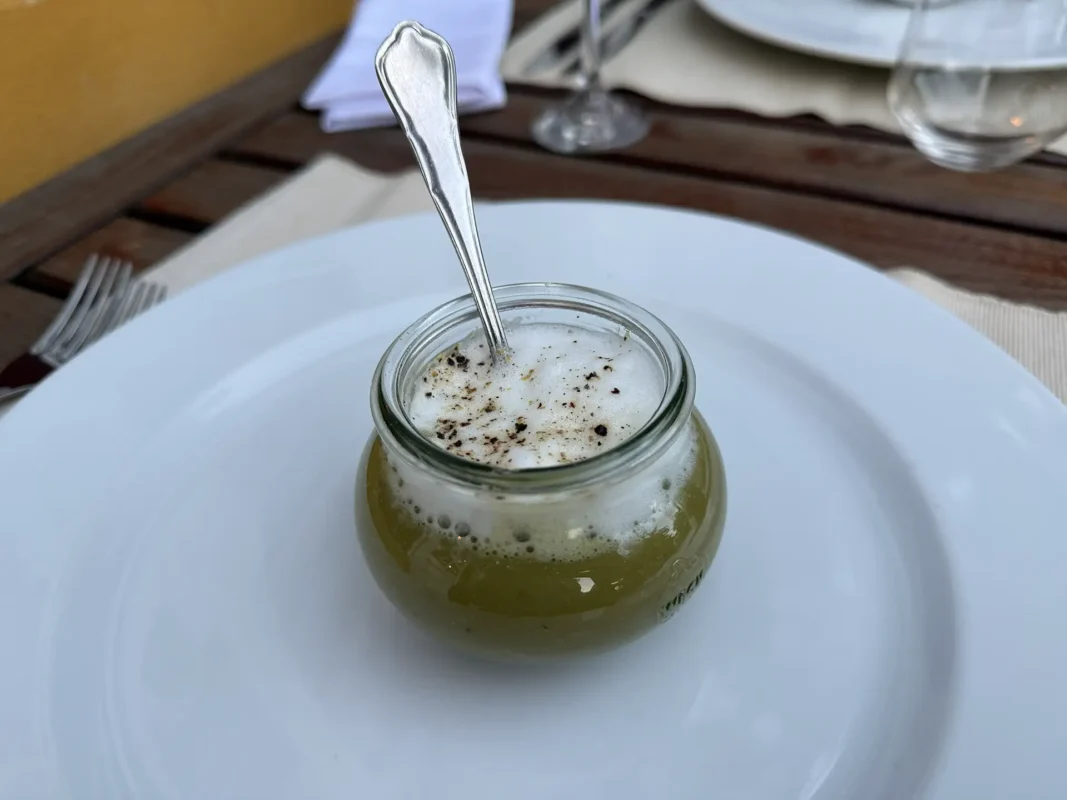
I saw one of the workers of Valea Verde working on the patch and asked: "What are you gathering?". She answered: "Sorrel. For this evening." This blew my mind as I don't think I've actually ever eaten something that travelled so little from ground to plate. I'll let the gallery below speak for itself. Play the song for extra vibes.
At some point, Valea Verde stopped merely restoring houses and started behaving like a small culinary republic.
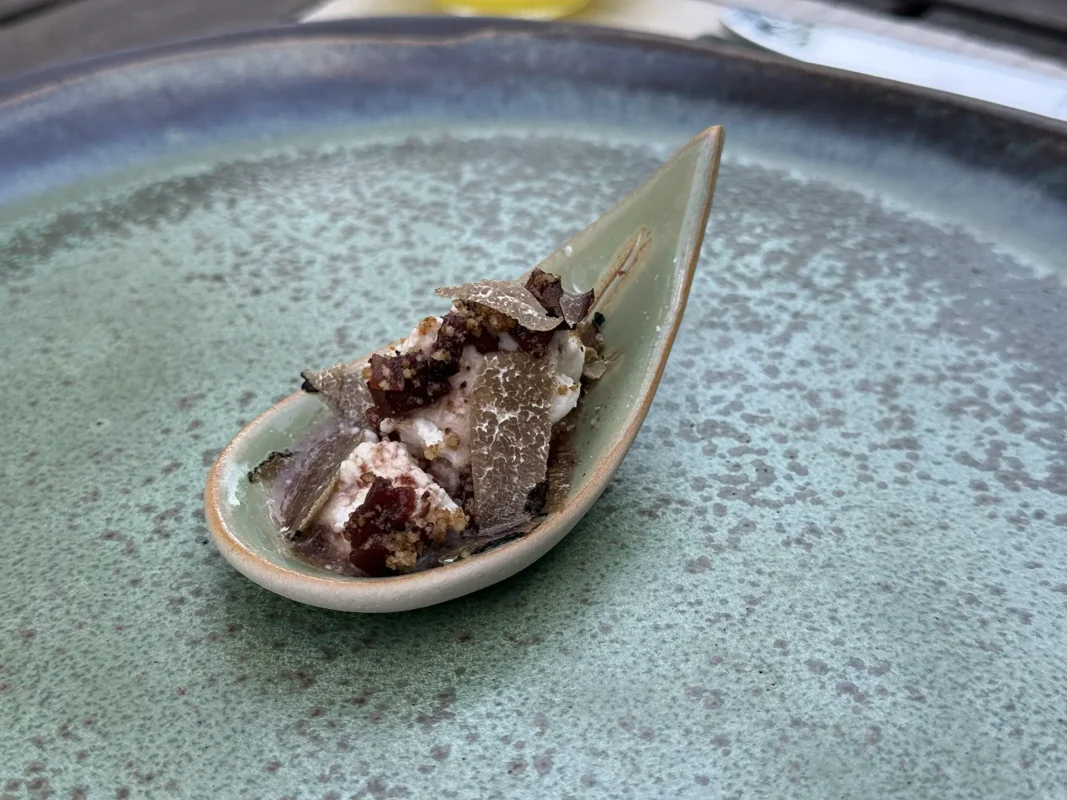
Jonas seems mildly incapable of feeding people normally. In a village of maybe a hundred souls, dinner arrives in courses, truffles are served like fries, sourced locally means sourced locally, and ingredients are treated with the kind of attention normally reserved for premium restaurants in much larger cities. The contrast is part of the charm. Outside: sheep, dark hills and an abandoned church. Inside: sorrel cappuccino, quince, wine reductions and enough truffle to make you briefly forget where you are.
And maybe that is exactly why it works.
Valea Verde makes Cund feel like remote is intentional. And that's why it became harder and harder for me to grasp the idea that I'd have to eventually leave back home.
One creature walks these hills. Some greater beasts also did, once.
My imagination was going wild, so I started researching, with the two bars of Edge connection that my operator left me for this trip. Like a lesson in restraint "Leave the phone at the entrance".
Look, the shepherd's bear belonged to the present: heavy, hungry and somewhere beyond the same tree line I had been photographing all afternoon. Eight sheep were already gone. No legend was required.
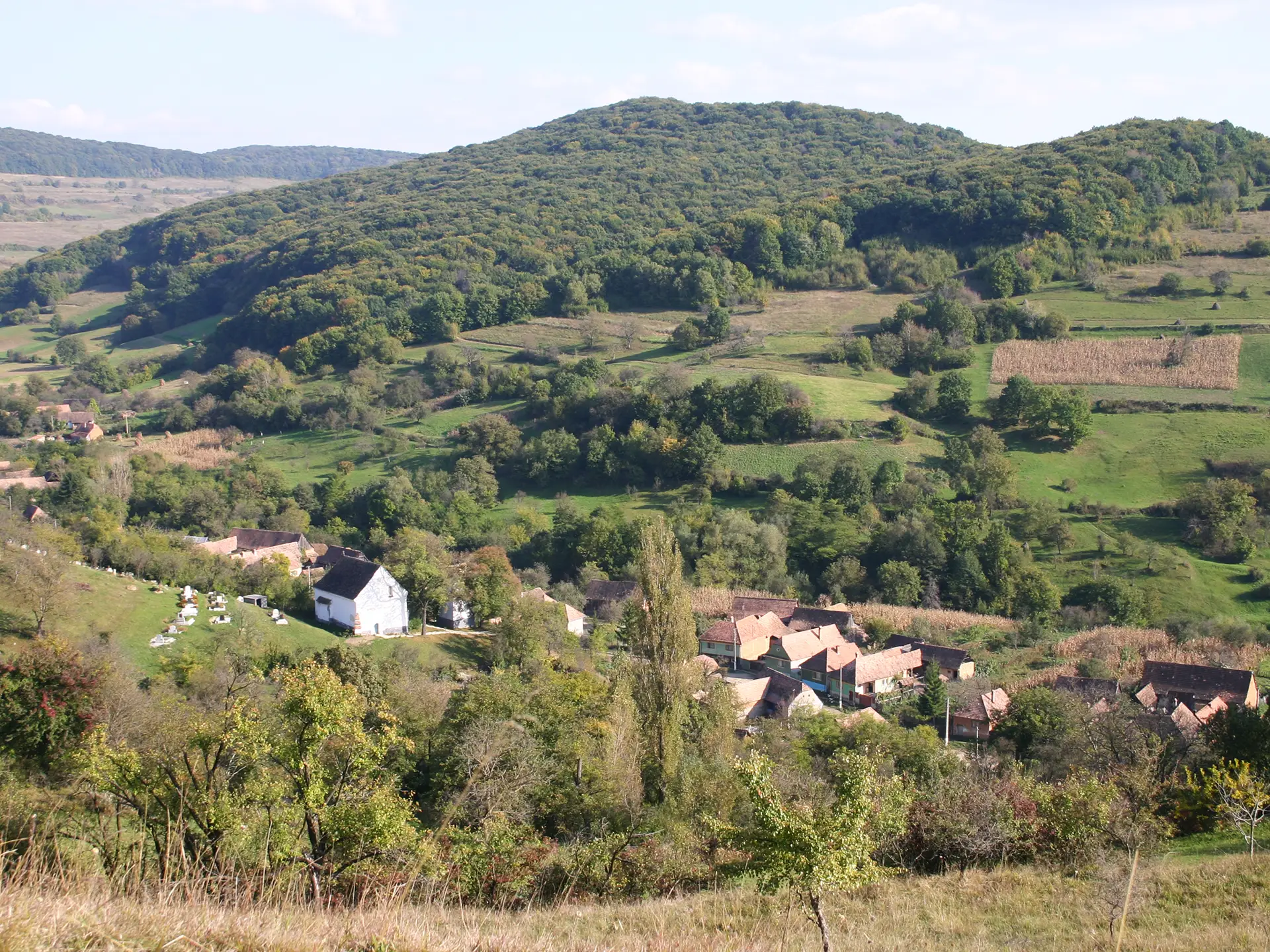
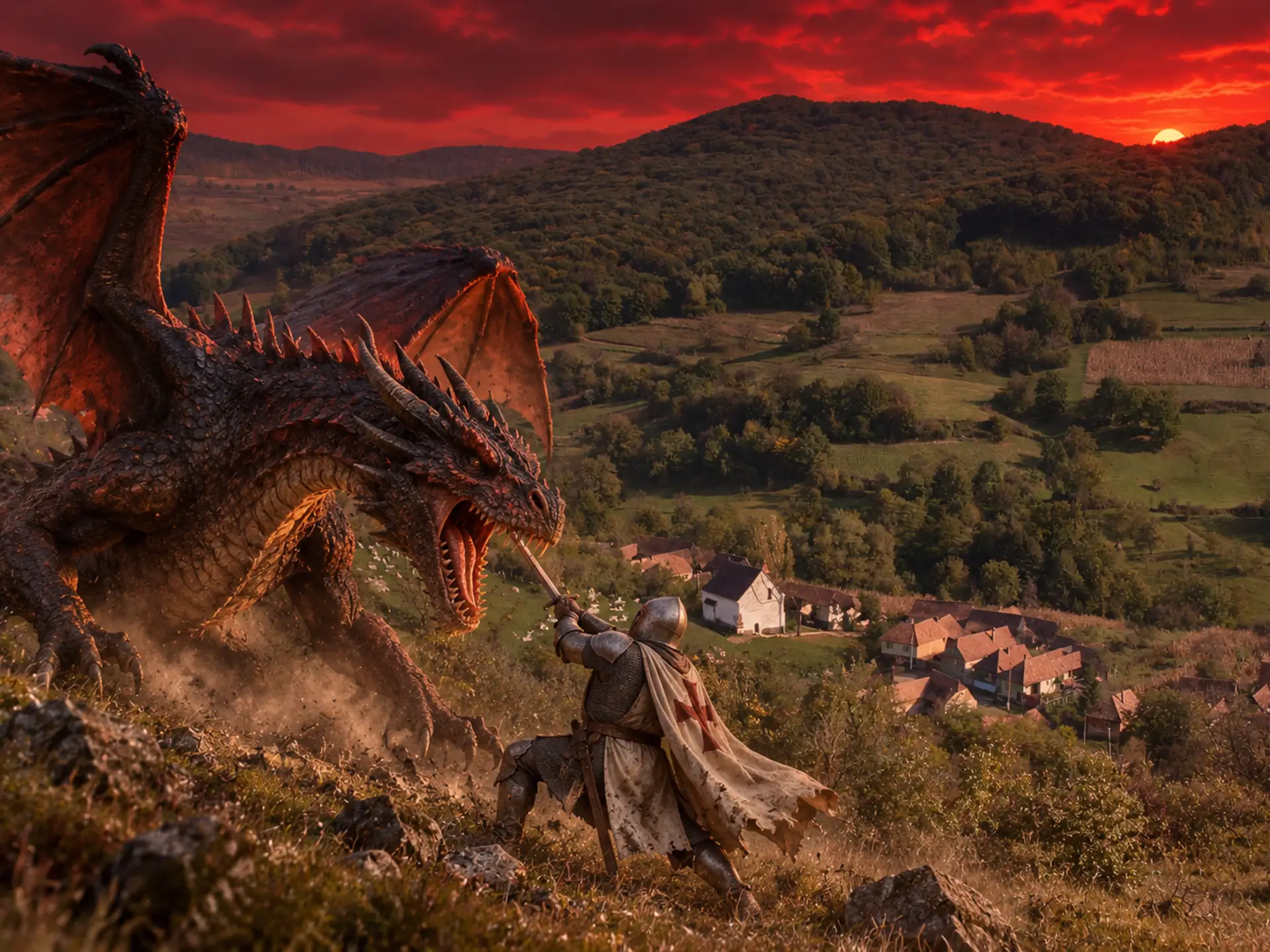
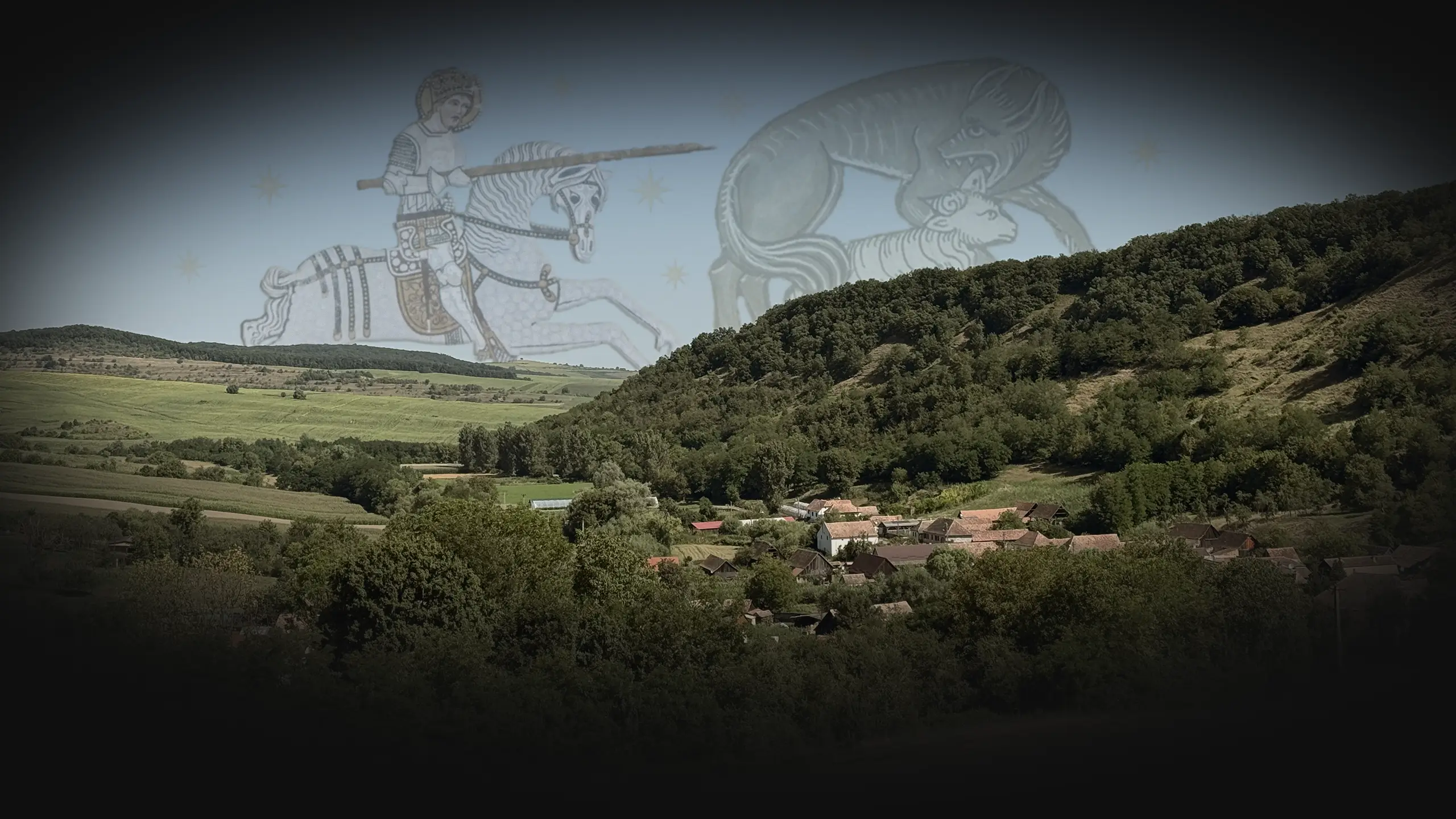
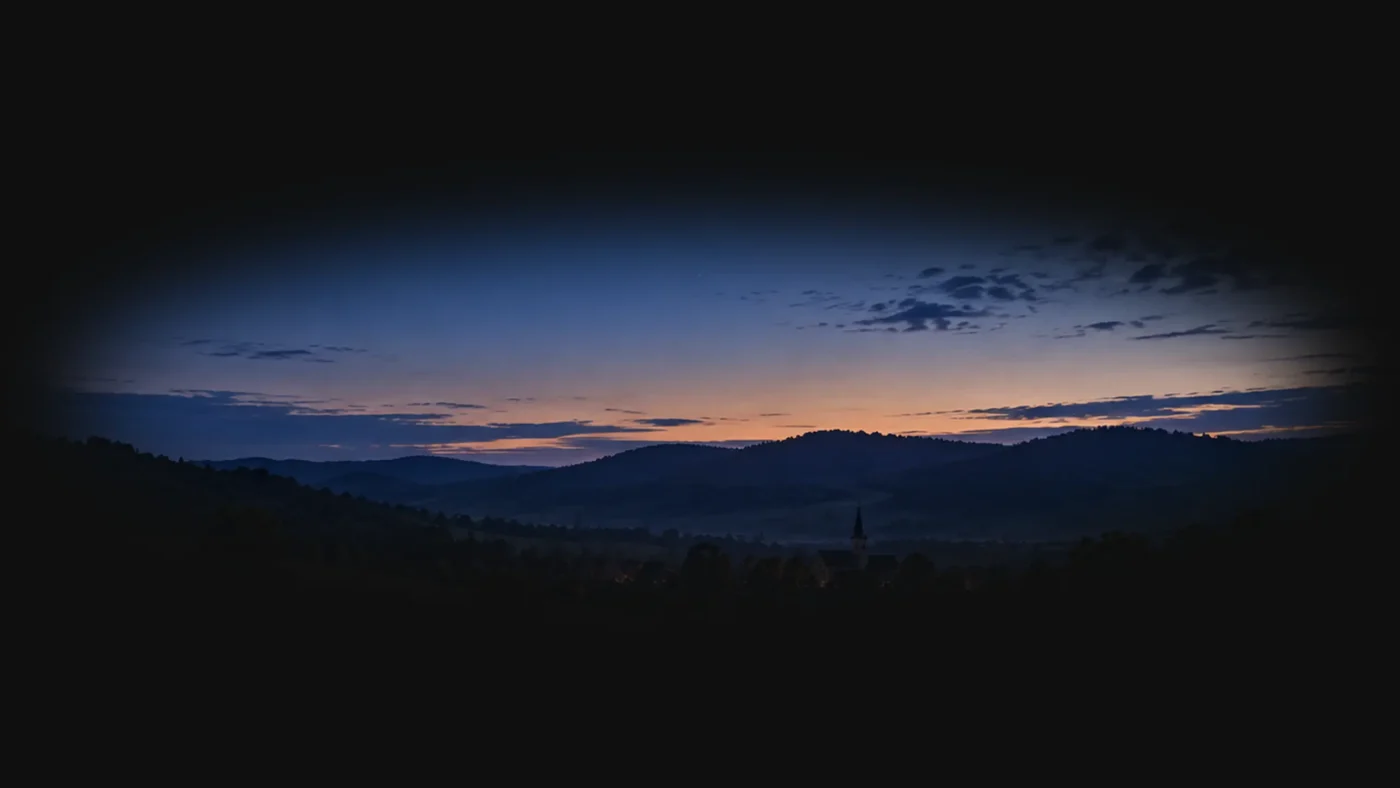
But a few valleys away, near Jacodu - Magyarzsákod - the elders speak of another beast. Beneath Castle Hill lies a spring still called Izvorul Balaurului, the "Dragon's Spring". According to local folklore, a dragon once lived in the marsh below the mountain and demanded a maiden from the village every year for sacrifice, in return for peace. Another year came, the dragon chose its maiden, but it picked the wrong one.
Her fiancé, remembered as an ancestor of the Bethlen family, refused to surrender her. He went down into the marsh, defeated the creature and carried its severed head back towards the village. Somewhere along the centuries, the knight disappeared into genealogy and the beast into folklore, but the spring kept its name. The dragon never quite left. And in stories, the knight still guards these hills. The full story can be found here.
Source Image 1. Image 2: The same hills, as folklore remembers them. AI-generated illustration of the Dragon's Spring legend.
Perhaps this is how legends are born, I guess. A forest nobody enters after dark. Livestock found dead by morning. A weird shape seen between the trees. Then, the hero, courageous and daring. He enters the unknown, saves the damsel and returns gloriously. History is therefore written... or spoken.
Back in Cund, the distinction suddenly felt less important. The bear belonged to reality, the other belonged to folklore. In places like these, you ask yourself "What is real?". After all, both creatures waited beyond the edge of the cultivated field.
1.1) Aedes Comitum
I left Cund behind and followed the road towards the Mureș valley. The hills widen, the villages become busier, and somewhere beyond the trees of Gornești waits something rather less modest than a Saxon farmhouse.
Compared with many noble residences, Teleki does not reveal itself dramatically from a mountain or cliff. Instead, it hides behind centuries-old trees with grand gates and a lake.
Video: Threshold #3 - Aerial journey from Cund to Teleki Castle, via Google Earth (2026).
After Cund's abandoned church and half-forgotten houses, this was another kind of survival. We are talking 52 rooms and 365 windows of castle. Although, it too had significant hurdles to remain steady across time.
1.2) Welcome, dear Guests. Your arrival has been most expected.
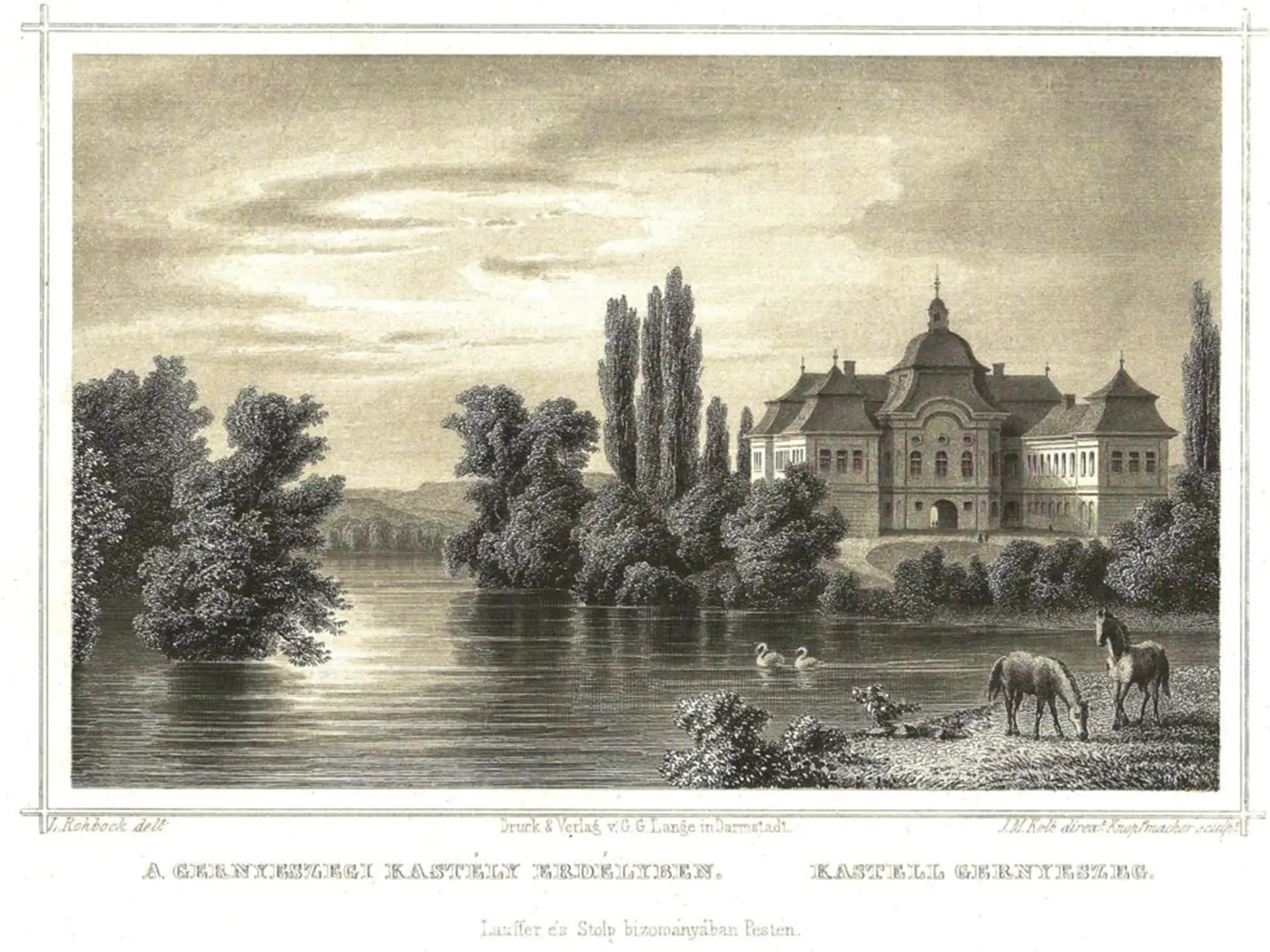
Long before the Baroque residence, Gornești already had a fortress. A fortified castle was raised here in the second half of the 15th century by the Erdélyi family; written records mention the castle and its castellan in 1477, and King Matthias Corvinus recognised the building as a castle in a royal document the following year. I could not find a surviving illustration of that earlier fortress.
It was a very different structure from what survives today, although, with certain similarities: a defensive residence protected by a moat, with bastions and towers, and water drawn from the Mureș. The elegant palace came after.
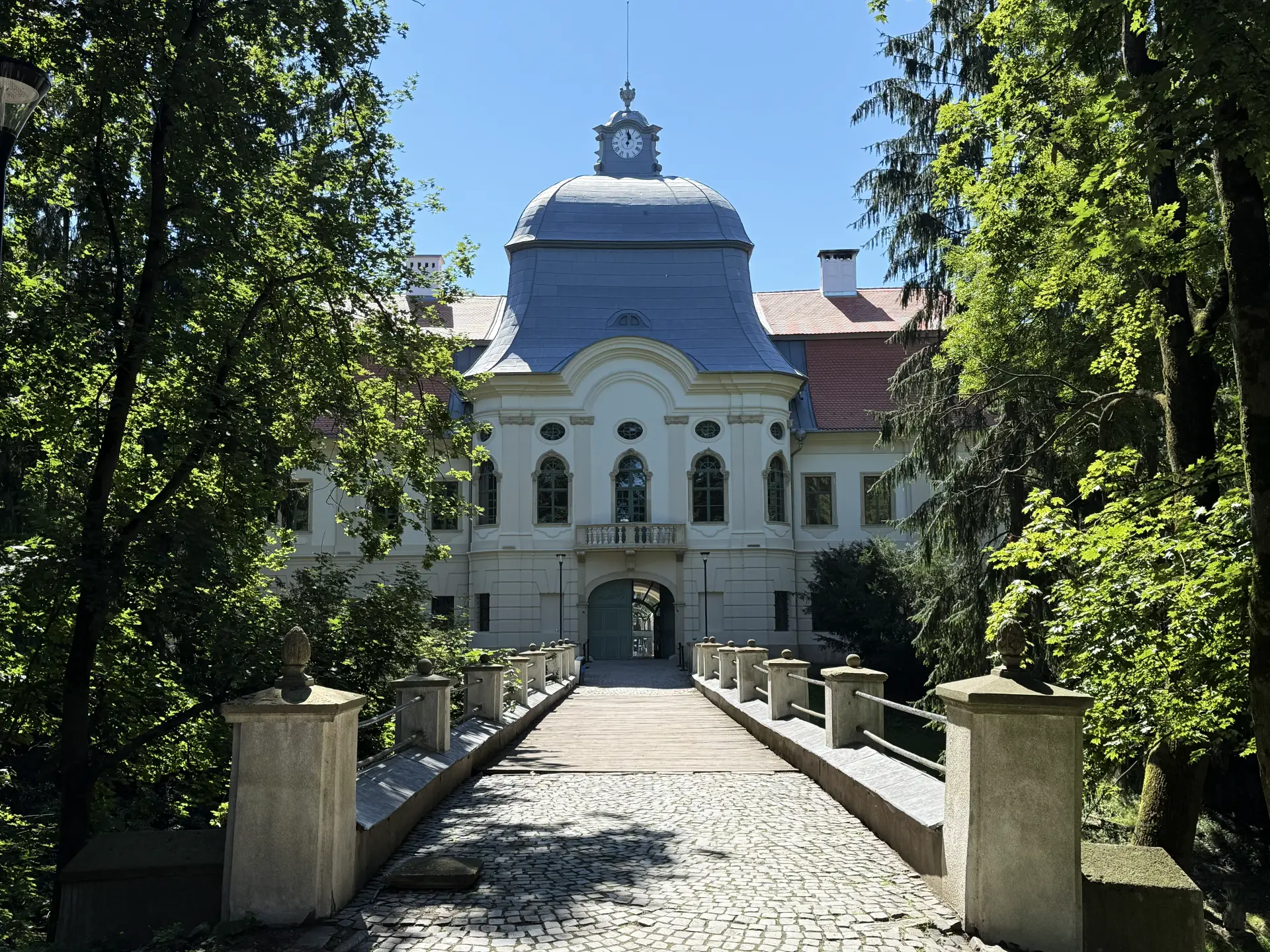
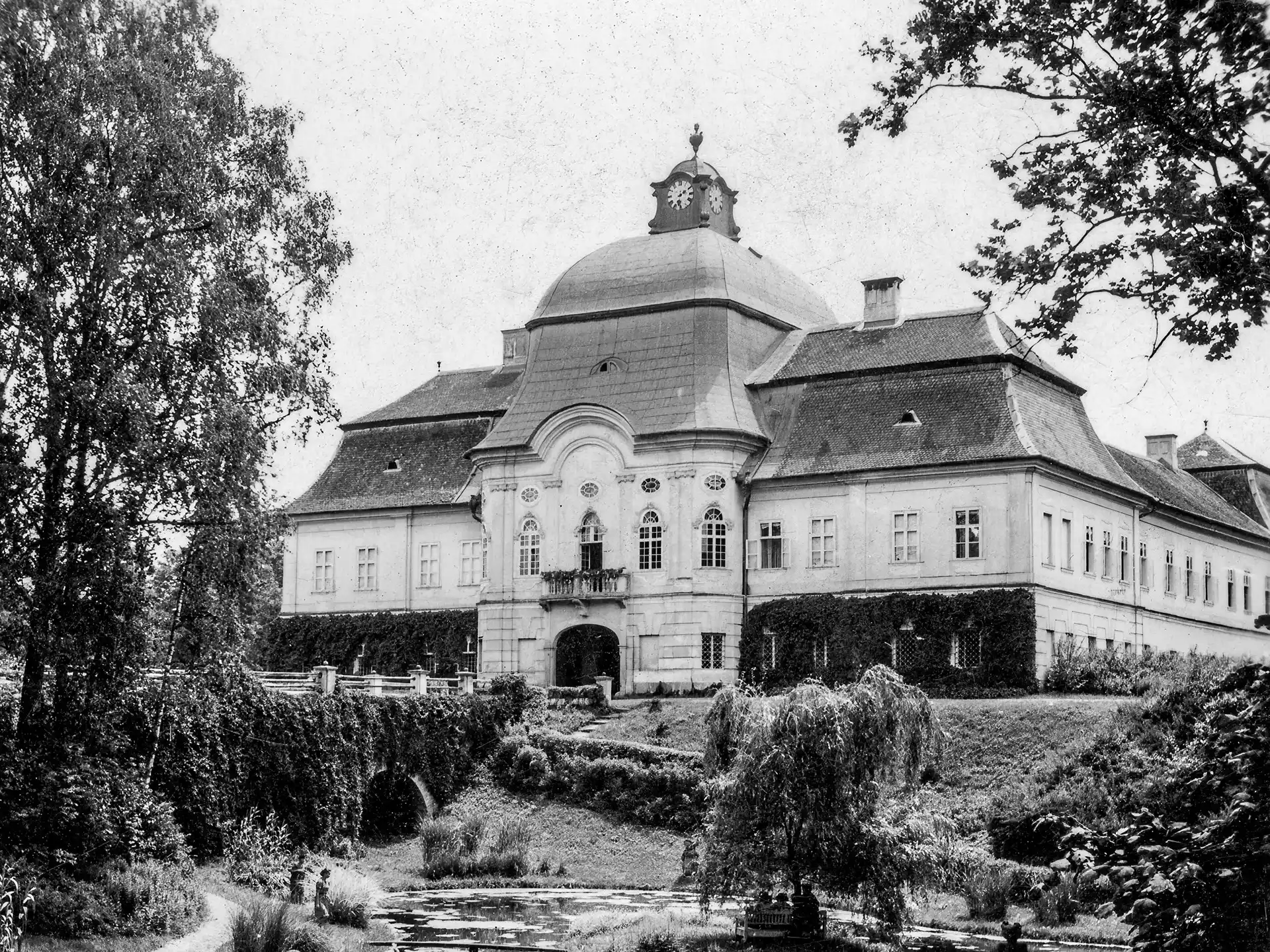
Image 1 - 1856 engraving of Teleki Castle and its park in Gornești, Transylvania. Image 2 - The same Castle in 1942. Source
By the late 17th century the estate had passed into the hands of one of Transylvania's most powerful political families: the Telekis. Their descendants gradually erased much of the old fortress and replaced it with the Baroque residence that now dominates Gornești - a U-shaped palace built between 1772 and 1803, with a ceremonial central wing, landscaped grounds and the unmistakable ambition of a family that expected history to remember its name.
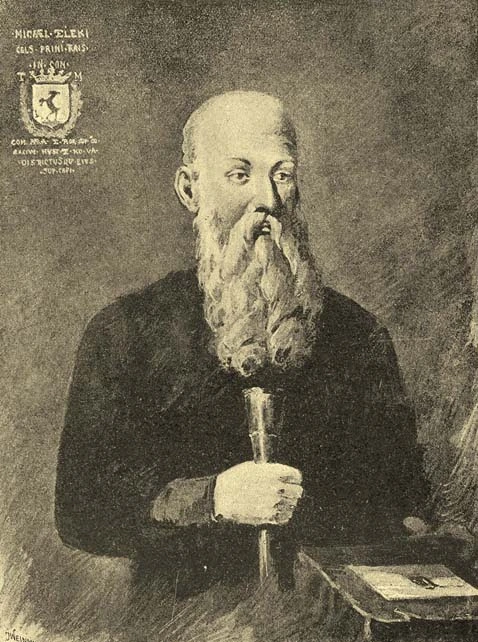
Image: Teleki Mihály portrait from 1685.
1.3) Inter Imperia
At the center of the Teleki ascent stood Count Mihály Teleki de Szék - soldier, Chancellor of Transylvania and the sort of man produced by places caught between empires.
Ottoman influence pressed from one side, Habsburg power from the other, while princes and nobles changed alliances somewhere in between. Teleki became one of Prince Michael I Apafi's closest advisers, gathered land and influence, and in 1674 brought Gornești into the Teleki estates.
He knew when the wind was changing. Teleki had once led Kuruc forces against the Habsburgs; as Vienna's power grew, he gradually changed course. In 1690, however, politics became considerably less theoretical: Imre Thököly invaded Transylvania, and Teleki rode south to meet him. He never came back. Story source
Teleki was killed at the Battle of Zărnești on 21 August 1690. His body eventually returned to Gornești - to the estate that would carry his family's name for centuries longer than any alliance he had made.
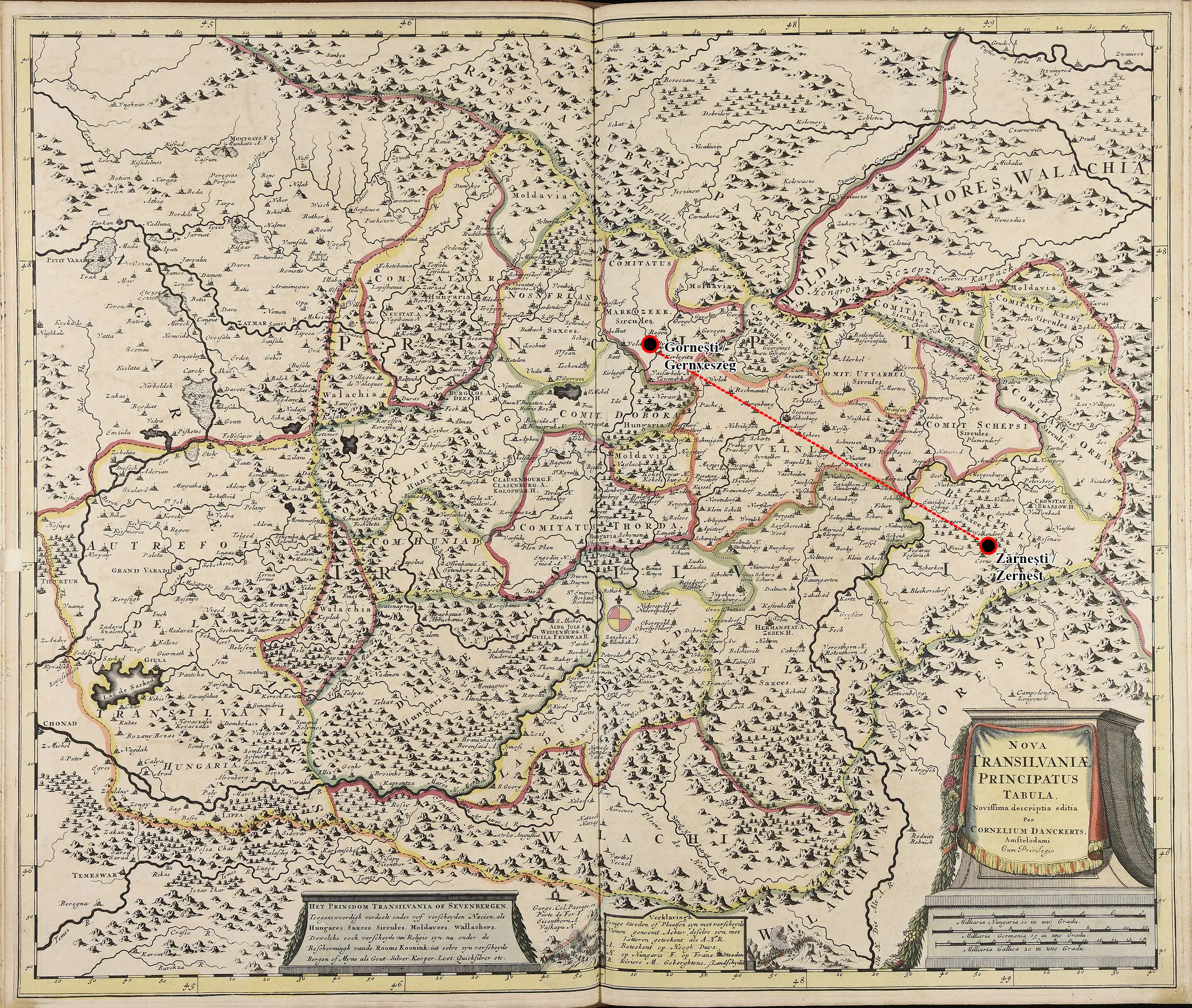
Here, Transylvania appears close to the world Mihály Teleki knew: a principality wedged between competing powers, with the Carpathians forming a formidable border around it. Gornești - then Gernyeszeg - lay in the Mureș valley, marked here in red, where the Telekis were building one of their principal estates.
Far to the southeast lies Zărnești, where Teleki's story ended in 1690. Between the two points lies almost an entire political life: court, land, alliances, war and the uncomfortable art of surviving between empires.
Map source - red markers added by Unbound Planet (2026). More specifically, the map plate was engraved around 1696 by Cornelis Danckerts III, then reused by later publishers.
1.4) CCCLXV
Mihály's fortress was not the palace standing here today. During the following century, later generations of the Teleki family transformed Gornești again, replacing the defensive residence with the elegant Baroque castle that survives today.
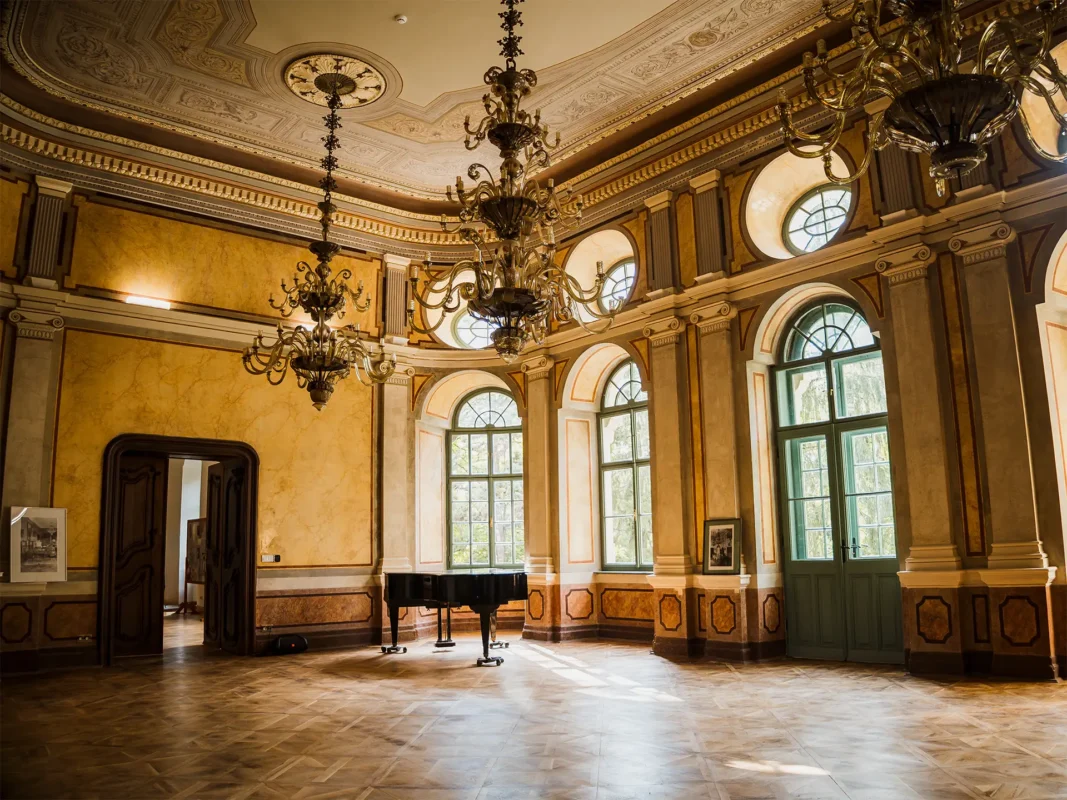
The result: 52 rooms (weeks in a year) and, according to the castle's own history, 365 windows (one for every day of the year). The medieval moat and bastions gave way to ceremonial stairs, salons, symmetry and parkland.
The war had been considerably less polite. In 1944, the Telekis returned to Gornești to find the castle stripped of much of its furniture, books and collections; nationalisation followed in 1949. Yet the family itself never disappeared. The present owner, Count Kálmán Teleki, belongs to the direct line that inherited Gornești after the Chancellor's death in 1690.
By extraordinary timing, I arrived during another resurrection. After almost three years of conservation and structural work, the castle reopened to visitors in July 2026, with its official reopening ceremony held on 1 August. For once in this story, I had not arrived centuries too late.
More than three centuries after Mihály rode away towards Zărnești, the name above the door is still Teleki.
2.1) Ad Forum
From Gornești, it's roughly half an hour into Târgu Mureș. Teleki's trees and aristocratic silence gave way to traffic, apartment blocks and an old center still reasonably convinced that the 20th century never ended. For the first part of this chapter, I'll push it back even further.
The city's old Latin name already explains much of what came next: Novum Forum Siculorum - the New Market of the Székelys. Târgu Mureș grew as a place of exchange: merchants, craftsmen, markets and guilds. People came to sell, buy, eat and leave with more goods than they arrived with.
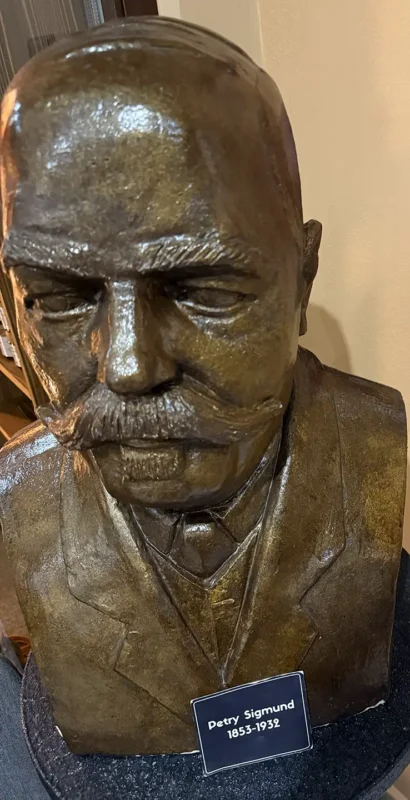
Image: Bust of Zsigmond Petry.
2.2) Sanguis et Sal
A market town needs craftsmen. By 1493, Târgu Mureș already had one of the institutions that would help define its appetite for centuries: the Butchers' Guild, whose privileges were formally recognised that year.
The Petrys arrived in this story later, but fitted it rather perfectly. The family's researched genealogy traces Petry butchers back to the late 18th century.
Then, in 1853, came Petry Zsigmond.
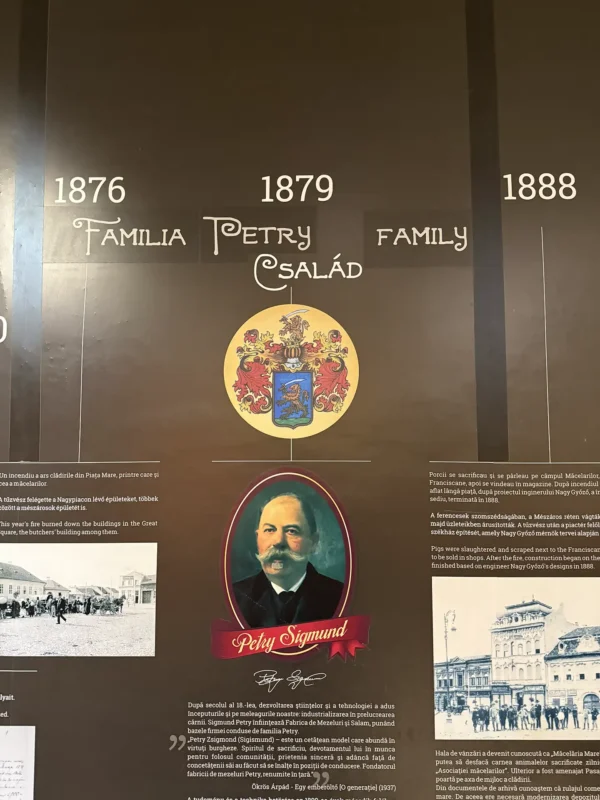
Zsigmond became a member of the Butchers' Guild and an active figure in the life of Marosvásárhely. In 1879 he formally registered his Salami and Butcher Products enterprise. He inherited a trade rather than a title, and in 1879 gave it a registered business name. It proved remarkably durable.
By 1908, Zsigmond was also a city councillor. Together with mayor György Bernády, he helped push for the construction of Târgu Mureș's first modern slaughterhouse, giving the city's butchers proper hygienic facilities for slaughter and storage.
His sons, Samu and Zalán, continued the trade. The workshop became a dynasty.
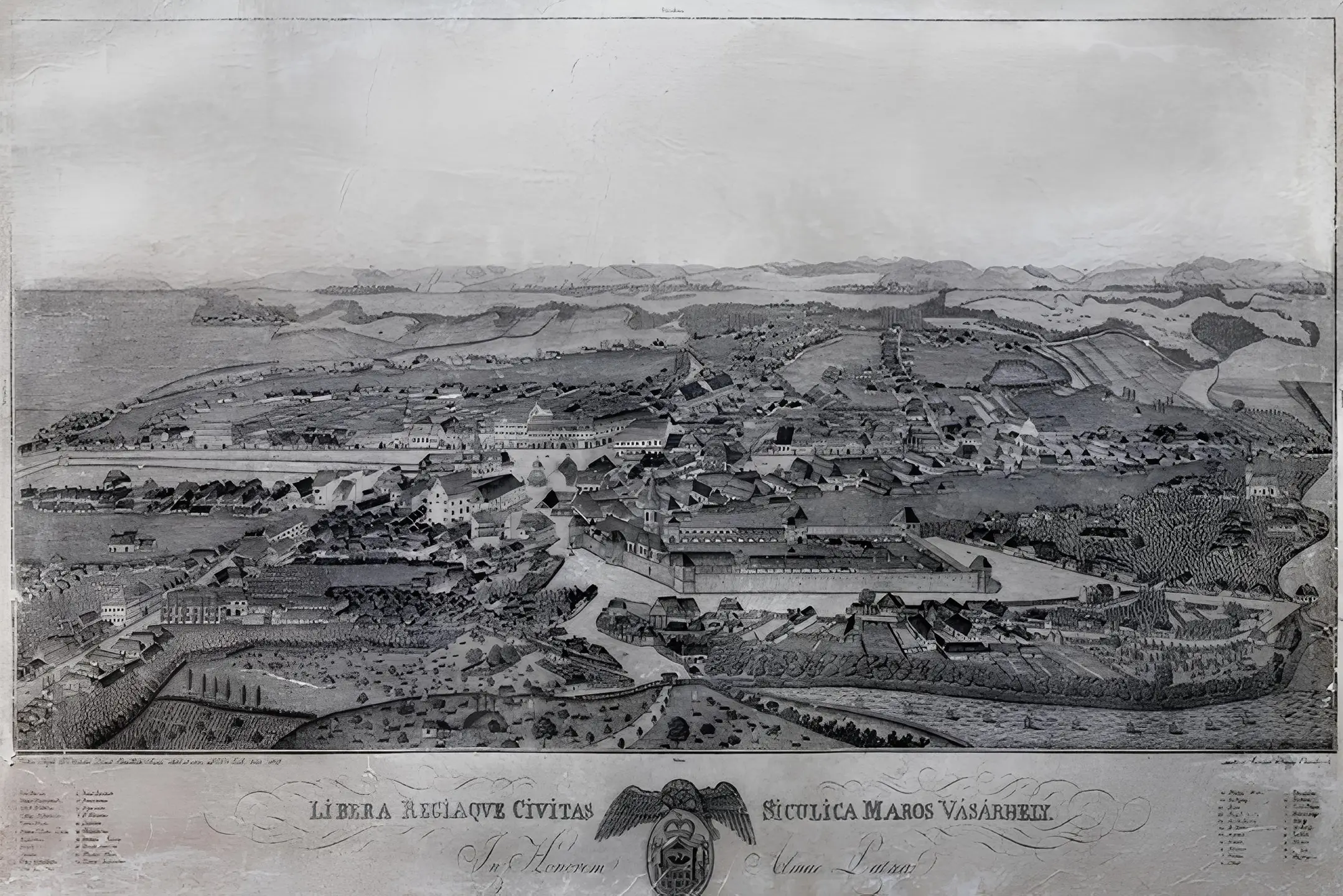
This was Marosvásárhely before Zsigmond Petry's factory, before electric light, automobiles, radio, television, the internet or artificial intelligence. A compact market town gathered around a few streets, churches and workshops beside the Mureș.
From here, a butcher born into an old guild tradition tried something deceptively difficult: turn inherited craft into a name that could survive the future. The Petry family had already been working in the trade for generations; Zsigmond gave that continuity a modern form in 1879.
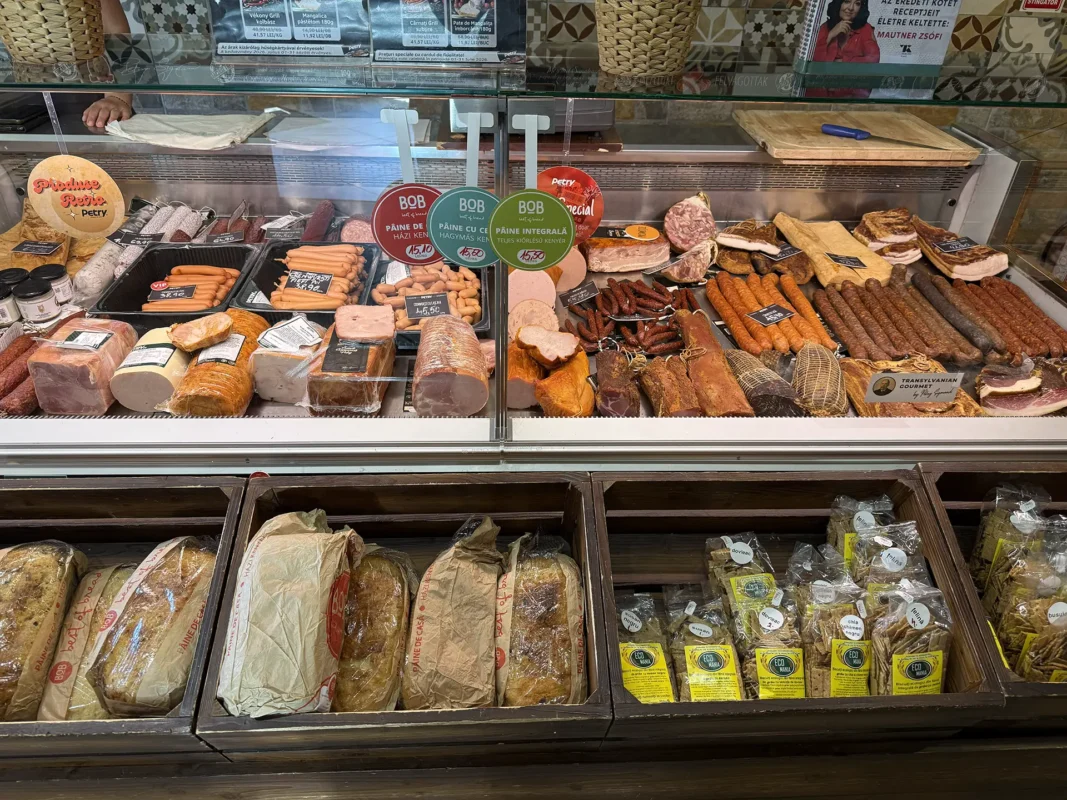
That future turned out to be rather aggressive. Industrialisation, two world wars, changing borders, nationalisation, communism, capitalism, computers, smartphones, AI - nearly everything around the business changed. Yet in 2026, you can still walk into Târgu Mureș and buy sausages branded with Zsigmond's name and face.
"The past is not dead, it is living in us, and will be alive in the future which we are now helping to make" said William Morris.
2.3) Officina Viva
The nice thing about the Petry story is that it does not end behind museum glass.
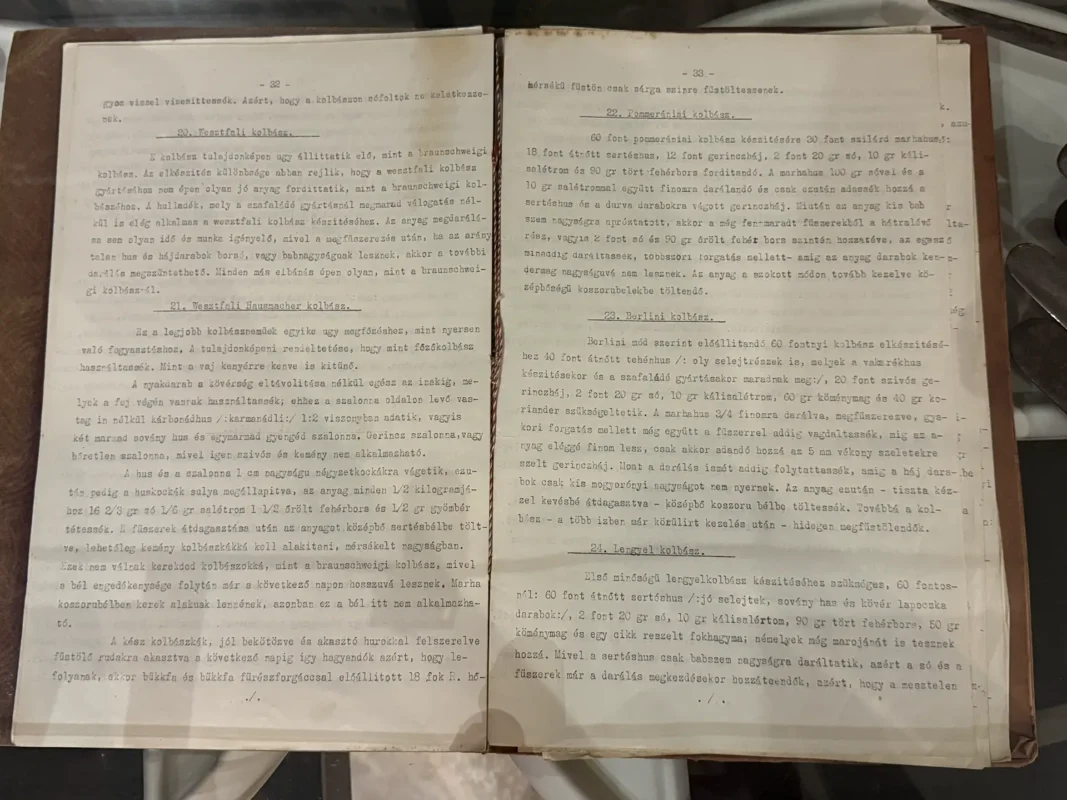
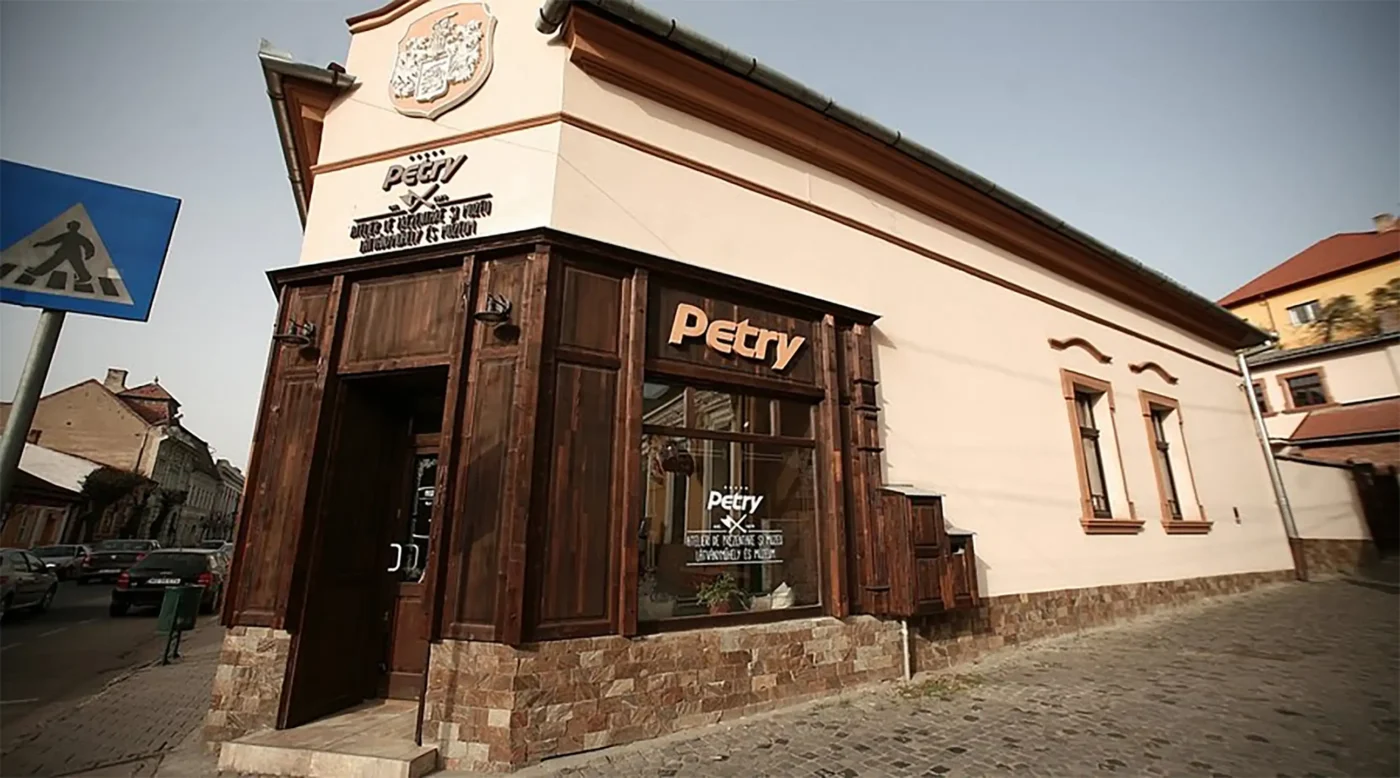
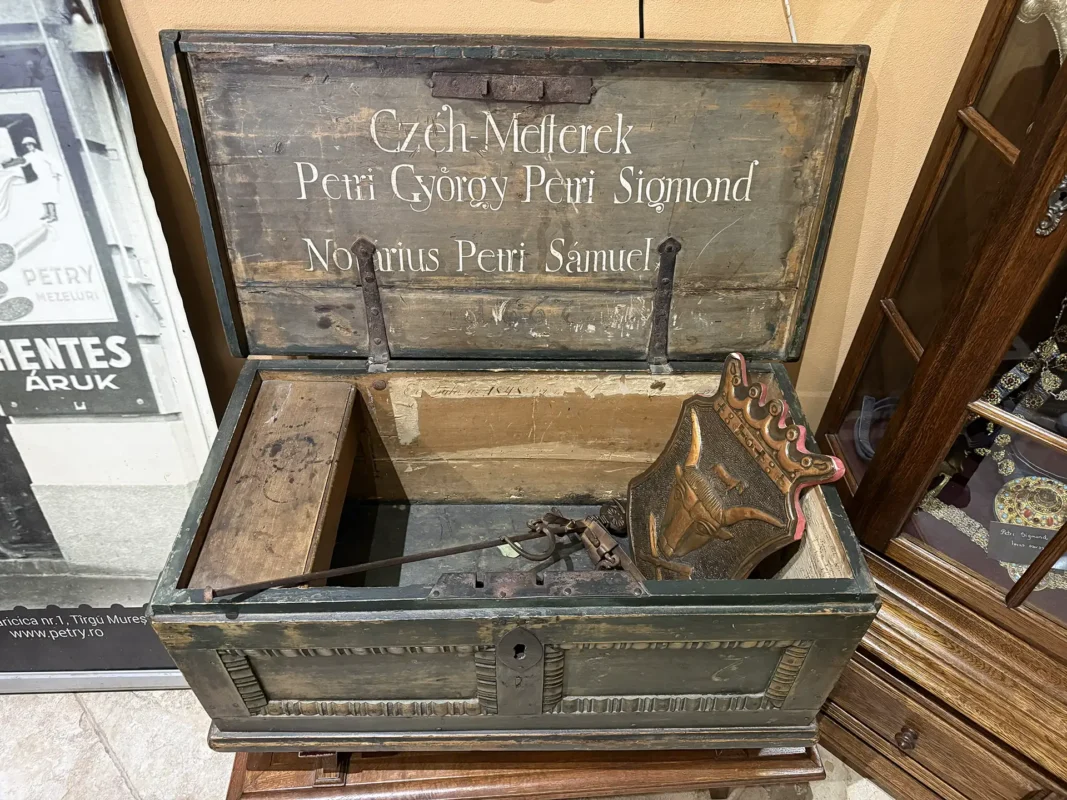
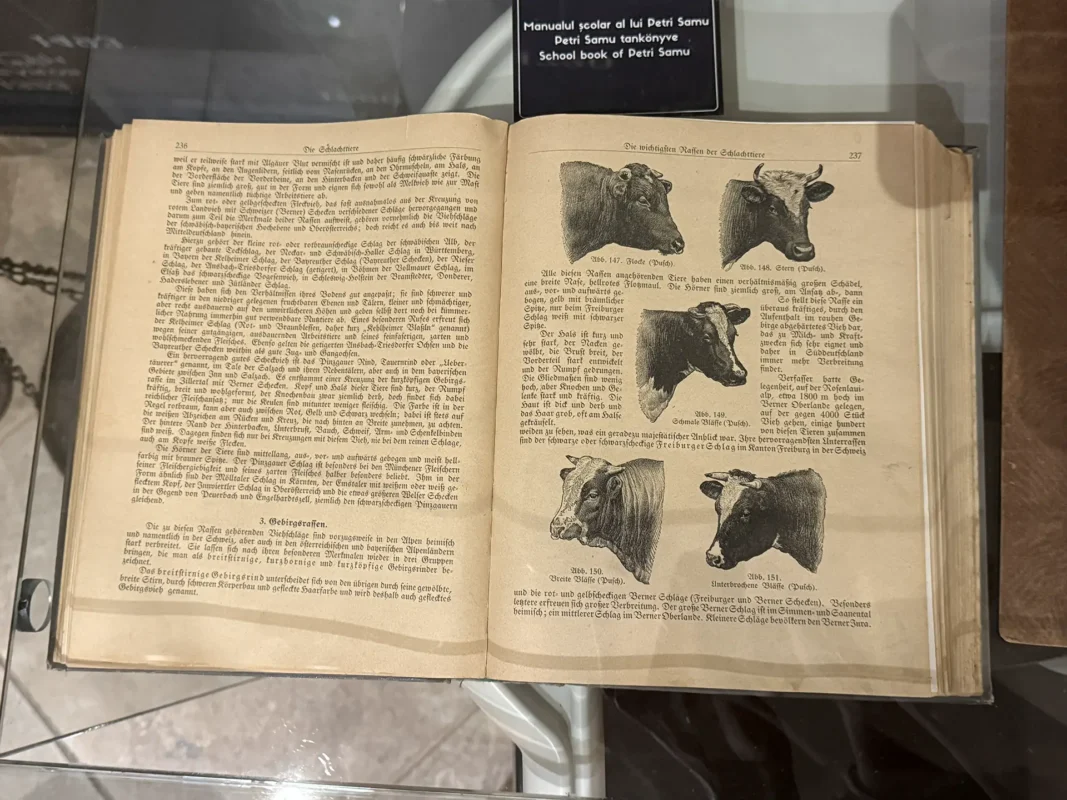
Under the Rákóczi Stairs, the modern Petry workshop and museum keeps the old trade surrounded by its surviving evidence: guild objects, family documents, tools, books and recipes. Among them, Zsigmond's typewritten work on sausage-making reads almost like the technical documentation of another century - recipes measured, tested and preserved before anyone had heard the words content management system.
Samu would take that education considerably further, learning the butcher's trade abroad before bringing the experience home. The recipes changed, multiplied and travelled; the profession stayed in the family.
Then came the 20th century, which rarely allowed Transylvanian family stories to remain uncomplicated. The business was nationalised in 1948 and the family pushed out. In 1990, their descendants started again.
Today the same corner contains a museum, working butchery, shop and, because apparently several centuries of cutting meat eventually require table service, a bistro. Petry brand website.
3.1) Arx Ecclesiae
Leaving Târgu Mureș, the road narrowed again and the city dissolved back into hills, fields and villages.
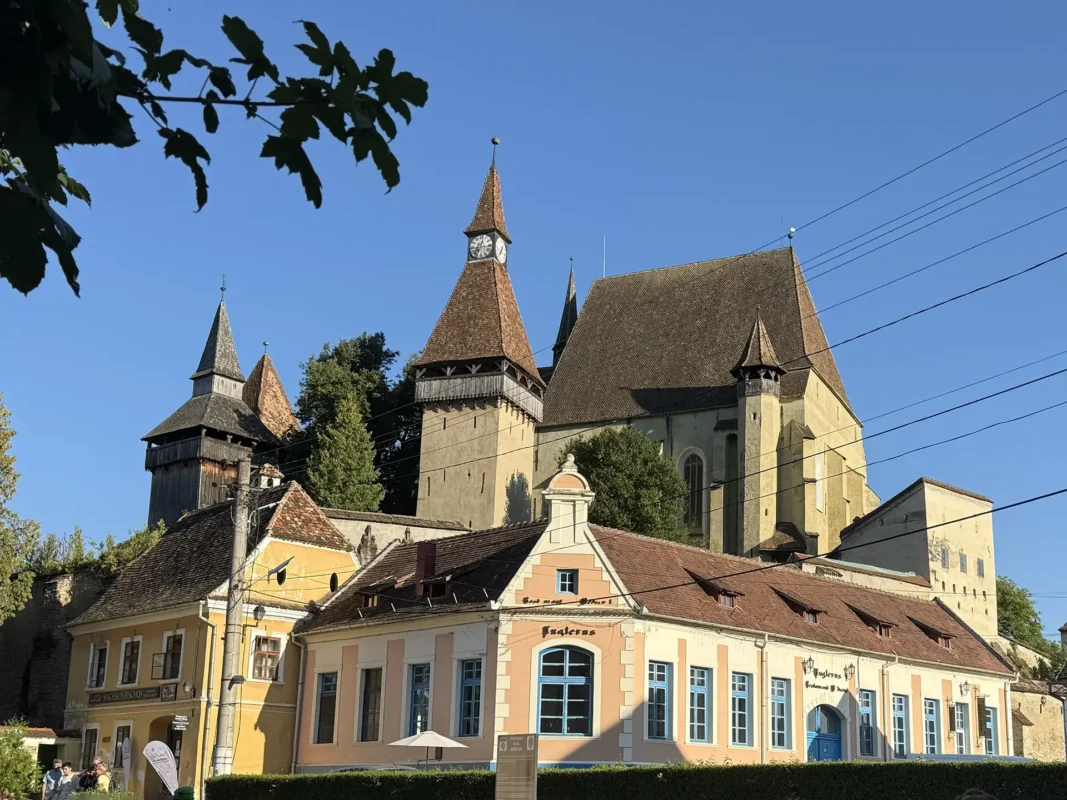
Biertan - Birthälm to the Saxons, Berethalom in Hungarian - first appears in written records in 1283. By the late Middle Ages it had become an important market settlement, competing with nearby Mediaș and Moșna, its craftsmen and winegrowers prospering beneath a church that increasingly looked less like a place of worship and more like somewhere you might survive a siege.
Video: Threshold #4 - Aerial journey from Târgu Mureș to Biertan, via Google Earth (2026).
The present late-Gothic church took shape around 1500 on the foundations of an older building. Around it rose three concentric defensive walls, gateways, bastions and towers. In times of danger, the church was where the village retreated, similar to the other Fortified Churches of Transylvania, Cund included.
There is something wonderfully Saxon about the solution. Building walls around every house would have been impossible, so they fortified the one structure everybody already shared.
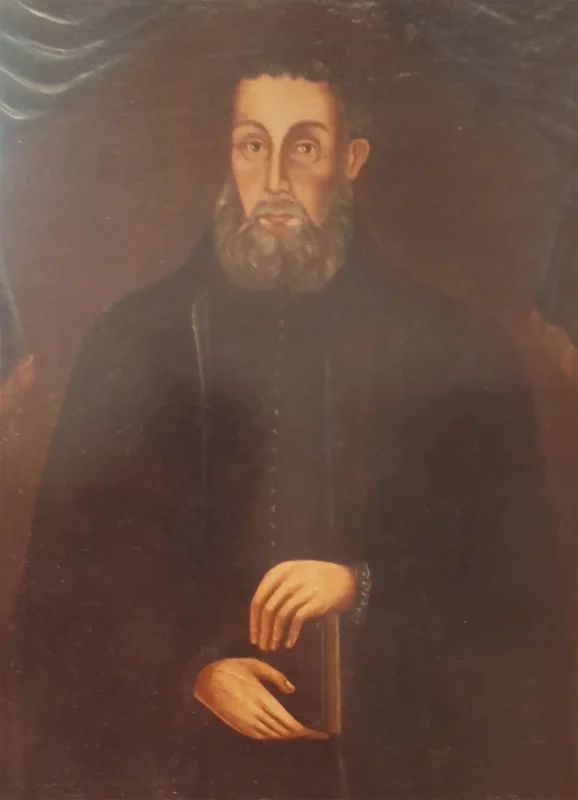
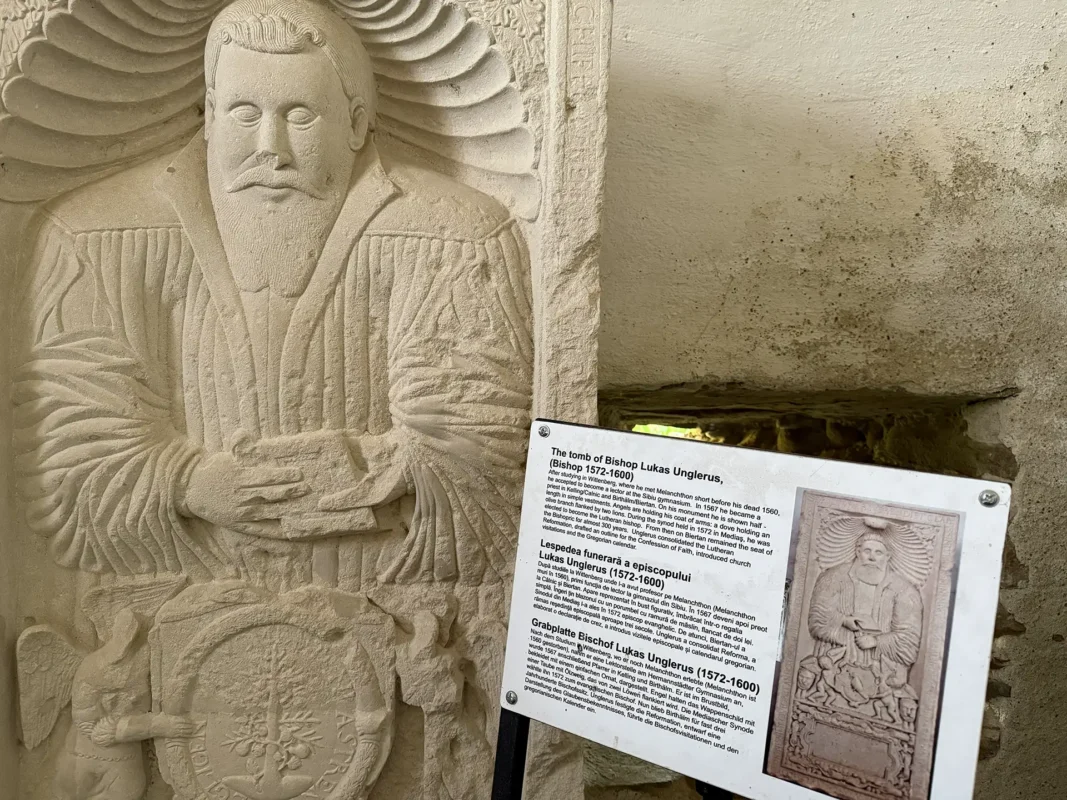
Image: Portrait of Lucas Unglerus. Source
3.2) Episcopus
Then, in 1572, one man changed Biertan's position in Transylvania. Lucas Unglerus, the local Lutheran pastor, was elected bishop of the Transylvanian Saxons. According to Biertan's local historical record, he accepted the position on one rather important condition: he would remain in Biertan.
From 1572 until 1867, Biertan served as the episcopal seat of the Evangelical Church - 295 years during which this small village became one of the spiritual centers of Saxon Transylvania. Unglerus died in 1600. The institution he anchored here remained for almost another three centuries.
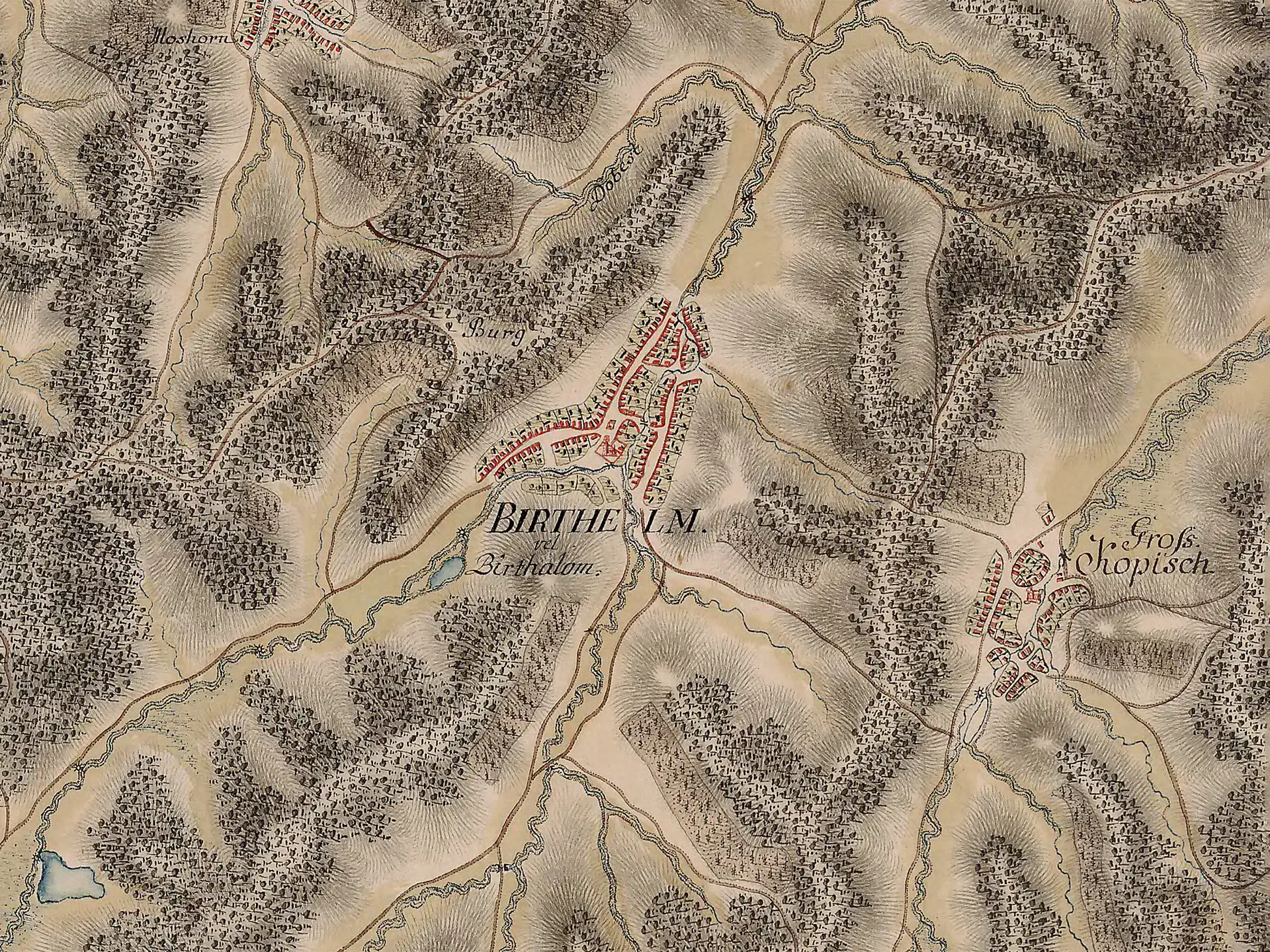
This is Birthälm in the Josephine military survey of 1769-1773 - almost two centuries after Unglerus made it an episcopal seat. The streets follow the valleys and gather beneath the fortified church, which still occupies the physical and institutional center of the settlement.
3.3) Oculi Domorum
Biertan's obsession with making things properly did not stop at the walls.
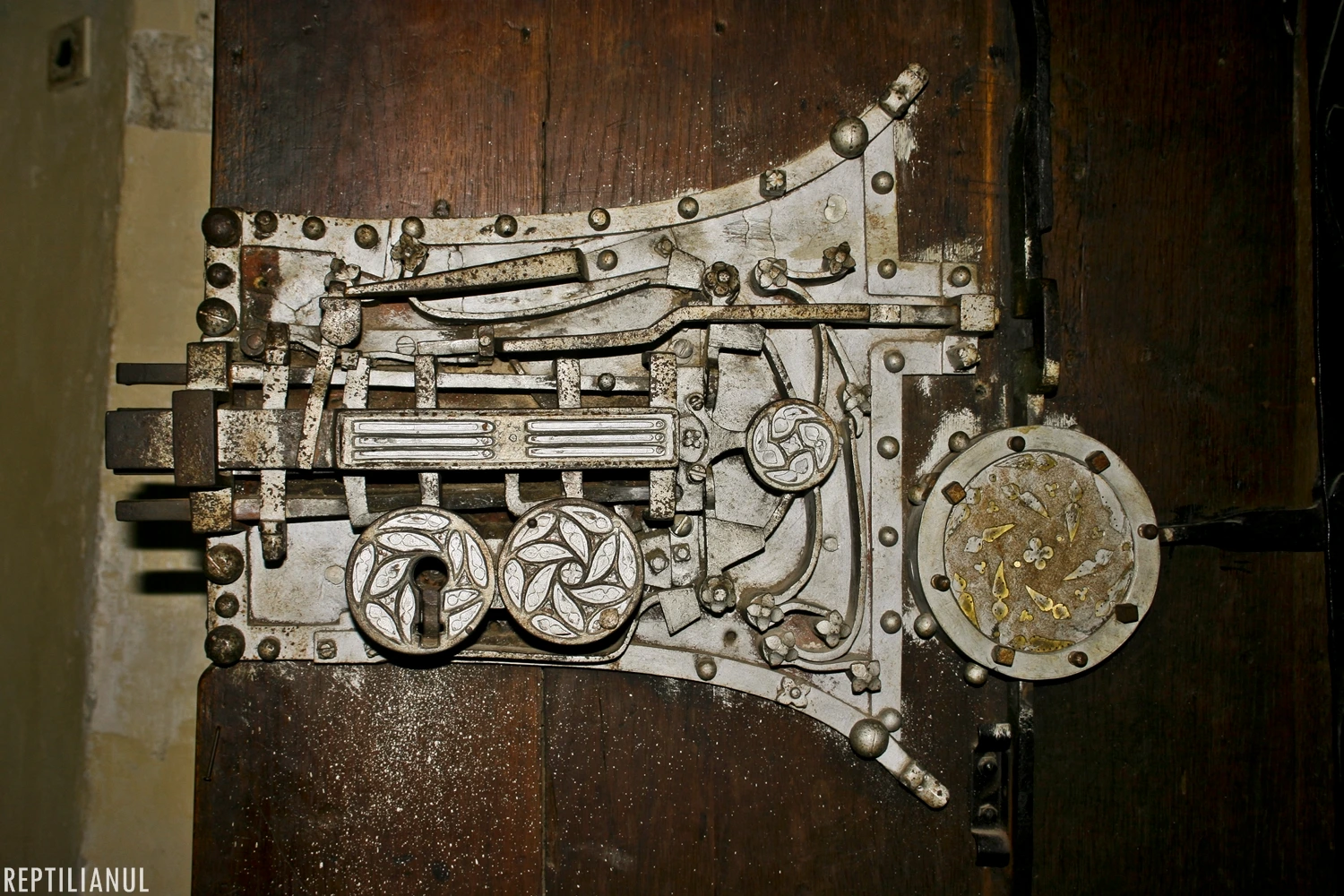
Inside the church, the late-Gothic sacristy door protects what was once the community's treasure. Its locking mechanism closes the door at thirteen points simultaneously - the sort of engineering solution that suggests somebody was given a simple problem and took it personally. The mechanism was impressive enough to be shown at the Paris World Fair in 1889. (source)
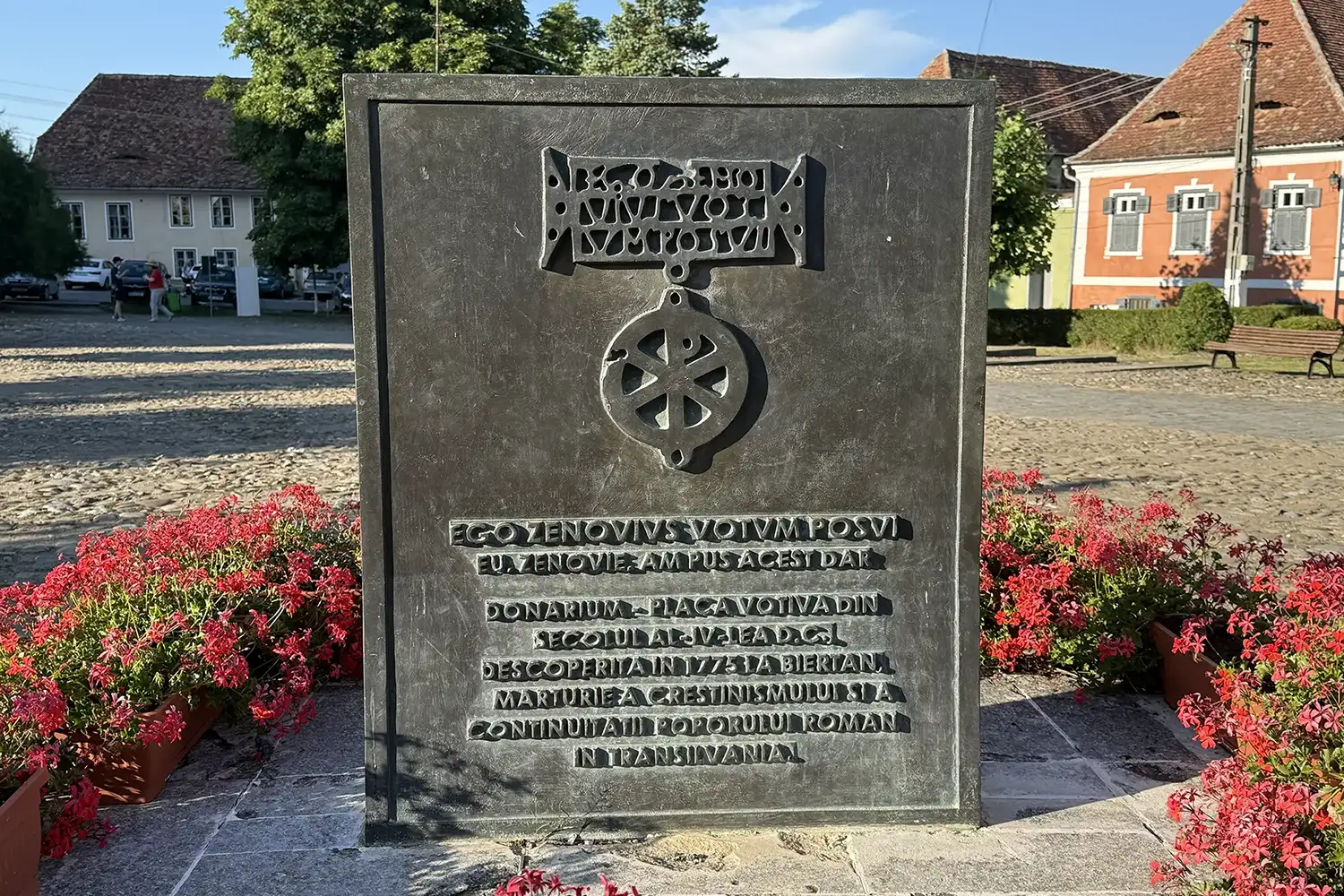
And lo - Biertan's story was never exclusively Saxon or Lutheran. In 1775, a fourth-century Christian votive object was discovered here, bearing the Latin inscription Ego Zenovius votum posui - "I, Zenovius, have made this offering." Today, a monument in the village recalls the find and the much older Christian presence in this part of Transylvania, long before the medieval fortified church rose above it.
Centuries later, Biertan would become home to Orthodox Romanians as well as its better-known Saxon Lutheran community - another layer in a village whose religious history is considerably older and more complicated than its famous fortified church.
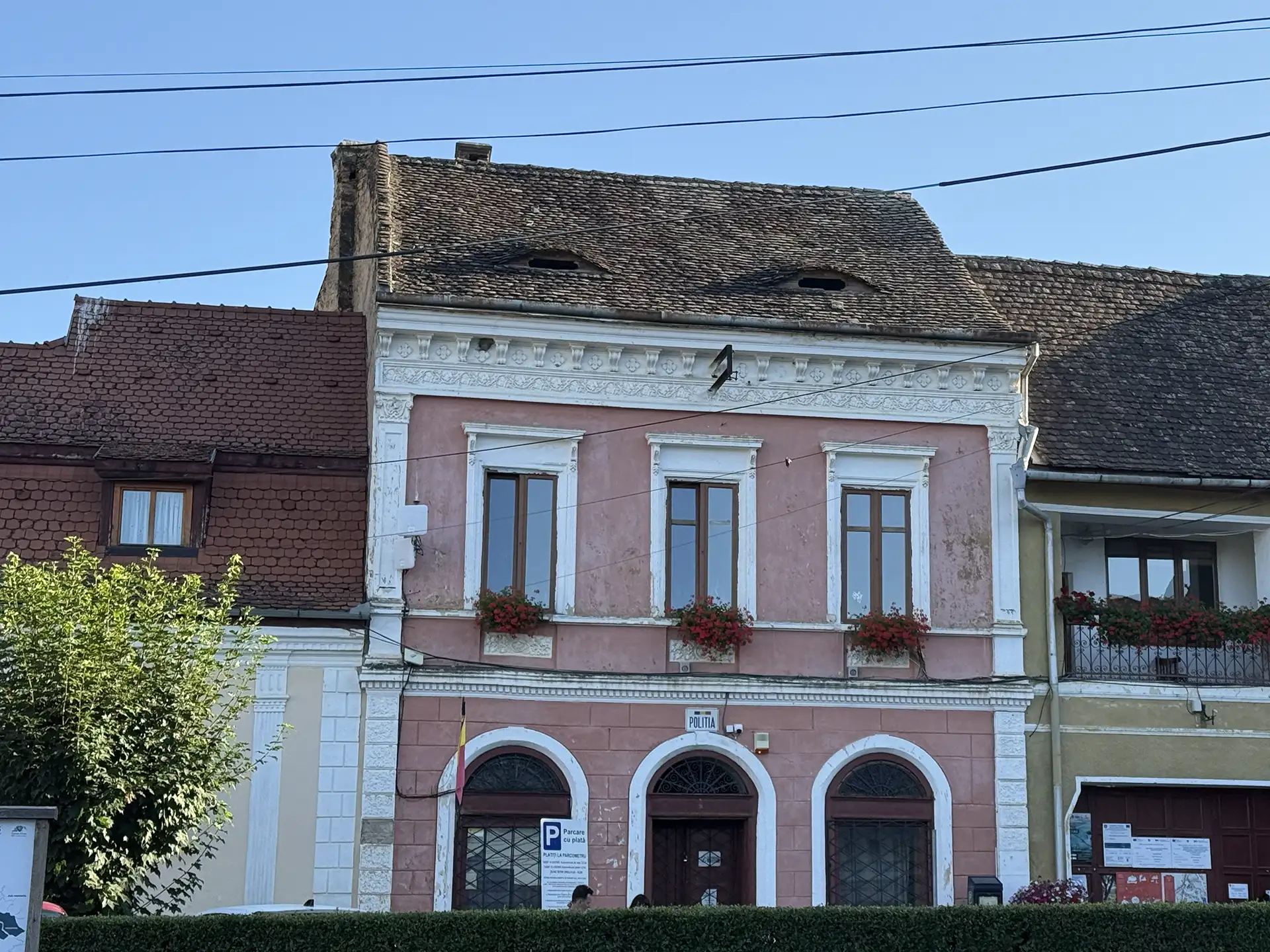
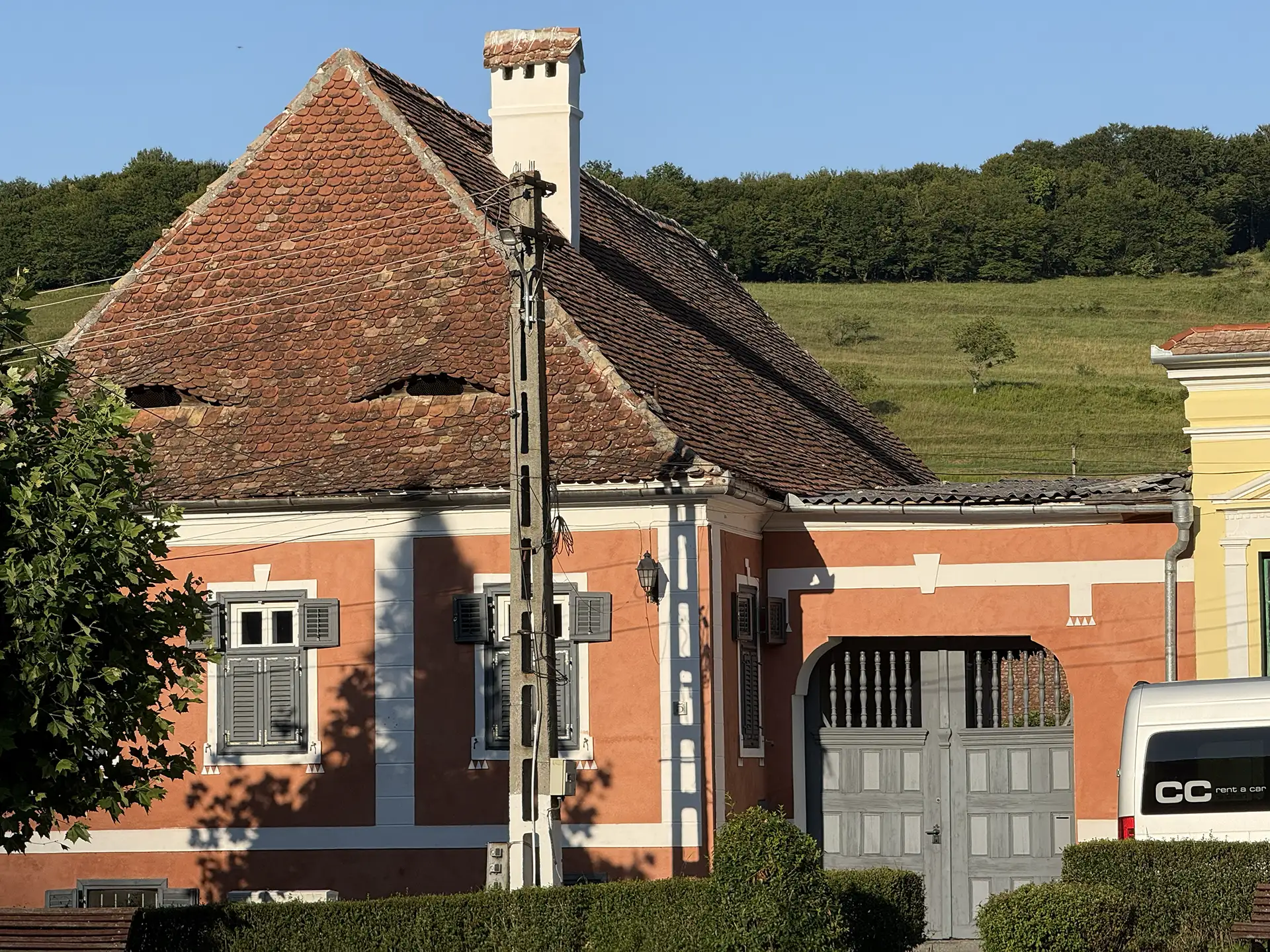
Anyway, if you know latin, or translated this subchapter's title, it's not random. Behold, the houses and police station that are watching us, for hundreds of years.
The eyes are, disappointingly, not an ancient Transylvanian surveillance system. They are curved roof dormers - sometimes called cat-eye dormers - built to ventilate and bring a little light into the large attic spaces beneath the steep tiled roofs while disturbing as little of the roof surface as possible.
Practical architecture, in other words. But place two of them above a symmetrical façade and several centuries later the house develops an expression. Once you notice it, Biertan becomes considerably more difficult to walk through without feeling observed.
"Ok guys," I told the houses, "I'm going to climb the Fortified Church now. Hope we're good."
For all the walls, locks, tombstones and defensive towers, Biertan never quite felt like a monument. Tourists were everywhere, speaking languages I rarely hear in one place. The church still opened its doors, and the music started playing.
For a few minutes, the church became a concert hall. Strings carrying through a place that had already heard several centuries of sermons, hymns, cries of hope and prayers for a better tomorrow.
The clock struck exactly on time. That seemed an appropriate way to leave Biertan. The bishops are gone, the old Saxon community is a fraction of what it once was. The fortifications no longer expect Ottoman armies, the thirteen-point lock protects no medieval treasury, and the houses only appear to be keeping an eye on things.
People still gather here, though. Now that is persistence.
I followed the road east, there was one more Saxon city waiting before home.
4.1) Castrum Sex
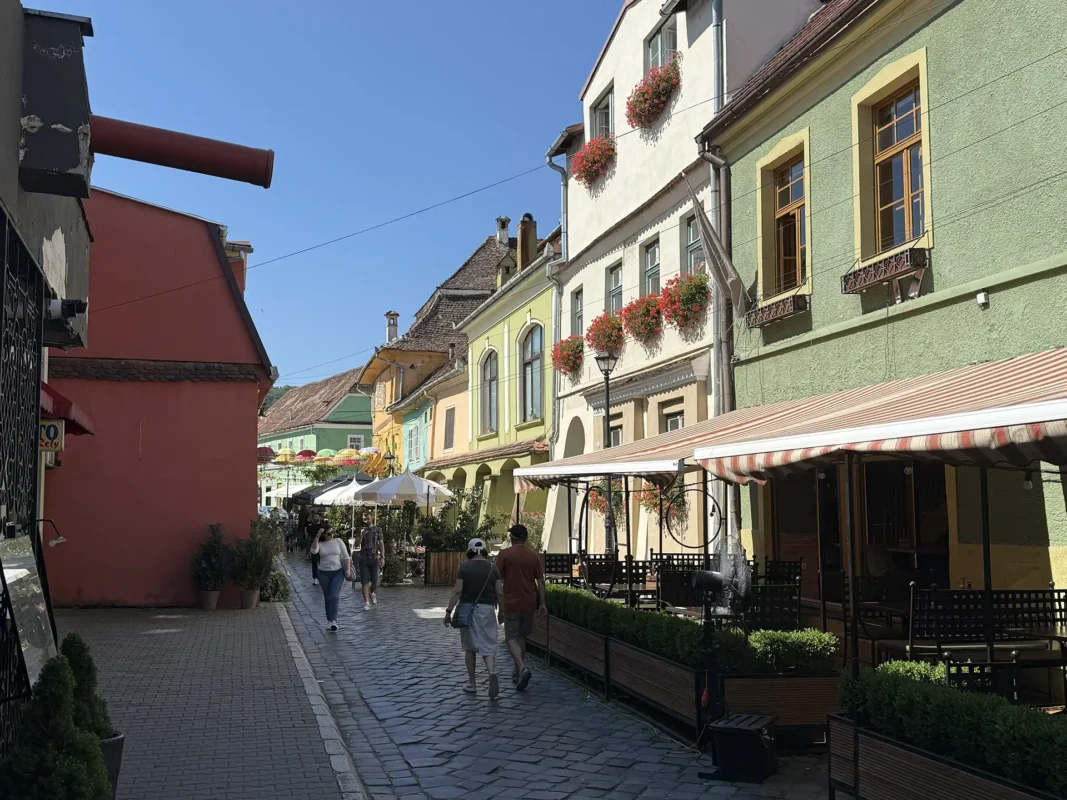
East of Biertan, the road eventually delivered me somewhere considerably less quiet. I'll keep this one shorter, as the internet is full of Sighișoara posts.
Sighișoara first enters the written record in 1280 as Castrum Sex. By 1367 it was a civitas - a proper town - defended by walls and towers maintained by its craftsmen's guilds.
Unlike the abandoned churches and half-empty villages scattered through Saxon Transylvania, the citadel never stopped being a city.
Video: Threshold #5 - Aerial journey from Biertan to Sighișoara, via Google Earth (2026).
From above, the logic of the place is still remarkably easy to read. The Clock Tower guarded the main entrance to the citadel, while the fortified hill behind it was divided among towers maintained by the city's guilds - blacksmiths, tailors, shoemakers, tinsmiths, butchers and others whose professions became part of Sighișoara's defences.
But here's the interesting part, the craftsmen were expected to defend the place. Their guilds maintained the towers, stored weapons there and, when the city was threatened, their own members were expected to man the defences. Story source
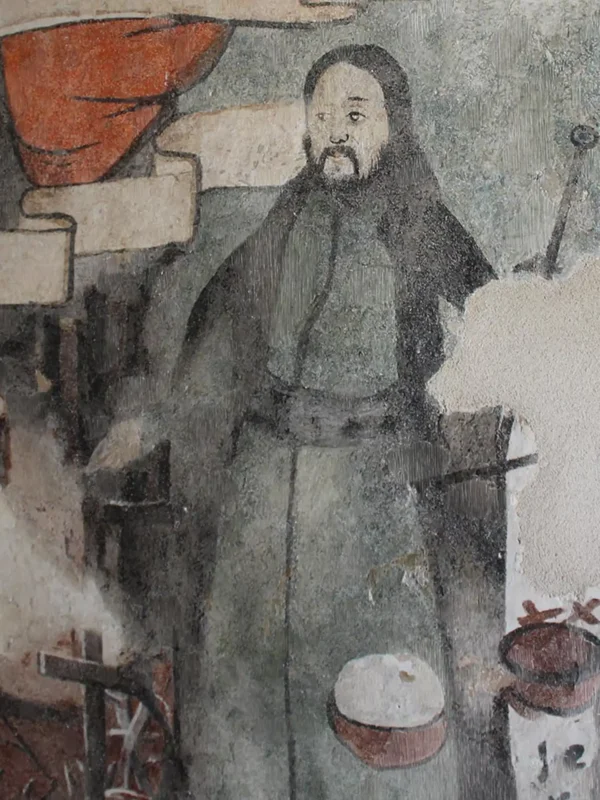
Georg Kraus (1607-1679) - Sighișoara's town notary and chronicler. He spent decades recording a Transylvania that didn't stop giving. Source
4.2) Memoria Civitatis
Sighișoara was fortunate enough to have someone taking notes.
For 17th-century Sighișoara, that man was Georg Kraus. A lawyer, town notary and chronicler, Kraus settled here in 1646 and spent the rest of his life recording a Transylvania that gave a town chronicler very little peace.
He had plenty to write about. Plague struck the city repeatedly, and in 1676 a catastrophic fire destroyed roughly three quarters of Sighișoara. The city rebuilt over what remained. Kraus died here three years later. His chronicle did not. His Siebenbürgische Chronik, covering Transylvanian history from 1608 to 1665, became an important historical source for the period. Kraus never saw it in print; the surviving work was published centuries later, beginning in 1862. That edition can be found here.
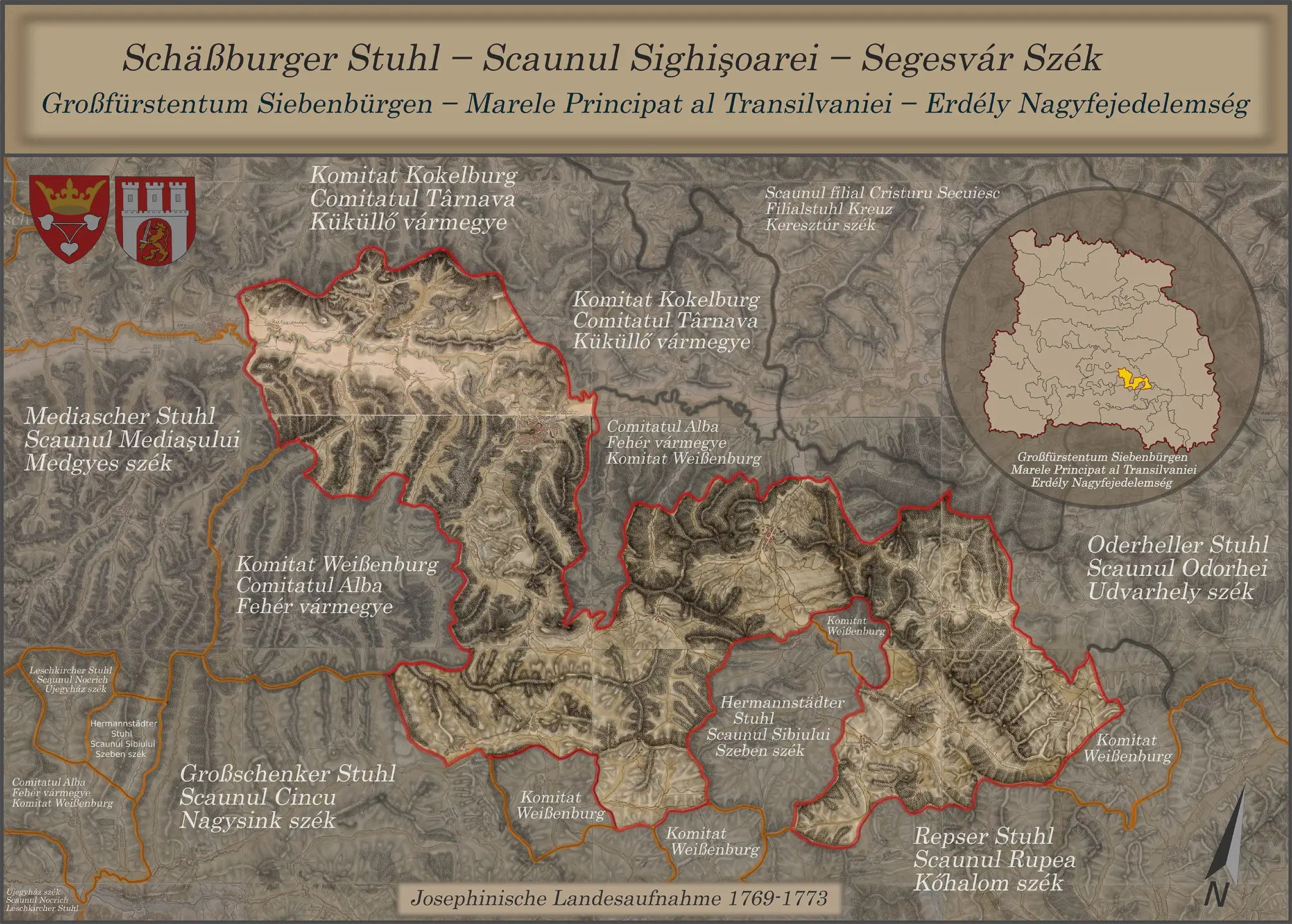
By the time of the Josephine Survey in 1769-1773, Sighișoara was more than a fortified town. It stood at the centre of the Schäßburger Stuhl - the Sighișoara Seat - one of the historic administrative territories of the Transylvanian Saxons.
The map makes the old Transylvanian patchwork obvious: Saxon seats, counties and neighbouring jurisdictions fitted around one another across the valleys and hills.
4.3) Quod Restat
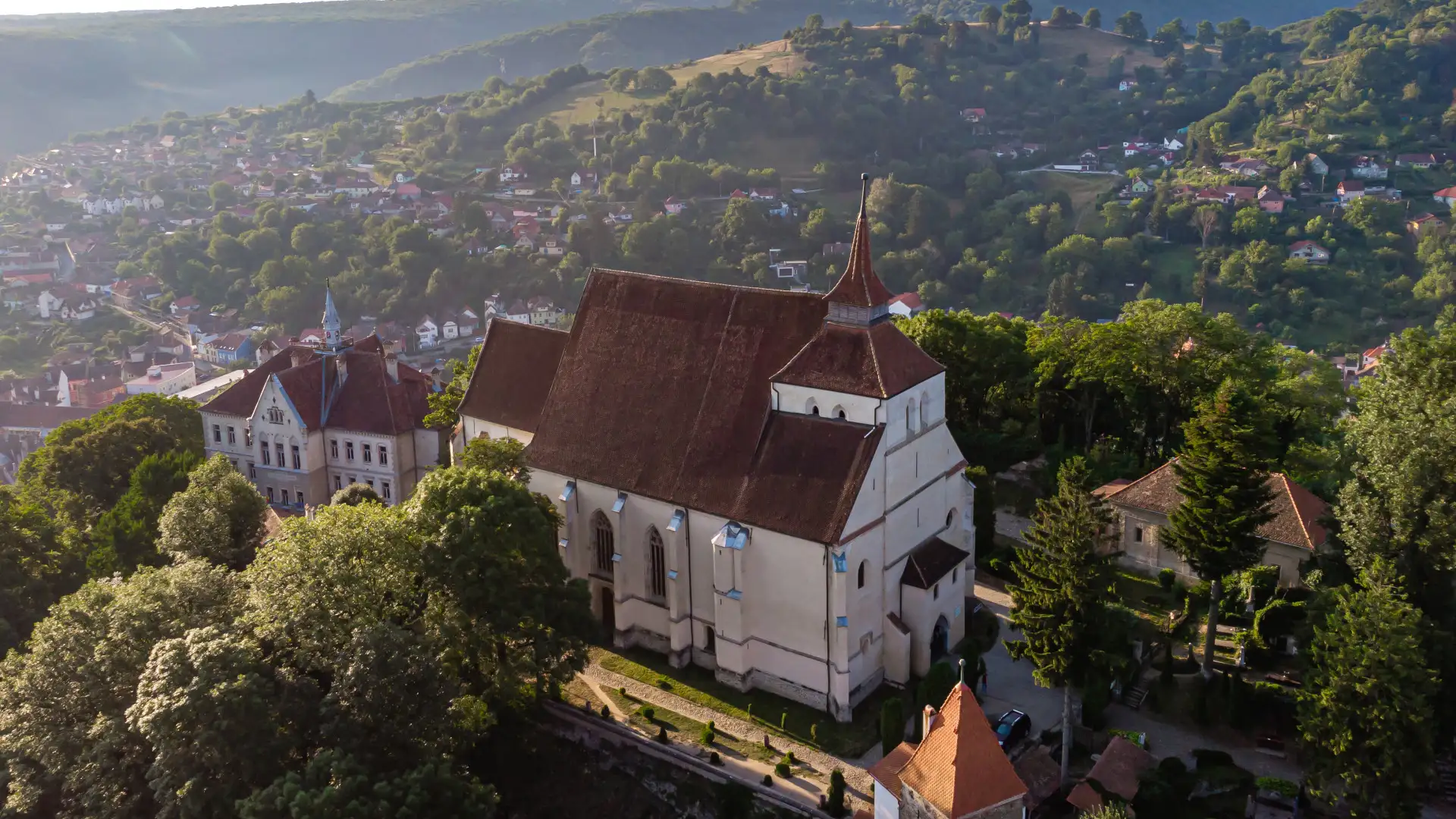
Then, near the top of the citadel, the trip quietly returned. On the first evening in Cund I had photographed an old Saxon church whose congregation had largely disappeared. One of its greatest surviving objects had left with it: the pre-Reformation winged altar of Saint Nicholas. Except it had not disappeared. It was here.
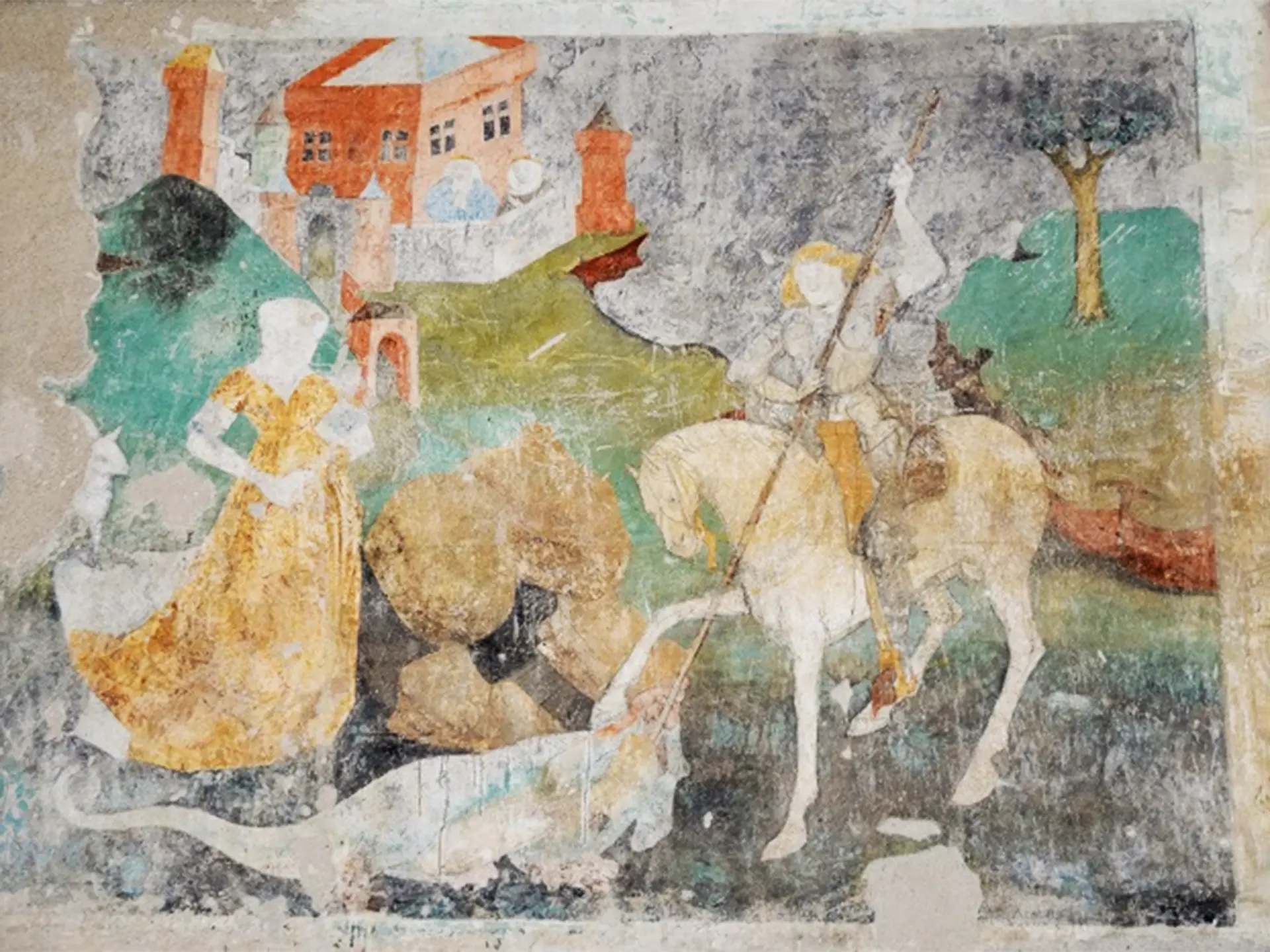
If this journey had not yet closed enough circles, the medieval walls of the same church preserve another familiar creature... A dragon.
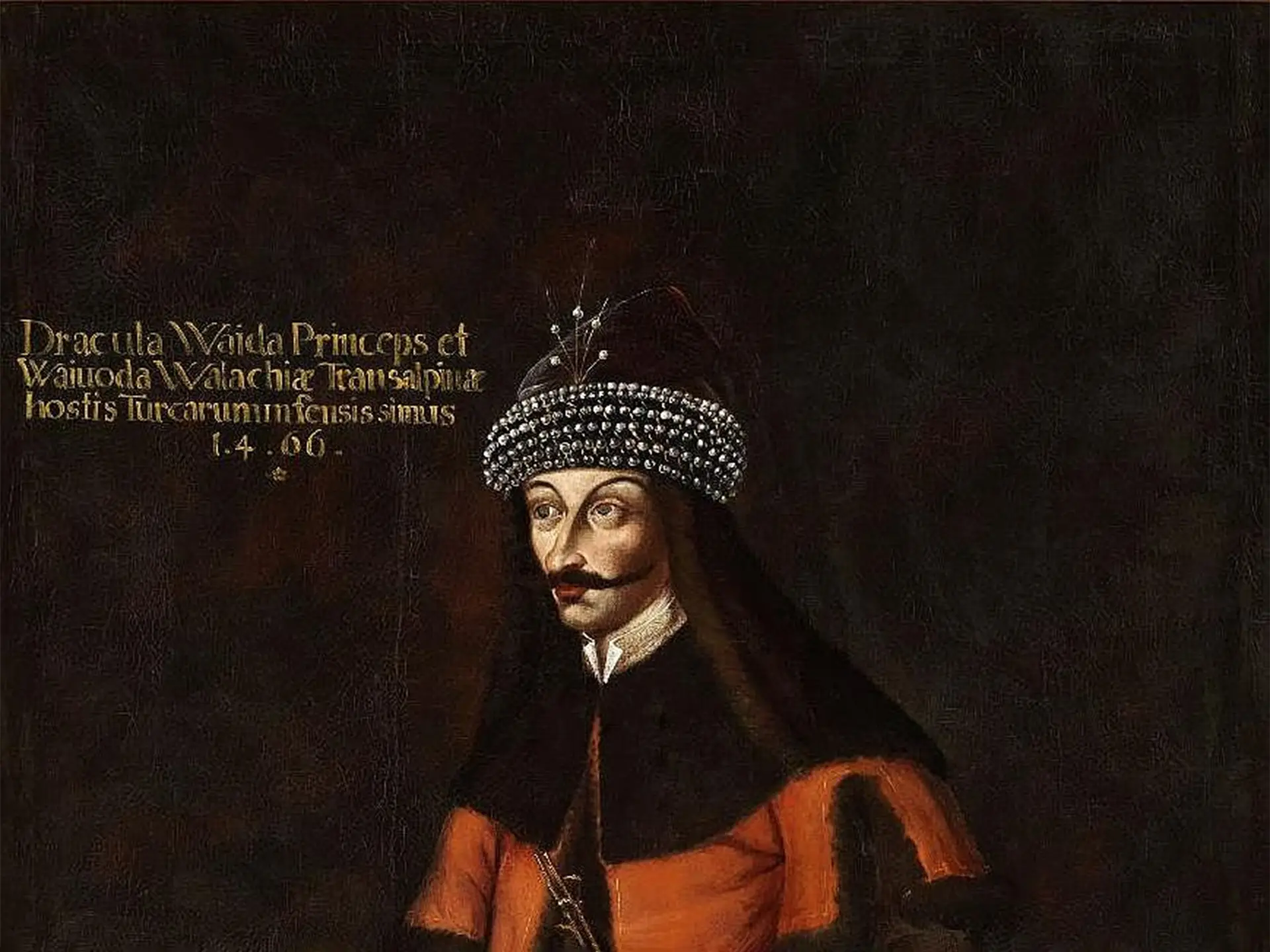
You want another one? Vlad the Impaler (Vlad al III-lea Țepeș) - yes, the actual Vlad Dracula - Bram Stoker's wet dream, is traditionally believed to have been born here around 1431.
I think that's enough "mind blown", no?
At that point, the coincidences had become almost rude.
Saint George rides out from the castle, kills the dragon and returns with the princess. Back in Jacodu, the dragon had belonged to a spring. Here, another had been waiting on a church wall for roughly six hundred years.
Cund had lost its altar. Transylvania had not. And with that, there was really nothing left to add. I went home.
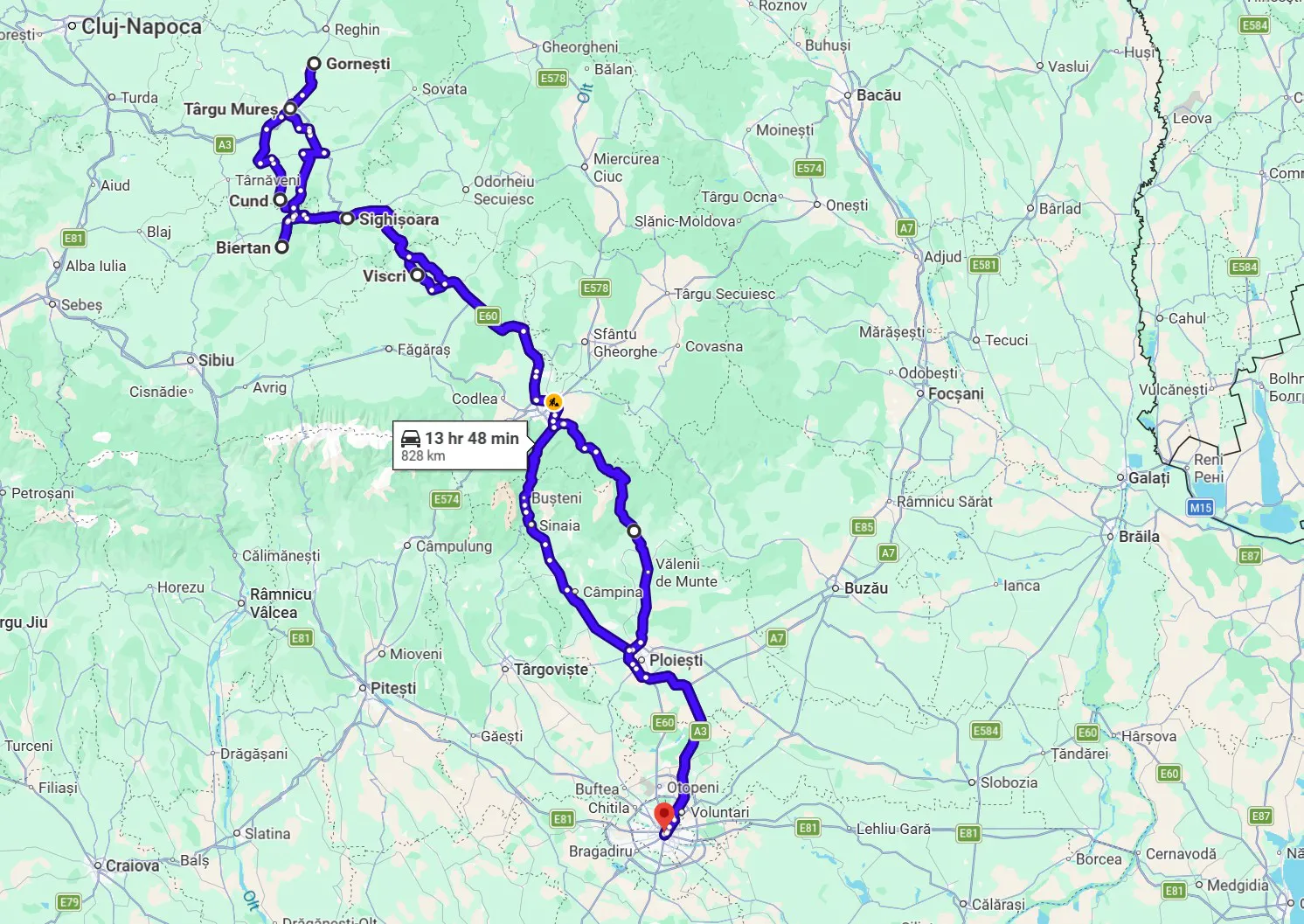
The Transylvanian Loop - Rolling Hills, Hidden History
828 kilometres later, the map looked almost too small for everything that had happened inside it.
And still, the more I travel, the more the same idea returns. Saxon, Romanian, Hungarian, German, noble, shepherd, tourist, local - all of them left something behind. Maybe we're closer to my wish, A Planetary Mind, than I initially thought: to stop seeing the world as a collection of separate boxes and start seeing how much we're alike.
It is a privilege to have witnessed so much during my time on this world, but it still saddens me that trips like these, and posts like these, eventually have to end.
Before leaving, I asked Jonas Schäfer three simple questions about the place he had chosen to call home.
1. Why Cund, out of all the places you've seen?
J: "I always say: just look around you. It is the most untouched piece of European wilderness I've come across, with a distinct European heritage - architecture, language and culture."
2. How has living here changed you?
J: "Dramatically. I became a quieter person. It made me appreciate life within nature, and the power of natural surroundings, to a degree that I never want to miss again."
3. What do you hope visitors take home besides photographs?
J: "Much more important than photos are experiences: a conversation, a moment of calm on the hillside, a walk through a flower meadow, a conversation on the street with locals who live differently."
These rolling hills hide an unreasonable amount of history. Borders moved, armies came and went, families lost houses.
Yet in the summer of 2026 I was looking at Teleki rooms freshly reopened, eating food made from a Petry tradition that survived nationalisation, listening to music inside Biertan's fortified church, and eventually standing in front of Cund's altar in Sighișoara. After everything this land has absorbed, an astonishing amount of it is still here. It made me feel hopeful.
I'm glad I reached Cund when I did. I met Jonas and heard, in his own words, why he had chosen this little valley. Soon afterwards, another chapter of Valea Verde ended when Jonas and Ulrike stepped away from the business they had built there (source).
What surprised me more was how bad I felt leaving. I usually reach a point on any trip where I start missing home. In Cund, that moment never really came. If anything, I felt the opposite: slightly annoyed that the road was taking me away from a place I had only just begun to understand.
Jonas' last answer stayed with me. Years from now I may forget what I photographed, but I doubt I'll forget the silent walk to Reussdorfer Hof, the shepherd on the hillside, or somebody gathering sorrel for dinner.
Maybe remembrance is enough to give things a second life. A place still needs people to repair the roof, but memory can be eternal. Cicero wrote that the dead live in the memory of the living. After Cund, I think I understand that line a little better.
Terra is my small contribution to the chain. I'll keep writing down things that deserve to be eternal.
Stay tuned right here, on Unbound Planet.
--Theo
Contact me🔗 with your stories, tips, or memories.